Category Archives: Dark

The Sleepwalker

This is a bit different from some of the stories I’ve written lately, darker for one thing, but it’s been rattling around inside my head for some time, so I finally let it out.

The Sleepwalker

The first thing Dillon saw when he came into consciousness was his hand, moving spasmodically in the muck by the lakeside, his fingers moving like five fat maggots. He took a shuddering breath, coughed out some water and stood up.

Sleepwalking. It must have been that again. The medicine seemed to have stopped working. He had the feeling he had done this before, walked outside in his sleep and right into the lake. It was lucky he hadn’t drowned.

Dillon staggered back up to the split-log cabin that sat on the bluff overlooking the teacup lake. Tiffany never liked going there, but he loved it, this tiny outpost beyond the grasp of civilization. No Internet, no TV, and just enough electricity to run the lights and his used Dell laptop where he forged his bizarre, surreal stories, one keystroke at a time.

So tired. His head ached and he walked with his head down and eyes half-closed until he reached the door. It was locked. That puzzled him. How had he locked the door when he was sleepwalking? Sure, it had a button lock on the inside that he could have pushed, but he had never known himself to do that before. He fished the keys out of his sodden pocket and stepped into the sparse kitchen. All the appliance were at least 30 years old, the old-fashioned, hard to use kind that drove Tiffany nuts. He liked them though. Or perhaps it was just that they guaranteed she would let him come here alone. Antique appliances were a fair trade for total solitude.

The coffee maker, the one modern concession besides the laptop, was set to turn on by itself in 10 minutes, as it always did. He pushed the button and as it gurgled and hissed, he pulled out his pill bottles from the drawer above it. Three blues, two whites: he popped them into his mouth and ducked to get a mouthful of tepid water from the faucet. He felt the meds kick in almost immediately and by the time the coffee was ready, he was a man reborn. They did not keep his mind from spinning; on the contrary, his mind was turning like a flywheel now, generating the necessary creative juices.

He looked out the window and a shock like electricity went through him. Next to his silver pickup truck sat a blue Jaguar, one that he knew very well. Tiffany was here? Since when? Dillon opened the bedroom door, expecting to see her, but it was empty. It was a tiny cabin, but he searched it again and again for ten minutes.

She must be swimming. Ha, not likely. His wife didn’t go near water without adequate chlorination and a handsome, college-aged lifeguard to watch over her. Hiking? Even less likely. If Tiffany couldn’t walk there in high heels, she did not walk there at all.

Finally, Dillon went outside to see if she was sitting behind the wheel. It was empty and locked. It didn’t make sense. He went inside, poured the coffee and took another white pill with it, just to calm his nerves, along with one of the tiny red ones, just because he felt he deserved it after all this confusion.

He turned on the laptop and it sprang to life with an electronic trill. There were no games on it or other distractions and he had set it up to open the file of his current work in progress automatically. Up came the title page, The Woods of Trillium. He scrolled to the bottom. When he had left off, the main character Turner Belasco had just left the witch’s house and was staggering through the forest, trying to get the cursed dagger out of his hand.

Dillon stared at the screen. There was text he didn’t remember writing. It didn’t fit with the story.

“Where is she, you dumb bastard?” the witch cried, tearing at Turner’s clothes with her claws. “You think I don’t know why you are wandering these woods all the time? You’re not looking for the Fountain of Light, you’re screwing some wench!”

          “You are surely mad, woman!” Turner shouted. He shook the cursed dagger to loose it from his hand, but it was stuck fast.

          “You must prove your loyalty to me,” the witch said. “Burn down this hovel you have constructed. Burn it to the ground and you will be free of the curse.”

          “But the house is the key to finding the Fountain of Light,” Turner said. “I carved the map on the floor myself, with hard labor. I will never give it up.”

          “You will or you will suffer!” The crone flew at him and Turner held up his hands to defend himself. But the cursed dagger, which was frozen to his hand, stabbed her in the throat and she dropped to the floor, dead.

          Turner cleaned up the witch’s blood and then carried her and her garments out to the Pool of Trillium, that sparkled with diamonds in the moonlight. He saw her body sink into the inky depths and with that, the cursed dagger fell from his hand and disappeared with her from sight. Then Turner went back to his hut, arranged his traveling garments and potions, set the coffee aright and set out to search for the Fountain of Light.

Dillon staggered up so fast, the table almost overturned. He made his way to the medicine drawer and shook out some pills, not bothering to check the colors or even how many he was taking. All he could think of, the thought that pounded in his head like a gong was: They don’t have coffee in The Woods of Trillium. It doesn’t exist there.

It was just a story. It was not real. Turner Belasco wasn’t a real person. He tried to tell himself this, but his mind was spinning out of control. He got down on the kitchen floor to look for blood. The lines on the flooring ran together and seemed to drip away into nothingness, but when he ran his hand over them, it came away dry.

What seemed like hours later, he found himself in the forest, yelling Tiffany’s name.

Dillon went back to the cabin and tried to think. It took two more cups of coffee. It might be only a story, but the Jaguar was real and he could not have driven them both there. If he had really killed her, it was all over for him. He had to at least look for her body, to make sure for himself. He had to find her or die trying.

It was early afternoon by now. He shut down the computer, put coffee in the filter and set the timer, out of habit more than anything. Then he went out and locked the door and walked to the lake. The water sucked greedily at the hems of his pants, pulling him in further. Finally, he ducked his head under and dived, down into that green-black world of weeds and shifting light, where everything looked like something that it was not. He continued to go down, looking here and there until the blackness seeped into his mind and his last thought was extinguished.

*        *        *

The first thing Dillon felt was a burning in his lungs. He hacked and coughed, spitting weeds, and when he finally opened his eyes, he was lying on the edge of the lake, his clothes and hair muddy and sopping wet. How had he gotten there? He must have been sleepwalking again.


I think something is stalking me

It’s out there somewhere, I know it. It knows where I am and I feel it getting nearer, little by little. I haven’t told anyone before this—I’m too afraid of people thinking I’m crazy. Afraid it’ll hurt my career if anyone finds out at the office. And so I go along day by day, trying to ignore the fear, like the man who avoids the doctor because he is terrified of confirmation more than the cancer itself. The truth is, I know something is after me.

If I only knew what it was.

I say “it” and not “he” since I can’t tell if it’s even human. Sometimes it looks like it, but then it moves wrong, or just disappears. I can see it across from my house sometimes, if it moves into the streetlight. I saw it once out my office window, just a flash of something dark moving between two cars. I can’t prove it but I know it wasn’t a person or an animal.

I finally got a picture of it. It was standing there in the streetlight across from the house, almost taunting me with its presence. I turned off the lights and took a picture. It turned out horribly, of course. I shouldn’t have taken it through the screen, for one thing.

I’ll have to use video next time. I’ll let you know if I get anything more.

I thought it looked human, but now I'm not sure.

I thought it looked human, but now I’m not sure.


Waxy Wolly – Friday Fictioneers

Well, I’m back from the hospital and back into my routine. My apologies for not being able to read many stories last week, but I’ll make up for it this week, I promise. Also, although my Monday post, Drowning Day, was supposed to be humor, it was rather dark, so I’m sorry (to those who prefer my lighter stories) for another dark story today. I have a funny one coming up on Friday this week.

Also, since this is a horror story, I will dedicate it to my friend, K.Z. Morano, whose book 100 Nightmares just came out.

copyright Renee Heath

copyright Renee Heath

Waxy Wolly

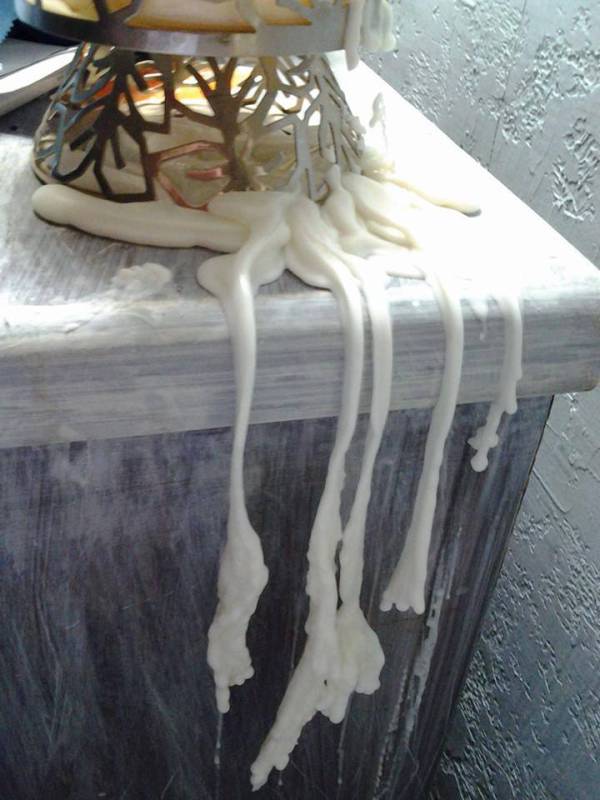
Do you know Waxy Wolly, that goblin with the soft, melty face, drooping eyes flickering like malevolent candles? May he never come to your house.

Many a mother has looked into a cradle to see her baby staring up, a living effigy of that happy, laughing soul of only an hour before. And then when she washes it in hot water or puts it near the fire . . .

No one believes me. They all think I killed them. But there are no bodies to convict me. Just a waxy stain in front of the hearth, like someone spilled a large candle.


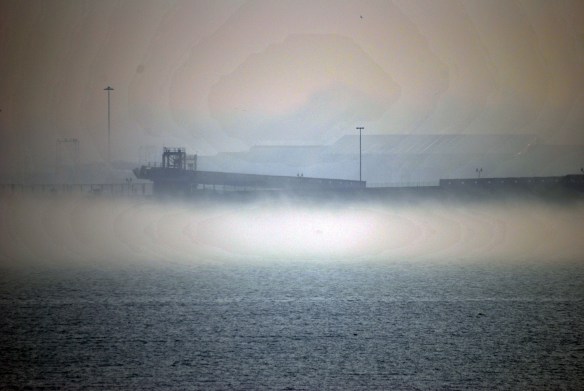
Fog Tweets

Fog Tweets

1234567891011121314151617


All Wrung Out

This story deals with somewhat disturbing material. Just a heads up. It’s a story for Al Forbes’ Sunday Photo Fiction. A bit over the word limit, but please forgive me this time.

All Wrung Out

I feel wrung out, with a soul like an old dishrag, flapping in the burning wind. But you gotta keep on, so I flip a smile, crack a joke and pretend. We all do.

“We got a drill hole on 10th Avenue,” Marc calls. “A real slip-n-slide.”

“And here I forgot my bathing suit,” I say, climbing into the truck.

There are no survivors, of course. The laser beam drilled a perfect hole down through the 20-story building, gutting it and disintegrating everything in its path. Nobody calls us when there are survivors, only when there is “organic material” to clean up. I don’t mind the “organic material”; it’s picking up the body parts I can recognize that gets to me. Nobody said war was pretty.

“Do you ever wish one of those lasers would get us?” Marc asks that evening. “Just erase the memories and nightmares forever.”

“What, and leave this dream job?” I say, laughing and taking a swig of beer.

He looks at me with pain in his eyes, pleading silently for me to be serious, just once. But I can’t do it, because I feel so thin inside that if I stop smiling, I’ll shatter.

I’m just all wrung out.


Jasper’s Lamp – full story

This past Wednesday, I did a Friday Fictioneers story called Jasper’s Lamp. It’s a creepy story about five generations of women and their relationship to a lamp that has something growing inside it. The problem is, that the Friday Fictioneers stories are 100 words and I wanted to say more about it. So I wrote this one to tell the whole story. It’s a bit long, but if you like creepy, then enjoy.

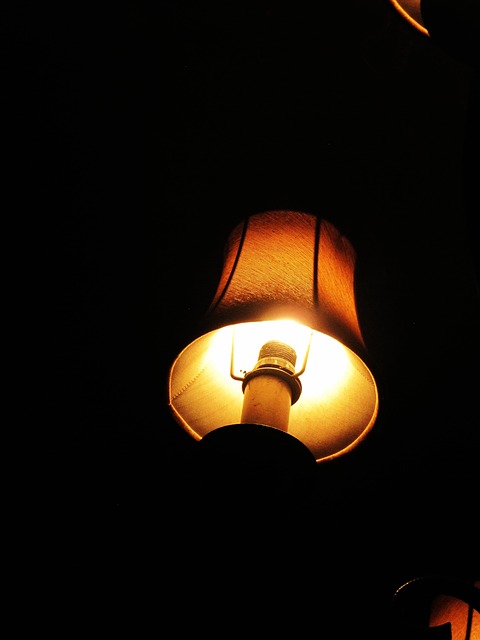
lamp

“I brought it,” my mother says, and with those three innocuous words, a shiver of terror goes down my back. This is the moment I have been dreading since my grandmother showed me the lamp and told me it would one day be mine.

“I don’t want it,” I say. “How dare you bring that thing here?”

Her eyes are filled with the wearied horror that comes from years of caring for a monster. “Look, I promised my mother I would do this. Throw it away if you want. I don’t care. I’m sorry to do this to you, Sarah. God knows I’m sorry, but now I’m done. I’ve fulfilled my promised. I brought the papers too.”

With that, she stands up and walks to the front door. “I don’t want it!” I shout after her. I know it is useless; the front door clicks shut.

I go to the door in time to see her drive away. The lamp is sitting next to the door, covered loosely by a canvas bag. I am tempted to leave it there, but of course that is impossible. What if Evelyn, my daughter, sees it? What if the wind blows the bag off and the neighbors see the monstrosity that is underneath?

It takes all my willpower to knowingly bring that thing into my house; to actually put my hand under the glass globe and lift it, holding that terror so close to my body. A folio bound with a string is next to it, and after I bring the lamp inside, I get the papers and bring them into the kitchen.

They smell old, with a mustiness that reminds me of sickness. I make some coffee and then open the folio. My mother has told me about these papers, which my grandmother collected as a history of the lamp and an ongoing record of it. She loved it, my mother said, although I cannot understand why.

The papers on top are a bundle of yellowed, type-written transcriptions of an interview between my grandmother Ursula and her mother, my great-grandmother Celeste.

Ursula:  Tell me about my father, Jasper.

Celeste: Jasper, he was quite the dashing young man. He was dark-skinned, and my parents didn’t approve of him, but he was a romantic. Always talking about places he’d been all over the world. He said he’d take me with him sometime, but I didn’t want to go. Getting malaria in some sweaty, God-forsaken jungle, no thank you.

Ursula:  And when did he give you the lamp?

Celeste: The lamp. He sent it to me, if you can believe it. I don’t how it didn’t break, but he packed it tight into a crate with straw and paper and bits of rag. It was an oil lamp back then, not the electric lamp you’ve made it now.

Ursula: Can you describe the lamp?

Celeste: Describe it? You know damn well what it looks like! Fine though, I guess it has changed over the years. When I first opened the package, it was a brass oil lamp, with a glass chimney and underneath, a large glass globe. Inside the globe, there was a single eyeball floating, about as big as a cow’s eye. Gave me one hell of a fright. I found the note he sent with it. ‘I need you to look after this for me. Promise you will, it’s important. I’ll be back for it soon, but for now, keep the lamp burning. Keep it warm!’ That’s all he said, no ‘I love you’ or anything.

Ursula: And that was the last you heard of him?

Celeste: That was it. He was heading for Indochina when I said goodbye to him for the last time, but that note and the lamp was the last I got from him. Five months later, you were born. I did as he asked though, taking care of you and the lamp, keeping it lit, although I covered up the bottom most of the time. I couldn’t abide that big, staring eye just looking, always looking. I kept expecting it to fall apart, just decay, but as you know, it didn’t.

Ursula: When did you first notice it growing?

Celeste: you were about three at the time. You were toddling around and you grabbed at the skirting around the lamp and yanked it off. You screamed when you saw the eye first, but then you couldn’t keep away from it. You named it George, I remember. It was then I noticed it was growing, that there was more flesh behind it and another eye growing next to it, though at that time, it was dull and undeveloped.

Ursula: What do you think about the lamp?

Celeste: [sighs] I didn’t like it and I still don’t. It still gives me the creeps and if you didn’t have such a connection to it, I would order you to destroy it when I die. But Jasper’s last letter to me made me promise to take care of it and I did it for him. You can do what you like with it. For years, I kept imagining he’d come back and take it off my hands. I don’t suppose he will now though.

The transcript ends there. I heard hints of this from my grandmother, but not everything. The next thing in the folio is a battered,spiral-bound notebook. On the cover, it says, “The Book of the Lamp, by Ursula McIntyre-Willis”. I didn’t know about this.

June 5, 1958: I’ve decided to call the thing Jasper instead of George. Not that it’s Father, but I never met him and this is all I have from him. Sometimes when I look into the lamp, I can imagine those eyes speaking to me as they look unblinkingly into mine. I can almost understand, but not quite. It’s frustrating. Both eyes are full size now and a body is growing behind them.

I flip through a few pages. My grandmother Ursula has made detailed notes about its development and her feelings about it.

August 19, 1961: The body is taking on a definite shape now and I can see a head forming around the eyes. Last night I had the insane thought to open the globe, even though I knew it might endanger Jasper. I pried off the lamp part, but the globe is totally sealed, as if it was made whole. I don’t know how they did it. I will replace the lamp with an electric one, I think.

July 29, 1964: My husband Randy tried to smash the globe with a baseball bat. He’s always hated Jasper,  but the bat didn’t even make a scratch. He knows not to try to touch Jasper again though. I made sure of that.

February 3, 1968: The kids never want to go near Jasper. I don’t care about Brody, but if Rose is going to take care of him after me, she needs to love Jasper as much as I do. An hour a week in the closet together should help their relationship. If she looks into Jasper’s eyes, he’ll speak to her.

March 28, 1970: I got the good idea to record my mother’s recollections of the lamp. She never loved him as much I did. I’m glad she let me take care of him.

July 2, 1973: The area over his eyes has been thickening for almost a year now. At first, I thought they were fading, but now I see it is the eyelids growing. Last night, I saw my dear Jasper’s eyes for the last time. Now they are shut and he is sleeping.

November 6, 2003: I am going into a nursing home tomorrow and I can’t keep Jasper anymore. My heart is breaking, but now it’s Rose’s turn.

At the top of the next page, my grandmother has written my mother’s name: Rose Willis-Hunter. But the pages afterwards are blank. At the back of the notebook, I find a letter from my mother to me. It has been crumpled up, but then smoothed out again. It is dated June 20, 2007, the day after my grandmother’s funeral.

Dear Sarah,

I feel like I’ve been living in a nightmare most of my life and the last thing I want to do is pass it on you. You were there for the reading of the will, but there was a secret clause about it. She left it to me along with her papers and a book of things that the thing inside has supposedly told her. She wants me to pass it on to you when I get old.

My darling Sarah, forgive me. I will keep it away from you as long as I can, but you have no idea what it was like living with her. She broke me, slowly but steadily. I hate that thing, but I can’t destroy it and I can’t abandon it. I dream about my mother even now and about that thing she loved. The hours she locked me in the closet with it before its eyes closed changed me somehow. I hate it and I hate myself for being so weak.

Your mother,

Rose

At the bottom, in red pen, my mother has scribbled, I threw this letter away, but decided to show it to you anyway. It was a moment of truth I don’t think I can bring myself to repeat. I burned the book of things it told her. I made the mistake of reading it and I may be weak, but I couldn’t let that survive. I left the notes she made of its history, so you’ll know the truth and be warned.

I close the folio and go out into the hallway, where the lamp is sitting. With a deep breath, I pull off the canvas bag.

The monster, Grandma Ursula’s Jasper, lays curled up inside. It is more developed than the first time I saw it, that time when Grandma brought me up to her secret library when my mother was away. This is Jasper, she said, as if introducing me to a friend. One day, he will be yours to take care of. Now, I can see a whip-like tail curled around the bottom, curved spines along its back and its hundreds of little legs curled up, each ending in a single claw. Its closed left eye is pressed against the glass now. I have a sudden image of it opening and I throw the bag back over the lamp. Somehow, I get the lamp down to the basement and bury it behind boxes.

I go out to do errands and come back that afternoon to find, with horror, my 8-year-old daughter Evelyn reading the papers about the lamp I have thoughtlessly left out on the table.

“What’s this?” she asks.

“Nothing,” I say, grabbing them.

“Do we have this lamp?” When I don’t reply, she continues, “Where is it? I want to see it.”

It’s like I don’t have a choice. With mute horror, I lead her downstairs and move aside the boxes, aware that I am continuing the chain. Show her now and she will be revolted by it, I think, to comfort myself.
“So this is Jasper. Wow, he’s so cool,” she says, gazing into the globe.

“It’s just a thing and it’s not cool.”

“But great-grandma Ursula called him Jasper,” she says. “He’s almost done, right?”

“Done?” I ask with alarm. “What do you mean?”

“Well, from the notes on the table, he’s been growing for years. So when he’s finished growing, he’ll wake up, right?”

“What makes you say that?”

“I don’t know. I guess I just assumed.”

“Look, Evelyn. Don’t come down here, okay? This thing is evil. I’m going to get rid of it, okay?”

“But I want to be there when his eyes open,” she says and my mind revolts at the smile on her face. Not for this! I want to shout. Not for you, Jasper. You can’t have her.

I lay awake in bed that night, thinking. I am all by myself since my husband left two years ago and I need to do something to stop this. I need to destroy the lamp, carry it to a dump, drop it into the ocean, anything to get it away. I fantasize about doing it, day after day, while I keep the basement door locked and an eye on my daughter. But I feel that time is running out. It’s almost done,” Evelyn said, and I feel it too. So I keep on, think about destroying it and do nothing and hate myself for doing nothing, around and around, in a maddening spiral.

But I have to do something. I have to. Before the eyes open.

lamp 2


The Poisoner’s Future

This is the final chapter of the Poison series, about Caliph, an immortal being who regularly poisons himself so that he will die and have a few hours of rest. During one of these, he has a vision of the future, where he sees a girl dead on the floor of an orphanage. With the help of his (also immortal) friend Terc, he finds the orphanage and finds that the girl is his daughter, the baby of a human lover he had centuries before. The girl, Theresa, ages very slowly and may also be immortal. As well, he soon finds out that Ram, another immortal who had a vision of a woman destroying him, thinks that that woman is Theresa and is trying to kill her first. Caliph stops him.

The previous chapters are The Poison Shop, The Poisoned Child, The Poisoner, and The Poisoned Mind. This one is slightly longer than the others, but I hope you enjoy it.

We live in our own, isolated world, those of us who cannot die, blending into the background of normal life like shadows that fade but never disappear. We use money and knowledge to achieve this. Doubtless, if we wanted, we could become the ruling class of the earth, but there is a crippling flaw in us: a fatal lack of ambition, of engagement, of charm. I can persuade, but I cannot lead.

Over the centuries and millennia, we have developed our own code of existence. Anything is permissible, except that which threatens the others. And now Ram is a threat.

I call Terc and tell her that I have Ram, temporarily dead by poison. We need to contain him. She says she will make some calls. Thirty minutes later, Kirk shows up. He is the closest we have to a leader, except that he refuses to lead too.

“He is determined to kill my daughter,” I say, when he asks the problem.

“Daughter?” Kirk says, his deep voice rumbling with suspicion. I explain and he nods, still not entirely happy. “Ram and his obsession. I will put him into confinement, until we figure things out.” He picks up Ram’s body with one arm and carries him out to his car.

Ram is locked in a basement vault and for the moment, I feel safe. Still, I remember the vision I had of my daughter Theresa, lying dead on the floor of the orphanage, the calendar on the wall reading December, 2045. It is now November and so I stay with her in the hotel until after New Year’s. Only then, with the month in my fateful vision passed and Ram in confinement, do I feel safe enough to let her go back to the orphanage.

I do not want to, but I have nowhere else for her to go. I do not have a home myself, and a hotel room is not a good place for her. I consider buying a house, because of Theresa, but the thought of being tied to one spot almost makes me panicky. I am not like Terc, who lives ensconced in her fortress of books. So I let Theresa go back to the orphanage, but I visit her every day, spending time with her and bringing her gifts.

This goes on until August 14, 2046, the date of the Great Earthquake, the disaster that catches everyone off guard. A city like LA, San Francisco or Tokyo might expect something like this, but not us—not here.

I am dead in the Poison Shop when it happens—a fitting punishment for my self-destructive habits. When I revive, I find that the roof has collapsed but the others have found a way out. I call Terc, then the orphanage: no phone service.

Terc’s library is closer, so I go there first, running harder than I have in a thousand years. Miraculously, her building is the only one standing in the neighborhood. Seeing that, I do not even go in, but run straight to the orphanage through fire, destruction and death that makes the city look like a war zone.

St. Benedict of Nursia’s Home for Orphaned Children is still standing, although the walls are veined with cracks and one wing has collapsed. I run through the front door and stop as reality seems to melt away.

Theresa is lying on the floor, dead. Her lips are grey and her eyes bulging, obviously poisoned. Mother Cecilia is standing over her, crying loudly, while children peer through the posts of the banister. It is exactly like my dream. I look up to the wall. Although it is August, 2046, the calendar says December 2045. Did I ever wake up? Am I still trapped in my vision?

“What happened? Where is he?” I ask. I have no doubt who did this.

“He broke in through the door and stabbed her with a needle as we were bringing the children to the chapel,” Mother Cecilia says.

“The calendar! Why is the calendar from last year?” I demand, almost shaking her. She looks at me as if I am mad.

“The children found it in storage and put it up as a joke yesterday,” she says. “It is not important. What about poor Theresa—?”

I am gone already, running hard. I know the signs of a very powerful poison; Ram would not have used anything less. Either Theresa is dead for good or she has received enough of the immortal curse from me and will revive in time. Either way, there is nothing I can do for her now. Now, I must find Ram.

I run to Kirk’s mansion first to find what I already suspected: the earthquake has split the house in two, opening up the vault where Ram was imprisoned. Kirk is nowhere to be seen, and so, I turn and prepare myself for the long search ahead of me. I will search for Ram and I will kill him: kill him and unbody him for good.

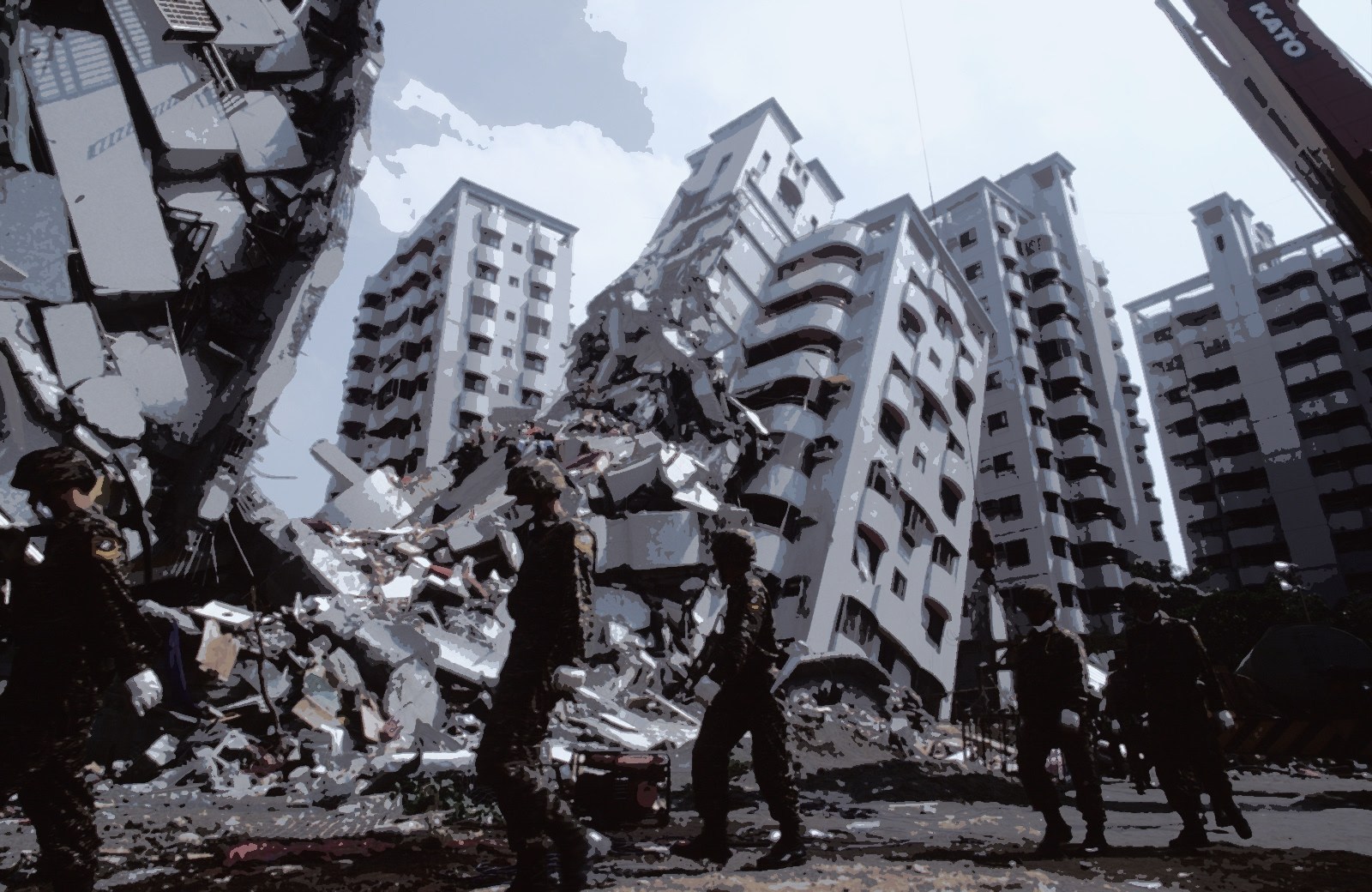
earthquake

The search is surprisingly short. An hour later, I find him strolling unconcernedly through the ruin and chaos of the city’s downtown. When he sees me, he gives a small smile. “It is over.”

“She is my daughter,” I say. “She may have recovered already from the poison.” The answer will not change what I intend to do: I merely want to know what he will say.

“It does not matter,” he says, flipping a hand in a careless manner. “What I gave her is triple the strength of Talon-4. She will be dead so long that decomposition will set in before she can revive. She is no longer a threat to me.”

“I will unbody you for this,” I say. He shrugs carelessly, mockingly and the smile is still on his face when I kick him full in the chest.

Neither of us has Kirk’s immense strength but we are equally matched and the fight goes on for some time as we wrestle and exchange blows in a long, protracted stalemate. Then we approach a chasm in the pavement. Below, a gas line has caught fire and smoke and fumes are boiling out. It looks like the mouth of Hell. I kick Ram towards it and when he glances back, I see the sudden terror in his eyes.

“But it was her, not you,” he says. He is trapped and he knows it. “It was her!” he screams, almost in disbelief. He kicks out at me, but I avoid it and with a punch, send him tumbling into the fire below.

An hour later, I arrive at Terc’s library, carrying Theresa’s body in my arms. She lets us in without a word.

“I unbodied Ram,” I say. I am numb now, but later, I know the deed will haunt me.

“I know.”

Terc is smarter than anyone I know, and this is a phrase that is often on her lips, but this time, it startles me badly.

“You know? How?”

“I saw it in a vision, 36 years ago. I saw you punch Ram and send him into a fiery pit.”

“But how? You don’t take poison, do you?”

She shakes her head. “No, but sometimes when I read for more than a week straight, I go into trances. Sometimes I see visions of the future.”

“But you don’t act on them?”

“Based on the vision, I concluded that there would be an earthquake or some other natural disaster, so I had this building strengthened to withstand it.”

“Why didn’t you tell me?”

“Look what it did to Ram,” she says, “when he knew his future. He went crazy trying to prevent it. In the end, the knowledge is what killed him.”

“But he was wrong,” I say. “In his vision, Theresa killed him, but in reality, it was me.”

“If he had not killed her, thinking to prevent his death, you never would have unbodied him,” she said, as if this is the most reasonable thing in the world. “So it was her—because of her—that he was unbodied.”

I look down at Theresa’s body, lying on the couch. “Do you think she will revive?” Terc doesn’t say anything and then a thought hits me. “Do you know if she will revive? Have you seen it?”

She waits a moment before speaking. “Yes, I know if she will live or not. But let me ask you: do you want her to revive?”

It’s a hard question. If she doesn’t revive, she will be dead and gone, my only child. But if she does, she will share our curse and live forever without hope of release. “I don’t know,” I say finally. “You won’t tell me?”

“No. Just wait.”

Terc is the best friend I have. The best, more infuriating, logical person I know. I sit by the couch and take Theresa’s cold hand in mine. Terc brings me a cup of tea and sits down by me. And together, we wait.

THE END

I don’t usually do this, but if you made it this far, I’m curious what you thought of the ending. I know some people hate stories that leave the reader hanging. Personally, I like them and it seemed to fit this story. However, if you give me enough hate and abuse, I can write an alternate ending.


The Poisoned Mind

This is a continuing story. The previous chapters are The Poison Shop, The Poisoned Child and The Poisoner.

For those of us who cannot die, there is no greater horror than the thought of being unbodied. Our bodies do not age and they will not die naturally, but they are not indestructible. When we first arrived in this world, perhaps even before humans began counting years, we soon discovered that time had became our prison.

There was a woman then named Nelin who could not bear the idea of this eternal confinement. After several years here, she walked into the fire one day and we looked into her eyes, and she back at us, as her body was consumed. But still, she did not die. We heard her anguished cried for years afterwards with that sense that we later discovered humans did not share. Some had the talent to speak with her and learn the ultimate horror of her new state: undying but rendered impotent by being robbed of her body. Now we know that, no matter how much we tire of this earthly form, it is better than the alternative.

And that is why the man named Ram is trying to kill my daughter, Theresa. Because of that and a rabbit hole.

“What is a rabbit hole?” Theresa asks me. I am sitting with her in Terc’s library, trying to explain why Ram—the man she knows as Mr. Rudolph—may be trying to kill her.

“Your mother was human, so you can sleep,” I say, “but Terc and Ram and I and those like us, cannot. Sometimes we drink poison to die for a few moments, and if we go deep enough, we sometimes see flashes of the future. We call them rabbit holes, because if you pursue them, you can go and go until you do not know what is what. The man known as Ram had a vision that a woman would kill him, or at least unbody him. He has been trying to find that woman for almost a century.”

“But I am only a girl,” she says and for a moment, even her eyes look it. “And why would I want to kill him, or unbody him, as you say?”

“I do not know, but I know that he thinks of nothing else except this idea. If he has been visiting you, then he must think you are involved.”

“What now?”

“Sanctuary.”

Terc is my dear friend, but she will not suffer my daughter by another woman to stay in her library, her sanctum, so we go to a hotel and Theresa whiles away the hours and days immersed in the plastic world of TV. I begin to itch for the poison shop, but I do not dare leave her alone for long. Finally, I slip out while she is sleeping. I just need to die for a few hours.

bar - dark

“Nightclaw,” I say, ordering the poison and getting it and a syringe. I sit at a table and am about to inject myself, when a figure slips in next to me. It is Ram.

A pain runs through me as if I have already injected the poison. He looks the same as the last time I saw him, 83 years before, but his eyes are those of a hunting beast now. They bear down on me and I ready the needle to stab, if necessary.

“Nightclaw,” he says, with a small sneer of disdain. “I’m surprised you still trifle with the weak stuff.”

“I tried Talon-4 last time,” I said. His expression changes to reluctant respect.

“It seems your body survived the experience. No rigor mortis or decomposition?”

“I saw something. A rabbit hole.” The muscles in his face spasm and clench. The banter drains away, leaving gaunt hatred.

“Where is she?” he says, almost spitting. “I do not know how you found her, but the nuns at the orphanage described you as the one who took her.”

“How is it you found her?” I ask. “She is my daughter, I know now. She will not hurt you, I swear. Why do you pursue her?”

He reaches over and grasps the syringe and for a moment, I think he will stab me. But instead, he squirts a little poison on his finger and licks it with a spasmodic shudder.

“I saw her in my vision,” he says. “It was her who pushed me into the blazing inferno. Her face was the last thing I saw before my body was consumed.” He reaches for the syringe again, but I pull it away.

“Stop this madness,” I say. “You know what Rami says, that following a rabbit hole could lead to it coming true, when ignoring it may stop it.”

“Could! May!” He spits out the words. “That is easy to say when I am tormented every moment but that vision of her face. I will never have peace until she is dead.”

“She may not be able to die at all,” I say. “She is half like us and already over two centuries old. Would you unbody an innocent soul for your own peace of mind?”

The answer is shouting from his eyes and in a moment of clarity, I act. I stab the syringe of fatal fluid into his neck, plunging it deep. He claws at it, but by the time it is out, it is already working on his system. In less than a minute, he collapses, dead.

I have several hours before he revives. I cannot unbody him; that is too cruel, but I must contain him. Terc would know how. I will ask her.

(to be continued)


The Poisoner

This is a continuing story but I have tried to write it as a stand-alone as well. The previous chapters are The Poison Shop and The Poisoned Child.

There are less than fifty of us who cursed with the inability to die. Less than fifty who came from that other place, so long ago that it seems like a dream. Some, like the Poison Shop keeper, I hold a casual acquaintance with. Most I never see. Only Terc is my friend and she wears her books like armor.

iron fenceI am standing in the yard of St. Benedict of Nursia’s Home for Orphaned Children. The children are playing but I am watching only one. It is Theresa that I saw in my death vision, the poison-induced state that is the closest I have to sleep. She is also my daughter, I now know.

Mother Cecilia is leading her towards me, as I have requested. The girl’s eyes are deep and solemn and hint at her long life as her body does not.

“Do you like it here?” I ask Theresa, after we have been introduced and are alone. Mother Cecilia has agreed to this request of mine, but still, she watches us intently from across the court.

Theresa does not answer, simply looks into my eyes as if trying to unlock their secrets. “Are your teachers good to you?” Still no answer. “Do you have any friends?”

“Sometimes,” she says at last. “But always they leave and I stay. When prospective parents come with interest in adoption, the sisters hide me away.” She speaks slowly and with diction that shows she is no pre-adolescent. “If I ask why, they say that this is my home. ‘Many sisters and brothers and even a Mother’ they say.”

“But no father,” I say. “I came today only for you. Would you like to come home, to be my daughter?”

Her face flickers between apprehension and wild, unforeseen hope, like a candle flame caught between opposing breezes. “But I don’t know who you are,” she says at last.

“I am your real father,” I say. My fanciful, believable lies are not crafted for family, and quickly I tell her as much of the truth as time allows. I tell about how I met her mother Harriet Velmann almost 250 years before, in a fit of wild, despairing abandon. I tell about myself and Terc and the others of our cursed race who came from afar and found ourselves trapped by time and immortality. “Now you know me far better than most,” I say finally. “Will you come with me, or do you wish to stay?”

In answer, she reaches out and takes my hand.

Adoption, it turns out, is a complex process that requires almost as much time and money as it does patience. Time and money I have without measure, but patience, very little. So I speak long and earnestly with Mother Cecilia and at the end, Theresa and I walk out the gates together.

“How did you convince her to let me go?” Theresa asks as we walk to my car.

“It is a gift, I suppose.”

“Mr. Rudolph does similar things, when he comes to visit me.”

“Who is he?”

“He comes to talk and bring me things. He is a strange, dark man who talks of pain and death a lot. But I cannot complain: until you came, he was my only visitor.”

I try not to show the alarm that I feel at her words, especially when I think back to my vision of her lying dead and poisoned on the floor of the orphanage. I wonder now if Theresa, being half-human, could be killed by normal means.

“Describe Mr. Rudolph to me,” I say. She does, in great detail, and before she is finished, I know for certain who she is speaking of. I hide my fear and drive straight to Terc’s library.

Piled books

“This is my daughter, Theresa,” I tell Terc when we are standing in her presence. “It was her that I saw in my vision.”

“I see,” Terc says. “Welcome.” She smiles but I know her well enough to see the deep disdain lurking behind her false-warm smile. “Do you like to read?” she asks Theresa. The other nods. “Come side down and read a while.” She leads Theresa off to a corner and finds her some books to lose herself in.

“And when were you busy making her?” Terc asks when she returns. Her intonation is tinged with acid.

“Centuries ago,” I say. “I was close to madness after you— we— I found a human woman for a while.”

“I see.” No mollification.

“Terc, there is something more pressing. Theresa mentioned a man visiting her, calling himself Mr. Rudolph. It is Ram, I know it, but what his interest is in her, I do not know. I have not seen him in almost a century, ever since he embarked on his obsessive quest regarding his vision.”

“Could it be her?” Terc asks. “The one Ram has been searching for? You said that in your vision, you saw Theresa poisoned and dead. In Ram’s vision, a woman kills him. If he thinks it is Theresa, he may be trying to kill her first.”

How would he know about her, I wonder. But no, it does not matter. “That may be,” I say. “If so, I must find him and stop him.”

“Ram never gives up,” Terc says, “and if he thinks that Theresa is going to destroy his body in the future, leaving him alive and unbodied, then he will never give up searching for her. He will find you.”


(to be continued)


The Poisoned Child

This is the continuation of the story The Poison Shop but I hope it will stand up pretty well on its own as well.

bar - dark

The Poisoned Child

I cannot die.

Blessing or curse, it is who I am now. My life stands like an iron spike driven into the rock, while countless souls tumble around me like grains of sand driven by the waves. They stay for a moment until the next wave crashes in; they are gone in an instant, but I am always left.

But I am not the only one.

I wake up in the poison shop to find that I have been dead for a little over eight hours. The poison I used was powerful and now my body is stiff and painful. Shop Tender gives me a look of I-told-you-so as I put the syringe on the counter and shuffle away.

I find Terc in her library, halfway through a stack of Chinese literature books. Each of us spends our sleepless, deathless existence in a different way. I poison myself to find the last shreds of that other world of dreams; Terc studies. She looks up at me with eyes that have been tired for centuries.

“I was at the poison shop,” I say. She waits for the news. “I glimpsed the future. Really,” I add, at the doubting twist of her mouth. “I saw the calendar.”

She slips me a patient smile, then turns back to her page of dense Chinese script. “You can’t trust your perceptions in that state. It’s dangerous to go down that rabbit hole of either trying to prevent the future or confirm it. Remember Ram.”

“I know,” I say. “I’m not going to go like Ram. But still . . . I saw a girl lying in the hall of an orphanage. She was poisoned. It seemed significant.”

“But you don’t know the name or any specific information,” she says, with assurance. I shake my head. “It was a dream, Shah. Nothing more.”

“I know. Still . . . how many orphanages in this city have iron gates in front of them?”

She gives a noise of annoyance but then closes her eyes. I see her eyes moving back and forth under her papery lids as she counts. “Only two that I know of,” she says. “Draw out what you saw and I can tell you which one it is. They are different styles.”

I smile but she just shakes her head, telling me it won’t be worth it. For a split second, the image of hot-blooded, passionate Terc invades my mind: Terc as she was before the fatigue of interminable time bore her down. The memories and their intertwined sensations blaze for a moment in my mind, but as always I push them down. I make myself forget.

iron fence

St. Benedict of Nursia’s Home for Orphaned Children. It is the next day and I am standing outside the very gates that I saw in my death-vision. The sight fills my mind with an insane elation. In my vision, I had walked through the gates, but here in real life, I ring the bell and it clangs unpleasantly. A moment later, a matron appears at the door. She is the woman I saw in my vision, standing over the child and screaming. She comes to the gate but doesn’t open it.

“Yes?”

“I am looking for a child, a girl.”

“What’s her name?”

“I don’t know, but I would know her face if I saw it. Can I come in and look at the children, or even at pictures?”

Her face is a wall, refusal so evident that she does not even need to voice the words.

“Please,” I say, holding her eye and silently beseeching her to come around to my way of thinking. “She is someone important to me. I just need a few minutes.”

“I’ll let you look at pictures,” she says after a moment, opening the gate. “Come this way.” I can be very persuasive if I want to be.

Mother Cecilia—for this is how she introduces herself—leads me to her office and around behind her mahogany desk, an island of luxury in the ascetically bare surroundings. Soon, pictures of thin, unsmiling children are flitting across the computer screen. After a hundred or more—Terc would have known exactly—they end.

“She’s not there,” I say. “Are these all the children in the orphanage?”

Her clumsy attempts to mask her expression tell me everything. “Please show me the others,” I say.

“There is only one other,” she says finally and opens up another folder. A moment later, the picture of the poisoned girl appears on the screen and I nod in confirmation. “What do you know of Theresa?” she asks.

“I know she is possibly in trouble,” I say. “How old is she?”

“She’s ten,” Mother Cecilia says. Why must people lie, especially when they are terrible at it?

I take a chance. “She is not ten,” I say. “She is much older than that, isn’t she?”

Her face flushes. “Who are you really?”

Later, I cannot remember exactly what I say. My lies are not memorable, but they are wonderfully effective in the moment. I play on the fact that Theresa is in danger and that I am—somehow—her only hope. “You must help me,” I say in closing, emphasizing the must. “How old is she really?”

I lie much better than Mother Cecilia. She nods. “I do not know how old she is, but they say she came here in 1840, just after the orphanage opened. At that time, the records say she looked about seven or so. If she ages, it is extremely slowly. We view her as a miracle. People come to pray over her. Some claim she can prolong the lives of others as well.”

So, she is one of us, I think. And a child, no less. I had not known there were any children. My vision was indeed significant. At my request, Mother Cecilia fetches all the records on Theresa.

“It says that her mother’s name was Harriet Velmann,” Mother Cecilia says. Then, “Sir, are you okay?”

“I apologize, I suddenly got dizzy. That never happens to me.” None of it is a lie, nor is the reason for my sudden reaction, a truth that is more unbelievable than any lie I could have told her. I knew Harriet Velmann once, when her tiny grain of sand was whirling momentarily through time past me. Oh, how I knew her, in that desperate, hopeless way when we fight against the inevitable.

And now I know why my vision is significant, because poor, orphaned, soon-to-die Theresa is my daughter.


(to be continued soon)


The Elephant's Trunk

🐘 Nancy is a storyteller, music blogger, humorist, poet, curveballer, noir dreamer 🐘

Thru Violet's Lentz

My view, tho' somewhat askew...

The New, Unofficial, On-line Writer's Guild

Aooga, Aooga - here there be prompts, so dive right in

Just Joyfulness

Celebrating joy

Tao Talk

You have reached a quiet bamboo grove, where you will find an eclectic mix of nature, music, writing, and other creative arts. Tao-Talk is curated by a philosophical daoist who has thrown the net away.

H J Musk

On reading, writing and everything in between ...

Clare Graith

Author, Near Future Sci-Fi

Dirty Sci-Fi Buddha

Musings and books from a grunty overthinker

Rolling Boxcars

Where Gaming Comes at you like a Freight Train

Lady Jabberwocky

Write with Heart

Fatima Fakier

Wayward Thoughts of a Relentless Morning Person

Life in Japan and Beyond

stories and insights from Japan

The Green-Walled Treehouse

Explore . Imagine . Create

One Minute Office Magic

Learning new Microsoft Office tricks in "just a minute"

lightsleeperbutheavydreamer

Just grin and bear it awhile

Linda's Bible Study

Come study God's Word with me!

Haden Clark

Philosophy. Theology. Everything else.

Citizen Tom

Welcome to Conservative commentary and Christian prayers from Mount Vernon, Ohio.

The Green-Walled Chapel

Writings on Faith, Religion and Philosophy

To Be A Magician

Creative writing and short stories

My music canvas

you + me + music

Eve In Korea

My Adventures As An ESL Teacher In South Korea

Luna's Writing Journal

A Place for my Fiction

Upper Iowa University

Center for International Education

Here's To Being Human

Living life as a human

jenacidebybibliophile

Book Reviewer and Blogger

yuxianadventure

kitten loves the world

Strolling South America

10 countries, 675 days, 38,540km

It's All in Finding the Right Words

The Eternal Search to Find One's Self: Flash Fiction and Beyond

Reflections Of Life's Journey

Lessons, Joys, Blessings, Friendships, Heartaches, Hardships , Special Moments

Ryan Lanz

Fantasy Author

Chris Green Stories

Original Short Fiction

Finding Myself Through Writing

Writing Habits of Elle Knowles - Author

BEAUTIFUL WORDS

Inspiring mental health through creative arts and friendly interactions. (Award free blog)

TALES FROM THE MOTHERLAND

Straight up with a twist– Because life is too short to be subtle!

Unmapped Country within Us

Emily Livingstone, Author

Silkpurseproductions's Blog

The art of making a silk purse out of a sow's ear.