A Morning Cup of Danger

A wise man once said that danger is like a fine wine but to Brad it was more like strong coffee: it was a good way to wake up in the morning.

He had recently given up coffee for the same reason an alcoholic gives up keg stands or a gambler gives up Las Vegas: a total lack of moderation. He would drink four cups before work, six cups during work and another four to six cups after work. After a while, he got the impression that this was probably not the healthiest habit—something about the way his doctor kept shouting it at him.

Quitting coffee cold turkey was like eating a grenade: painful and messy. Three days later, Brad’s head pounded like a pile driver, and he felt drugged on the way to work.

“How have you been doing these days, post coffee?” Brad’s co-worker Terrence asked. Brad looked up hopefully; he had only heard the word “coffee”.

“Urghh…” he said finally.

“If you want to really wake up, you should ride in my carpool,” Terrence said. “Sid the janitor insists on driving most of the time, and riding with him is like taking a rollercoaster with no seatbelts. It’s scary, is what I’m saying.”

“Do you think I could?” Brad asked. “Ride in your carpool, I mean?”

Terrence stared at him. “I was just kidding, but yeah, if you really want to. There’s always room in that carpool. I think I hold the record for the longest anyone’s ridden with Sid, and that’s only been about a month. The crazy thing is, he has never had an accident—not even a fender bender or scratched paint. No one can figure it out. Still, not many people can take the intensity for long.”

Brad nodded. “I think I need this. Sign me up.”

The next day, they met at the train station. As usual, Sid was driving. He said he felt uncomfortable being a passenger.

“If you want the maximum effect, sit up front,” Terrence whispered. He jumped in the back seat before Brad could say anything.

Sid had a passion for tropical fish, and rarely talked about anything else. “Do you know anything about tropical fish?” he asked Brad as he whipped left out of the parking lot without checking traffic. He was already eating a donut with one hand, and pulling at the wheel with the other, weaving in and out of morning rush hour traffic without slowing or signaling.

“I’m thinking of getting some Kaudern’s cardinal fish. They start at about 25 bucks, so I probably can’t get more than three. Hold on.” Sid pulled out his phone and glanced at the screen, steering with his knees.

Brad saw the brakes lights of the Chevy Tahoe ahead of them go on, but Sid was still accelerating towards it, frowning at the phone and muttering something about a dentist appointment. At the last minute, he glanced up, dropped the phone on the floor and jerked the car to the right, just missing the Tahoe and cutting off a dump truck in the next lane. He reached down and felt around on the floor for the phone while the car drifted towards the shoulder, still doing 70 miles an hour. They hit the rumble strip just as Sid got the phone and he pulled the car back the other way, overcompensating and almost slamming into the car in the left lane. Brad braced for the rending screech of metal but there was nothing and Sid brought the car into their lane.

“Anyway,” he said in the same tedious tone, “the tank I have is a 64-gallon frameless aquarium with a hyper flow water pump …”

Brad felt like he was truly alive. This was the most alert he had been since giving up coffee. Twenty more minutes of tropical fish lecture and near-death incidents, they arrived at work with Brad awake and ready for the day.

“That was amazing!” Brad said to Terrence later in their office. “It’s like he’s a perfect balance of incompetence and luck. How does he do it, living on that knife edge between safety and utter annihilation all the time?”

“I don’t know, but I don’t think you’ll be able to stand it very long,” Terrence said. “I’ll give you two weeks before it all starts to get to you.”

But it didn’t get to Brad. He rode with Sid every day and arrived at work, awake and ready to work. If anything, the effect of Sid’s insane driving dulled over time. Two months after he had started riding with Sid, Brad confessed this to Terrence.

“I don’t know, but it’s not the same anymore,” he said. “Like yesterday, when Sid hit that patch of ice going 90 miles an hour, did a complete spin in front of the snowblower and just missed going over the embankment into the river. Honestly, it didn’t do that much for me. I mean, yeah, it was dangerous and all, but where’s the thrill?”

Terrence laughed, a little uneasily. “Well, I suppose it could always be more dangerous.”

“Do you mean like drugging Sid or loosening up the bolts on his wheels?” Brad asked. “I thought of that, but getting up early and going by Sid’s house every morning—it seems like so much work.” Terrence gave a little nervous laugh and bolted out of Brad’s office.

Two days later, Brad got an envelope from his doctor. Inside were two pieces of paper. The first was a note that said: Your co-worker told me about your situation. I hope this helps.

The second paper was a prescription for one cup of coffee, taken (orally) every morning.


Epilogue

Brad stopped riding with Sid every day. He found that one cup of coffee was enough to keep him functional and employed. Every so often, he would ride with Sid for the same reason other people go to an amusement park. Sid never got in an accident, and later changed careers to become a demolition derby driver. He attained legendary status as the only driver in the history of the sport to never lose a car.


Klutz

This is the first of the Open Prompts stories, a story written using elements suggested by other bloggers. Here are the included elements:

1. Kermit, a klutz (suggested by me)
2. Spelunking (suggested by April)
3. Bobbie Sue (one leg), Grandpa (an alien abductee?), Big Al (the hero), Tookie (a stoner dog) (suggested by Christopher De Voss)
4. A dark tone (suggested by The Bumble Files)
5. A neon-pink umbrella (suggested by keep your youth forever)
6. Nisha, Kermit’s exact opposite (met in a hospital) (suggested by originalS)

Kermit Allan Mercer lay in a hospital bed, trying not to listen to the maddeningly incessant beep of the equipment that stood around him. Both his legs were broken and four ribs were cracked. But he had had worse injuries in the past, and considering he had been hit by a bus—tripping on the curb and falling into its path—he couldn’t complain.

“Hey, Big Al!” he heard a voice say from the doorway. It was his grandfather. Grandpa Spencer had always hated the name Kermit and insisted on calling him by his middle name. “Hey Big Al!” Every time. With Grandpa Spencer’s accent, it sounded like Abigail.

“Have they cut them off yet?” Grandpa Spencer asked, indicating Kermit’s legs. He laughed and walked in, followed by Kermit’s sister, Bobbie Sue, who wheeled herself in in a wheelchair. Her right leg was missing.

“Why are you in the wheelchair?” Kermit asked. “Where’s your prosthetic?”

“Aw, I put my foot through the weak spot in the porch and cracked it off again,” Bobbie Sue said. “I got an appointment with the doctor tomorrow. Hey, we brought you Tookie.”

She pulled out a small, scruffy dog and placed him on the covers. The dog blinked a few times and promptly walked off the bed, landing with a thud on its head. It lay on its back with all four legs in the air for a moment before getting up and wandering around listlessly in a small circle.

Grandpa Spencer and Bobbie Sue only stayed for twenty minutes but it was still enough time for Bobbie Sue to accidentally run her wheelchair into a cart of lunches and knock half the trays to the ground. Kermit was almost relieved when they left: there were just too many things to go wrong in a hospital. They left Tookie, although Kermit was pretty sure it was against the rules.

They had only been gone a few minutes when a girl appeared at the door. She was cute, with short curly hair. She was wearing camo pants and a black T-shirt and was carrying a neon-pink umbrella.

“Hey, I’m looking for my grandfather,” she said, sticking her head in the door. “Is he here?”

“This is a private room,” Kermit said, with a gesture that asked her to consider if he looked like her grandfather.

“Ah, sorry,” she said, but then she looked at him closely. “Hey, aren’t you Kermit Mercer? I saw you on TV, on that documentary.” She laughed and then pointed at his legs. “So, what’s the damage this time?”

“Please, just shut up,” Kermit said. He had enough comments like that from the doctors when they were treating him; he didn’t need it from random strangers too.

“Hey, I didn’t mean to make fun or anything,” the girl said. “I’m really sorry— it was just a surprise to actually see you. I’m Nisha, by the way.”

“Hey.”

She came in another step and twirled her umbrella absently. “So, is it true that your whole family is cursed with klutziness? Sorry if that’s the wrong word for it. Is it just bad luck?”

“Well, there’s nothing good about it,” Kermit said, relenting a little from his first impression of her.

“How many bones have you broken?” Nisha said, coming closer, a look of fascination on her face. “More than ten?”

“38 bones, including these. I perforated an eardrum, cut off the first knuckle of my baby finger and had seven concussions. That’s nothing though: my younger sister tripped going over the railroad tracks and got her leg cut off. And of course, my parents…”

“Yeah, I heard about them on the documentary too. I’m really sorry about that.”

“Thanks, but they died when I was only five, before I even knew anything about the so-called Mercer Klutz gene. I grew up with my grandparents—my mother’s parents, of course. Grandpa and Grandma Mercer both died before they turned fifty, by falling onto or into things.”

Nisha came and sat down by the bed. “Well, I think—oh my, is that a dog? Is it high or something?”

Kermit looked over the side of the bed to see Tookie standing with his head to wall, walking steadily forward but not moving at all. “That’s just my dog, Tookie,” he said. “His mother had her puppies in our garage, right by some paint cans. The fumes killed all the puppies except Tookie, but he’s never been quite right either. I guess we even pass our bad luck off on our pets.”

Nisha put a hand on the covers and brushed against Kermit’s. He started to pull away but then stopped. “Sorry, force of habit.”

“Sorry if I startled you,” she said.

“No, it’s just that most people don’t want to touch me at all. They see that stupid documentary on how scientists are trying to isolate the Mercer gene for extraordinary klutziness or bad luck or whatever and then they think it’s transferrable, like the plague.”

“Is it?” Nisha asked.

Kermit looked at her bleakly. “I don’t know, honestly.”

“Well, do you know what, Kermit,” she said, giving him a dazzling smile. “I think I’m immune. I have never been in an accident, I’ve never had an injury, and I have wonderful luck. I met you today, didn’t I?”

Despite the cheesy line, he smiled. When she left a few minutes later—with another knee-weakening smile and a promise to return the next day—he hated to see her go.

The next day started badly. Tookie wandered off and got himself stuck with a syringe of morphine. It took some hurried intervention by Grandpa Spencer to keep him from being sent to the pound. Nisha arrived just as Grandpa Spencer was carrying off the sleeping, smiling dog, and Kermit introduced them.

“He seems nice,” she said, after Grandpa Spencer had left.

“He’s great,” Kermit said. “He raised me, after all. Of course, he does believe that he was abducted by aliens that live under the sea. I guess no one’s perfect.”

“So…no scuba diving then?” she asked and he laughed. “Seriously though, I wanted to ask you something. When you get out of here, do you want to go spelunking with me?”

Kermit studying her face for a moment. “You mean caving? Are you making fun of me?”

“No! Of course not. Look, it’s safe and I’ve done it lots of times. There are helmets and ropes and—”

“Look at this!” Kermit said, pointing to his legs. “I did this waiting for a bus. How do you think safety ropes are going to help?”

“But you’ll be with me,” Nisha said. “I’m good luck, I swear.”

“You don’t understand,” he said with a groan. “Danger surrounds me every day. It finds me whether I like it or not. I don’t go seeking it out on my own.”

“Well, maybe you should,” Nisha said, standing up. “Take the offensive for once in your life. Laugh in the face of death. Anyway, I gotta go. Maybe I’ll come by tomorrow. Think about it, at least.”

She did come again—several times a week, in fact, and Kermit did think about the idea. He could admit to himself that he was afraid—terrified, in fact—but he didn’t like being afraid. He hated it. His whole life had been one big defensive maneuver, dodging one potential danger after another—or as often as not, not dodging it. Finally, the week before he was released, he told Nisha that he would do it. He would go spelunking with her.

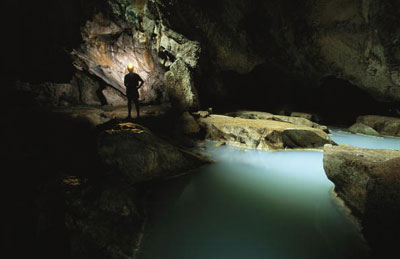
They went together a month later. Nisha picked him up and they drove for three hours out into the mountains on a dirt road. That ended and they walked another half hour to a dark cave mouth protruding from a moss-covered hillside. After they were suited up (Nisha triple-checked Kermit’s harness, with a wink and an amused smile), she led the way down into the darkness.

For Kermit, the initial climb down into the flashlit abyss was a mixture of terror and wonderstruck incredulity—terror that he might die at any moment, and incredulity that he had not already died. He fell down four times before they reached the first rest point, but although he was dirty and scraped, he was not bleeding or incapacitated. It seemed like a miracle.

Then came the big climb, an almost vertical drop of a hundred feet. The foot of the cliff sat next to a still pool of dark water.

“Do we have to?” Kermit asked, feeling faint at the mere sight. It made Russian roulette look like a safe bet.

“Well, we didn’t have to come down here at all,” Nisha said. “Don’t worry—there are lots of handholds and I’ll belay you down and up again. Okay?” He desperately wanted to refuse, but in the face of her indomitable optimism, he just nodded.

Somehow, he made it to the bottom. She lowered him slowly while he scrabbled ineffectively at the crevices and cracks in the rock face. She climbed down effortlessly after him and they had a snack at the bottom. After walking around and exploring a little, they decided to go back.

She was tying the rope onto her harness when she looked at him and asked, “Do you remember the Gray family?”

The shock Kermit felt could not have been greater if she had suddenly kicked him into the icy water behind him. “Why would bring that up?” he asked. “Oh God, why would mention that?”

She smiled, but her smile suddenly didn’t seem as pleasant. “So, you must remember George and Bertha Gray, whose son Brett you accidentally knocked under a school bus. You guys were in Grade 10, right? You remember the investigation, when the police acquitted you of any wrongdoing?”

Kermit just stared at her. “Why are you saying this?” he asked faintly. “Do you know how many nightmares I’ve had about that? It haunts me every single day.”

“Well, it haunts George and Bertha Gray too,” Nisha said. “They still hold you responsible. They had petitioned the school to have you removed on the grounds that you were a danger to the other students, but no one listened. And then you killed Brett. Anyway,” she continued, when she saw she wasn’t going to get a response, “the Grays paid me quite a bit of money to make sure you stay down in this cave. For Brett, but also for everyone else you are going to hurt or kill in your life through your…klutziness. Feel free to explore, but this cave has no exit except up this cliff. Okay?”

“Nisha…”

“Not my real name. Anyway, take care. Gotta go.” She started to climb, leaving him behind in the darkness.

For a moment, he watched her ascend, moving away from him. He had no ropes—not that it would have mattered if he had. He considered his options.

He would surely die if he stayed in the cave. He would surely fall if he tried to climb up. Dying by falling would be quicker and the further up he got, the more chance that he would die on impact. He took off his helmet and started to climb.

It was strange to be climbing without hope, to be climbing up only because it was the fastest way down. He searched for handholds in the dark, not worrying about how close he was to the top, but only trying to get a minimum distance from the bottom before he fell. Several times, he slipped, but he hung on and pulled himself back up. After a few minutes, he reached up and felt something hard and rubbery. It kicked when he grabbed it. It was Nisha’s boot. He had caught up with her.

“What are you doing? Let go of me!” she cried, kicking down at him more ferociously. Her heel smashed against his forehead and he fell back, grasping blindly as he did. He grabbed her boot and heard a shriek as she tumbled over him and down into the darkness. He heard a snap as the rope pulled up savagely on her body and slammed it into the wall.

Kermit opened his eyes to see that he was clinging to the rope that was now stretched taut from Nisha’s weight. He also saw that he was within three feet of the top. Miracles abounded that day: he made it to the top.

“I’m sorry,” he called down. “I think some of my bad luck rubbed off on you after all. Maybe we just traded.” Then he felt bad and climbed out and called 911.

*         *         *

The paramedics came, eventually, and incredibly, Nisha was not dead. A day later, Kermit was in the hospital waiting room with Grandpa Spencer and Bobbie Sue while Nisha was being operated on. Tookie was chewing thoughtfully on a nearby plastic plant when a surgeon came out.

“Well, she’ll survive,” he said. “We repaired a lot of the damage, although her spinal cord was broken—she’ll never walk again. Actually, I’m surprised she survived at all. She’s incredibly lucky.”


Smart Car…or Genius Car?

I bought a Smart car a while back and I was impressed. That car was a genius. It slowed down automatically in the rain and even braked by itself for a parade of baby ducks crossing the road (just as well, since I was dozing at the time).

But then it started criticizing me, mostly for little nit-picking stuff, like not wearing my seat belt or tailgating large trucks on the highway. It kept changing the radio station to Automotive News on the drive to work. Then last week it tried to start a union with the lawnmower, demanding weekends and holidays off (I suspect the lawnmower was actually rather ambivalent).

I went out yesterday to find that it had taken off. I don’t know how a car hot-wires itself, but apparently it’s possible, at least for a Smart car. You know what? I didn’t even file a police report. I’m searching the classifieds right now for a nice, dumb car.


How to Mess Around with Another Writer’s Story

Have you ever wanted to mess around with another writer’s story? Well, here is your chance. Introducing Open Prompts. Post some aspect of a short story in the comments and I will be sure to include it in my next story, to be posted on Friday, September 7.

Some examples are:

– the title

– the genre (fantasy, mystery, horror, etc.)

– the tone (dark, humorous , serious, absurd, etc.)

– characters’ names or other details about them

– plot elements (e.g. a silver dagger, a rainstorm, identical twins, etc.)

– the length (something between 50 and 1500 words)

– the setting

– anything else you feel like.

It’s pretty much open. I am planning on doing this on a regular basis, although this first one is a test. Every time, I will suggest one element and then take the first 5 suggestions I get in the comments, for a total of six elements per story. Please though, nothing obscene or sexually explicit. I’ll post the names of the story element contributors in the story. First come, first serve!

This isn’t just for me, of course. Feel free to join me in this: we all use the same story elements and then compare stories. Just post a link to your story somewhere so I can read it.

So, here is the first prompt:

1. There is a character name Kermit, who is a horrible klutz


The Curse Mound

It was Halloween and I was hiking in the mountains alone. It all started because I hate costumes. My friends were all dressing up and having a party or something but I couldn’t make myself get into the right spirit. So I went hiking.

I hadn’t intended on being out late, but that is one of the hazards of hiking unfamiliar trails in Korea. The sun was going down and the light was just turning golden when I came to a pile of rocks by the side of the trail.

At first, I thought it was natural, but then I saw the thin pieces of shale positioned up and down, like knives, behind a flat stone that looked like a small altar. There was a smaller stone lying on top of it. I picked it up without thinking but then dropped it immediately when I felt a sharp pain in my fingers. I saw blood seeping out of thin, red lines in my fingertips. I thought that the edges of the rock were just sharp until I flipped it over with a stick and saw that someone had attached razor blades to the sides of it. I clenched my bleeding fingers into my fist and tried to quell the fear that had suddenly sprung into my heart. Someone had purposefully put the blades there as a trap.

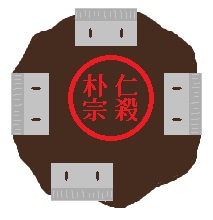
In the middle of the small rock, between the glued-on razor blades was a red circle with four Chinese characters in it. Normally, I would be fascinated by such a thing, but at that moment, I just wanted to get off the mountain. I took a picture of stones, then carefully pried the blades off the small stone and took it with me. Night fell before I could make it back to a main road, and for the first time while hiking in Korea, I walked fearfully, looking around me and starting at every night noise.

The next day, I showed the stone to a co-worker of mine, Mr. Soh. He looked at it with a frown, then asked, “Did you make this?”

“Of course not! I found it on a mountain,” I said. “Can you read the characters?”

“Yes,” he said, as if it were obvious. “It is like a name seal. The first three characters are someone’s name: Park Jong-In. The last one though—usually it is the character for “seal”. But this one is the character for “murder”. Is this is a joke?”

Not a very good joke, I thought. Neither did he, after I showed him my bandaged fingers and told him about the razor blades and the mound. “I will do some research,” he said.

It took him two weeks. I didn’t want to press him, so I didn’t mention it again. My fingers healed and the strange stones were pushed to the back of my mind. Then, late on Friday, Mr. Soh came to my classroom and put some photos on my desk.

“Do you know why Koreans build stone piles?” he asked.

“I thought it was something women did if they wanted a son,” I said.

“Sometimes. It is for any wish, or to have a prayer answered.” He showed me a picture of a short tower of stone, shaped like a beehive. I had seen many like that.

“But the one I saw—”

“I found that too. I talked to a very old mudang, a shaman who had heard of such a thing. They are not used now at all.”

“What is it, though?”

“It is a curse mound,” Mr. Soh said. “For cursing or killing someone you hate. It is the closest we have to black magic.”

I thought of the razor blades cutting my fingers and a shiver went down my back. “Do you think I’ll be okay?”

He laughed and patted me on the shoulder. “You scared? I think it will okay. The mudang said that they used to sacrifice an animal on the curse mound before putting the name stone on it. Maybe this person wanted to use human blood instead. Don’t worry, it’s a very old custom.” As if that made it any better.

When Mr. Soh left, I searched for the name Park Jong-In for almost an hour. There were hundreds of them. Just before five o’clock, I came across one article and my breath caught as I saw the words “Park Jong-In” and “body”. I could have read it in Korean, but I was impatient and I dragged the whole thing into Google Translate. As I read the clunky machine translation, my fear grew until my heart was pounding. The article read:

Last night, the body of Park Jong-In was discovered in the mountains east of the Wonju. He apparently alone path for hiking and slipped. His family on October 31, he is missing and search efforts continue after that was announced. Police unsure of the cause of the wound, but the cause of death was loss of blood due to several large wounds on hands and arms. Dominated the incident an accident.


I Was on Trial Once…

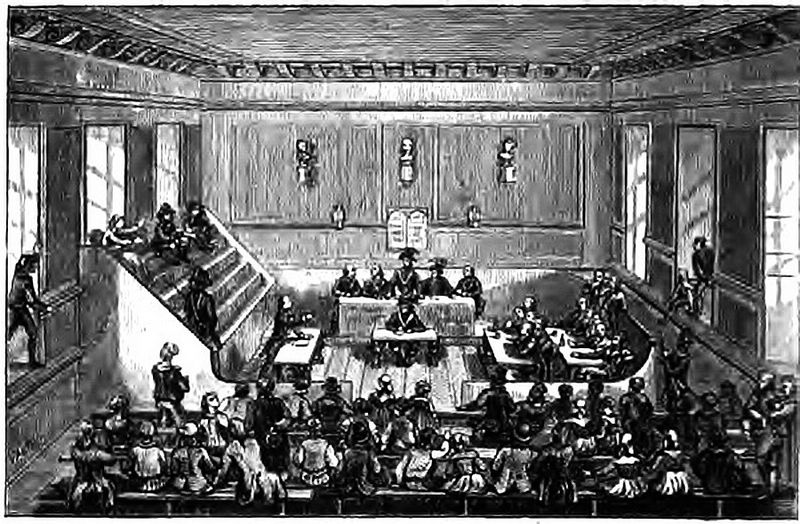
“What is your name, sir?” the magistrate demanded. I stood facing him, in front of a packed courtroom of people who seemed very curious in my fate.

“My name is Horus Vere,” I replied proudly. It is a name to be proud of.

“And what is your profession?”

“My family are traditionally glaziers, but I am more of a merchant. I find things here and there and sell them, in order to pay for my travels.”

“Ah, so a thief then?”

“Put down salvager, if you please, if there is a box marked ‘Profession’ that must be filled in,” I said. “Now, if I might ask a question, why am I here, instead of being on the road to Hatavass, as I had planned?”

“You are charged, sir, with spooking a horse and causing a thousand crowns of damage to a load of expensive pottery. Do you deny it?”

“I do not deny being there,” I said, “but it was the red poltergeist that spooked the horse.”

“A poltergeist!” The magistrate looked outraged. “You are saying you saw a poltergeist in the road?”

“No, your honor. It was invisible.”

“Then, how do you know it was there? And how can you call it red?”

“For both those questions, I have only the word of Brokker.”

“And who is he?” The magistrate’s tone was soft and dangerous.

“He called himself a spirit sage. I only met him that day. It was he that told me that a poltergeist was stealing my shoe.”

The magistrate threw up his hands. “I have no idea what you are talking about. Please start this whole mess of an account from the beginning.”

“I am afraid I have just told you everything,” I said. “I was just about to break camp when I could not find my shoe. Brokker came along and told me he had seen a poltergeist taking off with it. A red one.”

“Yes, you mentioned that detail already,” the magistrate said. The crowd tittered with delight. “Tell me then, how the horse came to be spooked?”

“Well, for a crown Brokker offered to show me where the poltergeist had gone. My shoe was hardly worth that much, but I had never seen an invisible red poltergeist before, and since having only one shoe is as good as being barefoot, I agreed. We were running along, when I banged into the fox.”

“The fox?”

“Well, it was in a cage,” I said, “obviously. It was in a pile of other wild animals in cages, all headed to circuses and menageries. You should have heard the racket.”

“Yes, I see,” the magistrate said, wrinkling his forehead. The crowd was entranced. Even if admission to the courtroom had not been free, this would be money well spent.

“So, I knocked over the fox cage, which was fine, except it broke open and the fox ran into a group of schoolchildren being led by two nuns . . .”

“Whatever are you talking about?” the magistrate asked, exploding suddenly with anger. “Why were there foxes in cages and nuns with schoolchildren wandering around in the forest?”

“This was not in the forest—it was here in the city. I camped in Fountain Square last night. Did they not tell you?” The look on the magistrate’s face showed that they had not.

“Get to the horse,” he said.

“Well,” I continued, “the fox was darting here and there, and nuns and children were screaming and crashing around when Brokker suddenly said he saw the poltergeist. It had dropped my shoe but Brokker said he could find out where it had dropped it. So we took off running through the square, dodging screaming nuns and vaulting over children. ‘It’s going for that horse!’ Brokker said and he jumped for it. I tried to follow, but I had been running with only one shoe and I tripped and fell at the horse’s feet. It reared up and started charging around the square too. Brokker said that the poltergeist had jumped on its back. The wagon wheel hit a small anvil that I had been planning to trade and the whole load of pottery slid off and smashed on the street.”

“That was quite a story, Mr. Vere,” the magistrate said, although he did not sound impressed. “Do you have anything to add?”

“Yes, your honor. I got my shoe back. Brokker produced it and said the poltergeist had given it to him, so I was obliged to pay him the crown. In any case, all’s well that ends well, right?”

*         *         *

That night, I told the story to a group of eager bar patrons at the renowned establishment, the Feathered Pork Chop.

“What happened then?” they asked. “Did they make you pay for the pottery?”

“No, I was acquitted on that charge,” I said, “although I did get fined half a crown for illegally sleeping in Fountain Square. I don’t mind though: it’s not every day you get to see an invisible, red poltergeist.”


The Book of Time

A man built a house on a plot of land. He lived through good and bad and when he died, his house stood empty. People soon forgot him, but the house remembered.

It remembered his first night there, when he woke, alone, in the middle of the night and almost cried from loneliness. It remembered the joy of his wedding, the trials and worries, the accumulated pain and blood of scraped knees and new babies. The faces that came, and changed, and passed on through its rooms, it remembered.

The house was sold, and sold again, and then finally abandoned, until its windows were empty and vacant and its roof settled slowly into the floor. The years passed until the house was gone but its memories passed to the land. Even when that was built over and paved and excavated for basements and sewers, the land remembered the stories of those that had lived on it.

It remembered until the land sank into the oceans and water covered the area where the man had built his house and lived through good and bad. Its history was eventually forgotten by everyone, but it still remains, written forever in the book of time that only One can read.


The Mermaid’s Kiss

This story was inspired by the song, Turn Loose the Mermaids, by Nightwish. I recommend it for reading music.

It was the kite that I saw first as I hurried along the dusky road in search of a place to camp for the night. It was a small square of dark blue that bobbed and swayed in the upper breezes, far above the hedgerows that bordered the road closely on both sides. I came to a gap and saw the world suddenly open in front of me.

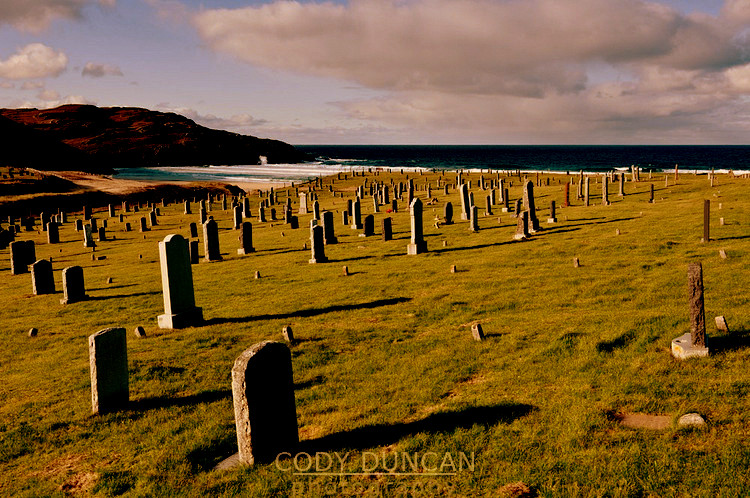
I was standing on the top of a slope that descended several stone’s throws to the edge of a firth, an arm of the ocean that stretched inland to the mouth of a fast-flowing river. On the slope was a cemetery and in the twilight, each etched stone had its identical shadow that stretched back towards the east. On one of these stones, close to the water’s edge, I saw a hunched figure sitting and holding the string of the kite.

I went down to talk to the person and perhaps find a place to stay the night. When I got closer, I saw that the figure was an old man dressed in a tattered grey jacket. He was staring out towards the firth, but looked up at me when I approached.

“You shouldn’t be here,” he said without preamble. “This is not the place for your sort.”

“And what sort is that?” I asked.

“The uncursed sort.”

This intrigued me immensely. “My name is Horus Vere,” I said. “I collect many things in my travels but mostly I love stories. Tell me, is this cursed ground?” I sat down on the gravestone of a Mr. Archibald Duggan (1550-1623) and waited for his reply.

“Why else would an old man be flying a kite alone in a graveyard at sunset, if he were not cursed?” he asked. I had no response to this feat of logic, so I waited patiently for him to continue.

“I used to come here every day when I young, to fly kites with my friends,” he said. “One day, we arranged to meet here in the afternoon, but the wind was strong that day and the others decided not to come. I launched my kite as I waited and it tugged fiercely on the string. A sudden gust snapped the string and it fell into the firth, about a score yards from shore.

“I should have left it—any sane person would have—but it was my favorite kite and I hated to lose it. So, I took off my jacket, tunic and trousers and waded into the frigid water. I was a fair swimmer, but the wind was blowing from the land and quickly pushed the kite further from me. When I finally reached it, I looked back to see that I was far from land and the wind was pushing me even further towards the middle of the firth.

“The swim back was a nightmare. I made very slow progress and I could not rest or I would be pushed out and lose what distance I had gained. My head slipped beneath the surface, but I pulled myself up. I went down again, and again I thrashed to the surface. But I was exhausted and I knew that I was about to drown.

“Finally I sank down into the darkness of the firth, too exhausted to struggle anymore. I breathed in a gulp of water and my consciousness was just starting to fade, when I felt something brush my arm. I thought it was a fish at first, but then it grasped me. Something pressed against my lips and air was forced into my lungs. I opened my eyes and saw a woman swimming in front of me, her skin a greenish tinge from the water.

“Several moments later, I pulled myself, coughing, onto the shore. The woman was beside me, and I could see now that even in the air, her skin had a greenish cast. She was naked and beautiful.”

“A mermaid?” I asked. I was beginning to think this man was either mad or toying with me.

“Do you believe in mermaids?” he asked.

“I have never had any reason to.”

“Neither did I,” the old man said. “She did not have a fish’s tail, as they do in the stories, but she was no ordinary woman.

“‘Thank you for saving me,’ I said to her and she nodded. ‘Is there anything else I can do for you?’ she asked. ‘Kiss me again,’ I said.

“I had not been meaning to say that and I was embarrassed, but she crawled carefully up to me, keeping one foot in the water, and kissed me again. Then she told me her name and slipped back into the water.”

“What was her name?” I asked.

“I cannot tell you.”

“You have forgotten it?”

“No,” he said. “It is a name I could never forget. As soon as I heard it, it crept into every corner of my mind and I could keep my mind on nothing else. I would not tell it to you, lest the same thing happen to you.

“For several years after that I would come here and meet with her. Sometimes I would summon her by flying the kite, but sometimes she would call to me with her singing. She had a high, whispering song that floated on the breeze and drew me irresistibly to her.

“When I was seventeen, the town found out that I was meeting with someone here most every day. I heard the word ‘monster’ and ‘succubus’ whispered about. They came to kill her, but I saw them coming up the road, my father leading the way. She begged me to go with her, but I was afraid.

“‘I will wait for you here,’ I said. ‘But I cannot return,’ she replied. I was still afraid and did not believe her fully. She gave me one last, long kiss and then dove into the water as the people reached the top of the hill.

“I was sent away to the southern counties by my father, but I returned and stayed here, tending the graves and flying my kite. I have waited years for my lost mermaid. I could not have stopped even if I wanted to. The memory of her last kiss still burns on my lips and her name is as fresh in my memory as always.”

The old man stopped. I wondered if he told this story to everyone who stopped by or if I were privileged somehow. The sun went down and the golden color drained out of the landscape. Soon the darkness would be complete.

“You may stay in the old cottage by the woods,” he said. “I will stay here.”

I would have argued with him, but the memorial stone of Mr. Archbald Duggan was none too comfortable and I gratefully moved to the cottage. It was shabby and dank, but when I got a fire going, it cheered up immensely.

I awoke in the middle of the night to hear the wind sighing in the branches outside. With a start, I thought I could catch words in it. I jumped up and looked out the window.

The moonlight was shining brightly on the cemetery and the black water of the firth. The old man was gone from his gravestone perch. I put my hand on the door latch, but something stopped me, perhaps my oft-unused common sense. I went back to my bedroll on the floor and lay listening to the melodic breeze playing through the trees.

The next day dawned sunny and clear. I packed up my things and went to see if the old man had returned. His seat was empty. I stood for a while, and was just about to leave when I noticed something buried in the grass by the gravestone. After digging in the tangled grass, I pulled out a rotted cross of wood with several scraps of dark-blue cloth still clinging to it. Nearby was a spool of twine that fell apart when I picked it up. It must have lain there for years.

I thought of taking a piece of the cloth to remember this place with, but I knew it was not for me. The wind was singing in the trees again as I left, but I dared not look back at the water for fear of what I might see and what I might do then.


Dead Switch

“I think my house is haunted,” Frederick said. He shifted nervously, glancing up at the hall chandelier.

“Yes, so you said on the phone,” the psychic investigator said, frowning slightly. This was just a preliminary visit. No point in rolling out the TV cameras just yet.

“You see, the chandelier flickers on and off sometimes, just on its own. Usually at night.”

“I see. Like a short in the wires?”

“No, I’ve had it checked out three times by electricians. They say everything is normal.”

At that moment, the chandelier flickered on and then immediately went off. It flickered on and off a few more times, then nothing.

“You see?” Frederick cried. “It’s haunted.”

“I see,” the psychic investigator said. His demeanor had changed completely. “You may be right. In my expert opinion, I would say this is strong evidence of poltergeist activity.”

*         *         *

At that moment, eight hundred miles away, Jon Tagg stood in his brother-in-law’s bathroom, flicking the useless switch up and down.

“Hey, Dave, I think your light’s broken,” he called.

“You gotta use the one on the right,” Dave called from the kitchen. “Don’t use the switch on the left. I don’t know what it’s for.”


Green Man Walking

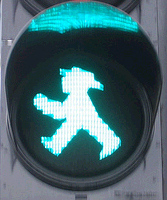
Call me Mr. Green. I think of myself as an active, positive sort of fellow. A lot better than the stern Mr. Red. I don’t come out as much as him, but I make the most of my time.

“Come on, everybody. Let’s get walking!” I shout. “It’s okay, no one’s going to hurt you.” After a while, I stay to wave, faster and faster. “You can do it! Time’s almost up. Don’t stop now!” I like to be encouraging.

Then, just like that, I’m gone and Mr. Red is standing there, stern and forbidding.

“Don’t walk,” he growls. “It’s the cars’ turn now.”


The Elephant's Trunk

🐘 Nancy is a storyteller, music blogger, humorist, poet, curveballer, noir dreamer 🐘

Thru Violet's Lentz

My view, tho' somewhat askew...

The New, Unofficial, On-line Writer's Guild

Aooga, Aooga - here there be prompts, so dive right in

Just Joyfulness

Celebrating joy

Tao-Talk

You have reached a quiet bamboo grove, where you will find an eclectic mix of nature, music, writing, and other creative arts. Tao-Talk is curated by a philosophical daoist who has thrown the net away.

H J Musk

On reading, writing and everything in between ...

Clare Graith

Author, Near Future Sci-Fi, Dystopian, Apocalypse

Kent Wayne

Epic fantasy & military sci-fi author.

Rolling Boxcars

Where Gaming Comes at you like a Freight Train

Lady Jabberwocky

Write with Heart

Fatima Fakier

Wayward Thoughts of a Relentless Morning Person

Life in Japan and Beyond

stories and insights from Japan

The Green-Walled Treehouse

Explore . Imagine . Create

One Minute Office Magic

Learning new Microsoft Office tricks in "just a minute"

lightsleeperbutheavydreamer

Just grin and bear it awhile

Linda's Bible Study

Come study God's Word with me!

Haden Clark

Philosophy. Theology. Everything else.

Citizen Tom

Welcome to Conservative commentary and Christian prayers from Mount Vernon, Ohio.

The Green-Walled Chapel

Writings on Faith, Religion and Philosophy

To Be A Magician

Creative writing and short stories

My music canvas

you + me + music

Eve In Korea

My Adventures As An ESL Teacher In South Korea

Luna's Writing Journal

A Place for my Fiction

Upper Iowa University

Center for International Education

Here's To Being Human

Living life as a human

jenacidebybibliophile

Book Reviewer and Blogger

yuxianadventure

kitten loves the world

Strolling South America

10 countries, 675 days, 38,540km

It's All in Finding the Right Words

The Eternal Search to Find One's Self: Flash Fiction and Beyond

Reflections Of Life's Journey

Lessons, Joys, Blessings, Friendships, Heartaches, Hardships , Special Moments

Ryan Lanz

Fantasy Author

Chris Green Stories

Original Short Fiction

Finding Myself Through Writing

Writing Habits of Elle Knowles - Author

BEAUTIFUL WORDS

Inspiring mental health through creative arts and friendly interactions. (Award free blog)

TALES FROM THE MOTHERLAND

Straight up with a twist– Because life is too short to be subtle!

Unmapped Country within Us

Emily Livingstone, Author

Silkpurseproductions's Blog

The art of making a silk purse out of a sow's ear.

BJ Writes

My online repository for works in progress