Tag Archives: science fiction

The Killing Type (Part 2 of 2)

A few days ago, I posted a call for song suggestions. The idea was like my Open Prompts stories, except that I would use quotes from song lyrics in my story. Thank you to the people who gave me suggestions. They are, in the order they commented:

Arjun Bagga: Hank Williams Jr.’s “A Family Tradition

Miles Rost: Alphaville’s “Dance With Me

starlight: Patrick Park’s “Blackbird through the Dark

Michelle Proulx: Jack Johnson’s “Bubble Toes

The Bumble Files: Amanda Palmer’s “The Killing Type” (Also, obviously, the inspiration for the title)

I have linked the quotations from the songs to the place in the Youtube videos where they appear. This is Part 2 of the story, so you can read Part 1 here.


The Killing Type: Part 2

Cassandra looked over at Doug and saw the fierce delight in his eyes. He was staring at the squig-squill, like a gladiator staring down his doomed opponent in the ring.

“Come on, let’s just go,” Cassandra said, reaching out for his hand. He shook it away.

“Hold on, you gotta watch this.” Doug darted forward and held the knife in front of the squig-squill. The creature lashed out at the blade. A small splash of pale pink blood landed on the ground and it pulled back with a roar of pain.

“Hilarious, isn’t it?” Doug said, with a laugh. “It’ll keep attacking and hurting itself, it’s so stupid.”

“Doug, come on. Let’s go,” Cassandra said. She tugged on his arm, trying again to pull him back to the rover.

“Fine, let’s go,” he said at last. He darted forward again and stabbed the long knife through the squig-squill’s throat. The creature fell back and Doug stepped on its chest. Even with the thin atmosphere, Cassandra heard the crunch of breaking bones.

“What are you doing? Are you crazy?” she cried.

“What do you care? They’re just pests. I’m not going to leave it alive after I’ve found it.”

“But it didn’t attack us. It was just defending its home. How did you get in this condition, Doug? You weren’t like this four years ago.”

“It’s easy for you to say, Cassandra, living in Coventry in the middle of an empty plain. We fight these things every day up in the mountains. They hide in the mines, they ambush the transports. We wiped out a lot of them before we started digging, but still they keep coming back, again and again. We need to wipe this planet clean, and then there will be peace. Stay here a minute.” Doug stepped over the body of the squig-squill and disappeared behind the bushes.

“Where are you going?” she asked. He didn’t answer.

Cassandra followed him through the bushes. In front of them, the ravine came to an abrupt end and was covered with a screen of woven plants. Doug ripped it aside, revealing what looked like a pile of fur, until a head raised out of it, hissing and snarling.

Doug kicked the pile apart and a handful of scrawny younglings tumbled out of it. A female had been covering them with her body. The female attacked Doug’s legs with its teeth, but they had no effect against the metal shin guards built into his suit. He kicked it off and stepped on one of the younglings, slowly crushing it into the ground.

“Stop it!” Cassandra screamed. “Let’s just go. Please, Doug!”

This is a mercy killing, Cassandra,” he said. “These ones are dead anyway. If the female goes to get them food, they’ll freeze and if she doesn’t, they’ll starve. She won’t go, so they’ll all die slowly together. It’s a foregone conclusion anyway, so might as well get into it, right?” He gave her a grin as he moved from youngling to youngling. Crunch. Crunch. Crunch-crunch-crunch. “My jellyfish dance, Cassandra. No rhythm, so but I’ve got some deadly moves. Come dance.”

“You monster!” she shouted. It wasn’t just the killing; it was the look of joy on his face as he crushed the little creatures under his heavy boots.

He stopped smiling and looked hurt. “Geez, it was just a joke. Sorry.” Crunch. “It’s got to be done—I was just putting a good face on it.” Crunch.

“Would you just stop!” she shouted, so loud he put his hand up to his ear in pain. The female was crawling back towards him and he stepped away from it.

“What do you want, Cassandra? We can’t live on this planet in peace with these things, and if they’re going to attack us, someone has to stop them. And I’m good at it. I saw you when you were dancing, with that look of joy on your face, oblivious to the rest of the world. You know that desire that burns a hole you’ll never fill with anything else. You have dancing and I have hunting. You’re the dancing type; I guess I’m the killing type.”

She looked into his face and saw with horror that he was right. He had become a killer, and he loved it. He turned around. “Go back and wait at the rover. I’m just going to take care of this last one.” He held up the knife and took a step towards the female squig-squill.

Cassandra ran at him and shoved him to the side. Doug tried to step to the side to maintain his balance, but he tripped on a rock and fell face down. His scream of pain reverberated inside her helmet. She ran to him and pulled him over and gasped when she saw the knife sticking out of his chest.

“Doug, I’m sorry,” she said. “I’m so sorry.”

“Killer,” he whispered, and for a moment, she saw his familiar, teasing grin touch the corners of his mouth before the life went out of his eyes.

Cassandra stayed kneeling for a moment until she remembered the squig-squill behind her. She jumped up, but it was nowhere near her. It was picking up the crushed little bodies that were scattered around the dell and arranging them by the rock wall. Then, as she watched, it made its way out through the bushes and lay down, covering the body of the dead squig-squill with its own.

Cassandra pushed the button on the com, trying to keep the tears out of her voice. Still, her voice quavered when she spoke. “Akash, come get me. There’s been an accident.”

*         *         *

Coventry Outpost was a storm of rumors, but all anyone knew for sure was that Doug Rankin, the son of Camellia Outpost’s commander, was dead. Cassandra sat in her room, confined there by her father while they sorted things out. After an hour, her parents came in. Her mother sat down and hugged her tightly.

“This is a horrible tragedy,” her father said, “but I think we’ve found a way for some good to come from it. Here is what you are going to tell everyone: you were walking with Doug when you were attacked by a group of squig-squills. He tried to defend you and killed a lot of them, but then several hit him from behind and he fell, accidentally stabbing himself with his knife. Akash is willing to testify that he was worried about you and came to find you, arriving just in time to scare them off.”

“What good could come from that?” Cassandra asked softly. She felt as if all the energy was drained out of her. The world was a more confusing place than it had been, just hours before.

“You pushed him and he died,” her mother said. “Some people might consider that manslaughter, and that could even carry the death penalty if Rankin pushes for it. He is inconsolable. But there were no witnesses; there’s no reason we should even go through that.”

“Plus, now I’ll have a pretext to start hunting them again,” her father said. “The commander seems to think that since they’re not attacking us at the moment, we have to maintain some sort of truce with them. But their numbers are just increasing and some day there may be enough to attack Coventry itself. Remember the Magnolia.

“No, I’m not going to tell them that,” Cassandra said. “I’m not going to let you hunt them. I saw them, Dad. They’re intelligent, and it would be wrong.”

“You would throw away everything because of them?” Her father’s voice was full of disgust and disbelief. “You would possibly even die for those things—our mortal enemy?”

“I’m not a killer, Dad,” Cassandra said. “I’m sorry. I guess I broke the family tradition.”

coventry outpost


The Killing Type (Part 1 of 2)

A few days ago, I posted a call for song suggestions. The idea was like my Open Prompts stories, except that I would use quotes from song lyrics in my story. Thank you to the people who gave me suggestions. They are, in the order they commented:

Arjun Bagga: Hank Williams Jr.’s “A Family Tradition

Miles Rost: Alphaville’s “Dance With Me

starlight: Patrick Park’s “Blackbird through the Dark

Michelle Proulx: Jack Johnson’s “Bubble Toes

The Bumble Files: Amanda Palmer’s “The Killing Type” (Also, obviously, the inspiration for the title)

I have linked the quotations from the songs to the place in the Youtube videos where they appear. The story is about 2500 words, so I split it into two parts. The second part will be posted tomorrow.

The Killing Type: Part 1

He finally found her, dancing alone in the stardust dawn underneath the crystal roof of the power station. She was twirling and pirouetting with utter abandon, her eyes closed and her feet splashing through the oil and waste water on the floor.

“Cassandra,” he said at last, hating to break the spell of her dancing.

Cassandra stopped and looked up, then her eyes widened. “Doug? Is that really you?” She flitted up to the steel ladder and gave him a hug. “Stars, you got tall in a hurry. When did you get here?”

“An hour ago, maybe,” he said, grinning. “It took me most of that time to find you. What are you doing here, in this filth?”

“It’s the only place I can be alone and still see the stars,” Cassandra said. “I don’t want to dance where people can see me. I was born in Coventry Outpost but still, the close quarters, always being near everyone else—it gets to me.”

“But at what price?” Doug asked. He indicated her bare feet that were covered with tar balls and scars.

“It’s worth it,” she said and suddenly laughed. “Tell me what’s happening with you. I haven’t seen you in four years.”

“It’s a great life out there on the frontier. I’m working with my father to expand Camellia Outpost. We just built the smelter and factory.” He paused. “I missed you.”

“I missed you too,” she said. She took his hand. “Hey, do you want to dance with me?”

“I’m not really the dancing type. I’ve got no rhythm.”

“Bah! I remember you. You’re slow and graceful, like a jellyfish. When you move like a jellyfish, rhythm don’t mean nothing.”

“Jellyfish are deadly too, though,” Doug said. “Hey, I know what we can do. Have you ever killed a squig-squill before?”

“What?”

“I’ve gotten really good at it—you gotta be out where I live. I can hit one with an air rifle at 50 meters. You wanna try?”

Cassandra looked up into his eager, expectant face and let go of his hand. “I’m really not the killing type,” she said.

He nodded. “Okay, okay. But let’s go find some anyway, just to look at. Have you ever seen one?”

“Only in pictures.” Cassandra had seen lots of pictures of squig-squill bodies that had been killed back when she was a baby. They looked like limp bags of fur with claws sticking out of them. Her father was head of patrols and boasted about killing hundreds of them. These days, though, the outpost commander forbade them from hunting squig-squills unless they passed the outer perimeter of the outpost.

“You gotta see one up close,” Doug said. “I’ve gotten really good at finding their nests. So, you wanna?”

“Isn’t it dangerous? What about the Magnolia?” The very first manned mission to Asteria had been attacked and annihilated by squig-squills, back when Cassandra’s parents were children on Earth. The legend lived on, though, and every child in Coventry had to memorize the names of the ten astronauts killed.

“That was back when we didn’t know how to deal with them. Trust me; there’s no danger at all.” Doug gave her a reassuring smile.

“It’s pretty far to walk, though,” she persisted. “The outer perimeter is 5 km out and there aren’t any squig-squills within that.”

“Listen,” Doug said, as if he were imparting a secret, “I’ve got a rover.” His eyes were shining. “It’s the first one we’ve built at the factory. That’s how I got here; I drove it and my dad drove a transport.” He caught up her hand and squeezed it. “I know that before I left, we used to be just good friends—”

“More than just friends,” Cassandra said, smiling.

“We would have been, if I hadn’t had to leave.” He suddenly leaned in and kissed her. It felt good and she would have kept kissing him, but he straightened up with an impish grin.

“Fine, go show me a squig-squill,” she said and he hugged her again. Cassandra wiped off her feet, put her boots back on and then led the way out to the vehicle dock.

The commander of Coventry Outpost was hosting a banquet in honor of Doug’s father, Commander Frederick Rankin, and almost the entire population of Coventry Outpost was squeezed into the main dome. The only person Cassandra and Doug met on the way out was Akash, the guard at the airlock gate.

“I just heard over the com that they’re looking for you two, you know,” he said, giving them a knowing smile.

“They can’t be looking very hard,” Doug said.

“No, they’re not,” Akash said, “and they probably think you’re off somewhere, catching up. Which I guess you are.” He pushed the button to open the airlock. “Don’t go far, and stay on the com.”

“Yessir,” Doug said with a salute. He gunned the engine and the rover sped out over barren plain.

For Cassandra—sitting behind Doug with her arms around his waist—the feeling of speed and openness was heavenly. She was only able to leave the outpost every 20 days or so, and that was just to walk around the perimeter and check the instruments. Red dirt and sand covered all the land as far as she could see. Asteria’s blazing sun was just over the horizon and the light sparkled and flashed in the upper atmosphere. Above them, tethered lightdomes hung in the upper atmosphere, gathering energy and providing the outpost with its communications. Through the lightdomes shining in the sky, the last of the night’s stars burned in the midnight blue expanse.

Doug drove them out past the perimeter and up into the foothills of the rocky spine that led from Coventry to Camellia, 200 km away. Small, scrubby plants began to appear among the rocks, interspersed with icy pools.

They came to a ravine cut in the rocks and Doug stopped the rover. “This is the kind of place you’d find them in,” he said.

Cassandra heard his voice through the speaker in her helmet. He pointed to a white smear on the rocks, about a foot off the ground. “Look there. They leave those around a lot too. To mark their territory or something.”

Doug took Cassandra’s hand and led her towards the ravine. The light of the sun was blocked by the rocks and the ravine was in deep gloom.

“Is this safe?” she asked. “How will we know where they are?” She noticed that he had drawn a long knife and was holding it in front of him. “What’s that for?”

“The males are aggressive. Best not to take chances.”

Before they could take another step, Cassandra heard a high-pitched roar. It sounded faint and far-off in the thin air. A squig-squill burst out of the bushes, blocking their path. This looked nothing like the limps bundles of fur she had seen in pictures. Its small, misshapen head was stretched out on a thin neck and flicked back and forth, mouth open and menacing. It moved its clawed limbs in circles in front of it, but did not attack.

(to be concluded, here)


A Lily Look-Alike’s Lament – Friday Fictioneers

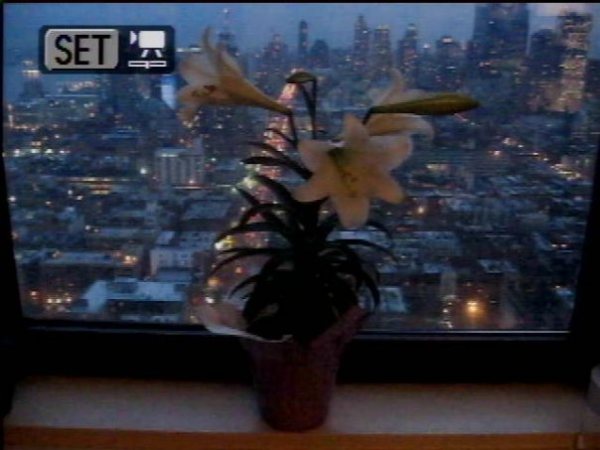
This Friday Fictioneers story includes dark humor and white flowers. On a side note, I dare you to say the title five times fast.

copyright Lora Mitchell

copyright Lora Mitchell

A Lily Look-alike’s Lament

I’m making this video to say that I quit. It’s too hard. I came to this planet to make friends and have adventures, but everyone mistakes me for a type of local flora known as a lil-lee. I hate it when they stick their noses in my mouths, inhale deeply and say “ahhh”. I’ve always been ashamed of my body odor. They put me next to dead people too.

I’m going to throw myself out this window as soon as I can get . . . it . . . open.

I guess I’ll just wait for someone to throw me away.

Too bad I’m immortal.


The Universe of Five

This story was inspired by the picture for this week’s Friday Fictioneers. I was originally going to use this story idea, but it proved to way too long, so I wrote it up properly here. I feel like I should continue it, but I don’t want to dilute the original story theme. Read it and let me know what you think.

cogs

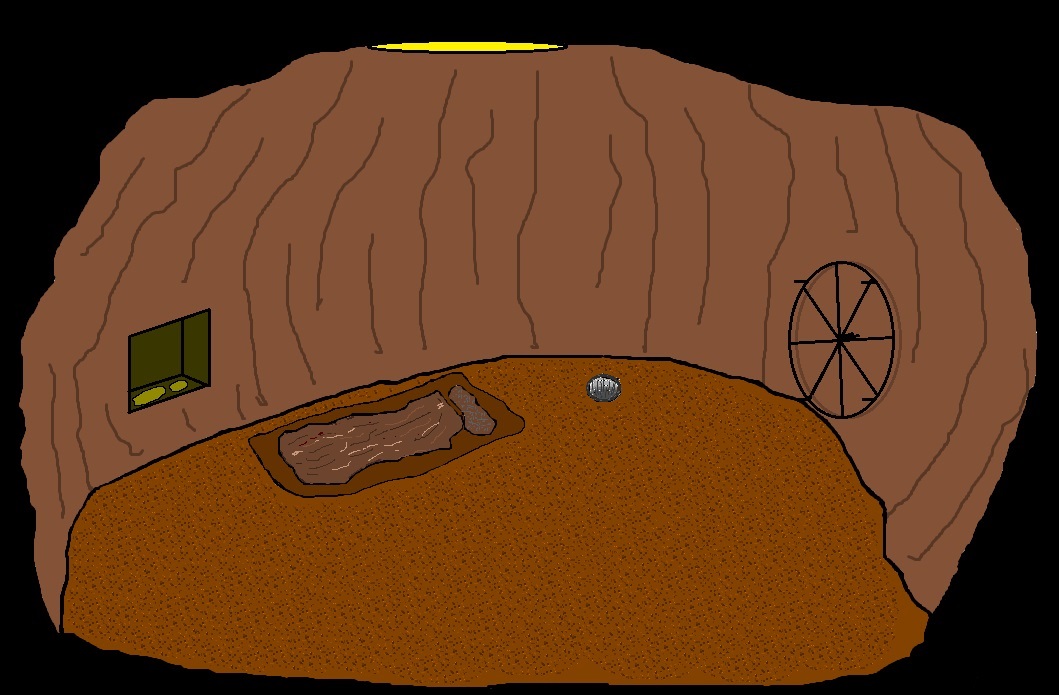
She counted to five, because there were only five things in the tiny cave that was her whole world.

  1. The Bed, where she slept.
  2. The Hatch, where her food and water appeared while she slept.
  3. The Hole in the floor where the smelly stuff went that came out of her body.
  4. The Wheel. The Wheel was her life. She turned it in long, slow revolutions, around and around and around.
  5. The Light that was built into the ceiling and illuminated her world in a sickly yellow glow. When it came on, she got up and ate and began to turn the Wheel. When it went off, she went to sleep.

It was not a life without thought, but it was a life of small thoughts. She was not sure how she had ever learned how to turn the Wheel, or why she turned it when the Light came on. That was just life. She did not worry about how her food got there; the process was invisible and did not warrant thinking about. All that was real was in her small cave.

She counted obsessively. “1: the Bed, 2: the Hatch, 3: the Hole, 4: the Wheel, 5: the Light. 1: the Bed, 2: the Hatch . . .” She did not count with words—she knew no words—but only saw the images in her mind as she went through the list. She did not count her food. It was there, but then she would eat it and it would disappear and become part of herself and so ceased to be truly real. She did not even count herself. She could see her body, but it disappeared out of sight around her chest and shoulders. Her head was invisible to her and anything that was invisible was not truly real. So she moved like a ghost through her world of five real things.

Time was binary: there was dark and then there was light. The dark was the empty place, when things ceased to be real. Then the light came again and the world was recreated. Every time the Light came on, she would get up, count the world, and then eat. Then she would squat over the hole, and then begin to turn the Wheel. She had no memory of past events, because all events were the same.

universe of 5

Until the dark time when the Light did not come on.

She became aware of lying on the Bed in a world of nothing. This happened sometimes, but then the Light would come on. So she lay there and waited. The next thing she noticed was an uncomfortable feeling in her body. She needed to eat, and to squat.

She wondered if the food was there. That was impossible, since the Light wasn’t on. A thought occurred to her. Was the Hole there? It was a strange thought and at first she dismissed it. The Light wasn’t on, how could it be? But maybe it was like the Bed. The Bed winked out of existence with everything else when the light went out, but it still cradled her formless body as she slept. It had a sort of dark form. Could the Hole have that too?

After a few heartbeats, she crawled forward and felt the floor beyond the Bed. She kept moving and her probing hand felt the floor disappear in a small circle, just like the Hole. By now, the urgency in her body was frantic and despite the absurdity of the situation, she positioned her invisible body over the non-existent Hole and squatted.

When she was finished, she wondered if the Wheel was there. Did everything have a dark form? She moved forward and found the Wheel. She could even turn it. The idea of turning an invisible wheel seemed ludicrous to her and she laughed.

It seemed obvious now, but it had never occurred to her before. Everything must have a dark form. But already her mind came up with an objection. How could the Light have a dark form? It was a contradiction. That, at least, must be impossible.

She made her way to the Hatch and found that it was there, but with no food or water. That made sense, since the food came with the light, but she could not understand why her body wanted it so much. Noises came out of her middle. There was an indentation inside the Hatch where the food always appeared. She felt around with her hands, but nothing was there.

While probing with her hands, she found a small opening further up. She put her arm through it and continued to probe. She felt a dark form she had never known before—smooth and hard with small bumps. There was a bigger bump and when she pushed on it, part of the Hatch fell away and she tumbled forward, through the hatch and out of her known world.

It was still totally dark, which was almost comforting. It meant it was still like a dream. Perhaps it was a dream. She started walking, hands out in front, seemingly floating through an abyss of emptiness. Walls came up against her touch, but she floating around them, letting them effortlessly guide her progress.

She walked in a sort of reverie and it was a shock when she realized there was light up ahead. It was not the Light, but a different light. This was grey and faint, unlike the dull, yellow Light that she knew. It kept getting stronger until she saw that she was in a cave that was very long. All along the sides were things that looked like the Hatch. She could not count them, but there were more than five.

Ahead of her was a kind of floor that went up. It was the shape of the Hole, but much bigger. The light was coming from it, far, far above. The pain in her middle drove her on and she walked, up and up in a circle, going towards the light.

She came to the top, where there was something like a large hatch and something like a very small wheel on it. It turned like the wheel and then the large hatch opened. Light poured in.

It was a cave without walls, huge beyond imagining and filled with light and far, far too many things to count. The size, the colors, the numbers all overwhelmed her. She wanted to run back and hide, but she stood as if frozen, trying to take in this whole new world at once.

*         *         *

Captain Nuris piloted the jump-craft just above the blasted landscape, surveying the site of their victory. Not much was left; the enemy capital had been fire-bombed into oblivion. Smoldering wrecks and piles of rubble showed where the once powerful city had stood.

“No signs of life yet, Captain,” his navigator said. “Wait. There’s someone over there. It’s a woman, I think, but naked and filthy. Just look at that tangle of hair! How do you think she survived?”

Nuris stopped the jump-craft and looked over at the figure, standing frozen in front of a door. Behind her, a massive building lay in shattered ruins. “Must be one of the Cogs that powered the machinery,” he said. “This was a manufacturing plant here, I think.”

“I thought they were supposed to be non-intelligent?”

“Well, this one had enough sense to escape.”

“What should we do: pick her up or leave her?” the navigator asked.

“It’s been three days since the bombing—she’s got to be hungry. If she’ll come with us, we’ll take her.” He turned the jump-craft and started towards her.


Edward and Hestia

This is part of my post-apocalyptic Aftermath series. The previous story was Voices from the Past. Here is the Aftermath Glossary.


“It looks like you’ve been through an ash heap or two since I saw you last,” Hestia said. “I guess we all have.”

Despite what she said, Edward could not see that the last seventeen years had touched her much at all. She was older, of course. Her hair was touched with silver and a few wrinkles had sprung up in the corners of her eyes, but overall she had passed through the poisonous world unscathed.

“You know each other?” Blake asked in surprise.

“We met once,” Edward said. “Look,” he said, turning back to Hestia, “I’m not looking for anything for myself. You took some kids for me before; now I’m asking if you can again. I have one named Sean who’s in the hospital here. Just give him a good home and I’ll get the hell out of here.”

Hestia gave a small smile. “Hell,” she repeated softly

“What?”

“You said hell. I just wondered what you meant by it.”

“I—I don’t know, I just said it. What does it matter?” He felt a flash of anger.

“I was just wondering because most people in here consider out there to be more or less a literal Hell. They would do anything not to go out there and the people out there would do anything to get in here. So why the hell do you want to go back out so badly?”

“I can survive out there. It’s where I belong. I’m in control there.”

“Ah, ‘better to rule in Hell’ and all that.” Hestia sat down and motioned them to chairs. Blake sat down but Edward didn’t move. “I’m curious, Eddie—”

“Squid.”

“Squid? Really?” She shrugged. “I’m curious, Squid, what you’ve seen out there. What’s the world like?”

“You know what it’s like,” he said. “You said it yourself. Everything is sickly and twisted. Food is scarce. Everybody is hungry. Everybody suffers.”

“Except you.”

“Even me! But what’s the alternative? Live in here where everyone tiptoes around in fear of losing their position.” He would not tell her, but a small part of him wanted to stay—longed for that safety and security. Still, he could not do it. A bird that had been freed and lived in the open forest could not voluntarily step back into the cage, no matter have much gilt was put on the bars.

“You know,” Hestia said, “the right to murder and steal is not as precious in a place where no one is your enemy and everything you desire is freely given. But let me tell you about the world outside. Cambridge is the solitary island of civilization in England, but we are branching out. We even have a seaport now in Great Yarmouth and a rail line connecting us. It was the closest port we could find.”

“Was Ipswich destroyed?” Edward asked. “That would be closer.”

Blake made a noise of exclamation and Hestia stared at him. “Are you making fun, Squid, or have you really been that isolated from things down there in your scuttle-hole?”

“What are you talking about?”

“I mean, that Ipswich is the antithesis of civilization now,” Hestia said. “It’s a seething den of crime and piracy and every terrible thing you could conceive. They are our main enemy, since they are the only ones that send targeted attacks against our supply lines.”

“I didn’t know,” Edward said. He didn’t know how he felt about it. Part of him wanted to go there, to test himself against a whole city of the worst villains and thieves, but part of him didn’t want the competition. He enjoyed being the top dog.

“We have a few mines and a small refinery,” Hestia continued, “although a lot of what we get is still through salvage. That’s my job here. As Minister of the Exterior, I send out people to find things and bring back the best. Blake works for me sometimes, finding robots.”

“And that’s what you want me to do, to go find stuff and bring it back.” Edward thought of the chren mining that Hinsen had tried to get him to do and suppressed a shudder.

“That’s the idea,” she said. “Listen: what you’ve got here is a golden chance. We don’t pull molerats—outsiders—in and offer them jobs very often. Actually, never. But you’re here and at least I’ve met you before; someone who attracts little kids like a magnet and tries to find them good homes can’t be a total blacksoul. So, here’s the deal. We’ll give you a house here—you don’t have to live in it if you don’t want—and the boy can stay here. You can spend most of your time outside and do whatever you want, as long as you bring me some good stuff every now and then. If you ever want something more, let me know.”

“What the alternative?”

Hestia waved her hand carelessly. “Take the boy and leave. But if you do, my offer won’t be renewed and you won’t get back in. I’m too busy for that.”

“What do you need me to find?” Edward asked and Hestia smiled.

There was a buzz and Blake took out his e-device and looked at the screen. “The hospital says the boy is awake.”

“You mean Sean?” Edward asked.

“He says his name is Damian. And he is asking for you.”

hospital bed 2


Voices from the Past

This is part of my post-apocalyptic Aftermath series. The previous story was Droog the Angel. Here is the Aftermath Glossary.


The hot water that coursed over Edward’s head and down his back seemed to strip away more than the dirt and sweat of years. It soaked deep, washing away some of the pain and awakening a part of him that had existed, Before. He stood in the shower and reveled in becoming clean until Blake knocked on the door and told him the water tank was getting low.

Blake’s house was on the ground floor and looked out onto one of Cambridge’s ancient college quadrangles. The apartment was small, but warm and dry, and to Edward it looked like a palace. He came out of the shower and put on clean clothes that Blake had given him. The place peaceful and empty, but still he held his knife close to his side as he went into the living room. Blake was sitting by the electric heater, fiddling with a tiny gearbox.

“Thanks for the clothes and shower,” Edward said, standing uncertainly by the door. He glanced quickly behind him—no one was there.

“Not a problem,” Blake said, barely glancing up. “I’m happy to extend a few things to a friend of 8134—Droog, I should say. Just sit down and relax. You don’t need the knife.”

Edward sat down and crossed his arms, keeping the knife hidden in his hand. “So, how did you find him?”

“He found me,” Blake said. “He’s a smart little bot. He told me all about you—otherwise I’m not sure I’d have let you in here.”

“He doesn’t talk; he just blinks his red and green lights.”

“I put those lights there to make it easier to communicate,” Blake said, “but he does talk, if you ask him to and know the language. It’s Russian.” He held up an e-device. “I’ve got an instruct that will translate. I’ll give you a copy, if you want. He told me how you rescued that boy. Sean, right?”
Edward stood up, dropping his arms and unconsciously exposing the knife blade. “You have Sean? Where is he?”

Blake smiled. “Sit down, and put the knife away. He’s with Droog at the hospital—yes, we have such things here. He was almost dead when I found him and he would have been dead and eaten if not for Droog. You’re lucky to have that little bot.”

“I stole him, you know, from a guy named Joseph.”
“Droog says you invited him to come along on your quest. To find music, he said. You’re a complicated guy, Edward.”

“I thought bots couldn’t lie,” Edward said. He put away his knife slowly and sat down.

“They don’t have any morals,” Blake said, “but they also don’t have any guile or reason to lie. They tell things as they see them, but every so often, they just choose to interpret things a different way. Droog claims you requested him to come.”

Edward gave a small laugh. The shower had put him in a better mood than he could remember for a long time and hearing that Sean was safe made it even better. “You know, I don’t remember the last time I requested anyone to do anything,” he said.

Blake gave him a long look over the gearbox. “I’m not surprised, looking at you. Listen, you can stay the day here, but tomorrow night you’ll have to go. If you want, I can see about getting you a job somewhere around town: security or loading or something like that. Still, I don’t know if you’re the kind of guy who works well with others.”

Edward gave him a thin smile. “I want to see Sean.”

Cambridge street

They left Blake’s house and walked through narrow streets of the city. They were lit with electric lights, quiet, and what amazed Edward most of all, clean. People passed them, talking quietly. There were no raucous market sellers, not street rats, not even any weapons that he could see.

“Isn’t there any crime here?” he asked Blake.

“Of course,” Blake replied. “There’s crime everywhere, but nothing like out there. The penalties are harsh too: often execution or worse.”

“Worse?”

“Exile,” Blake said. “Fear of the outside is a better enforcer of the law than any number of policemen.” He led the way up a set of stone steps and into a long hall.

“This is just the local clinic. The bigger hospital is across the city, but I thought this would be sufficient.”

They came to a long room with beds lining the walls. Droog was standing by the third one on the right and lying on the bed was the little boy, Sean. He had an IV in his arm and looked to be asleep. Blake called over a doctor, who said that Sean was improving and would probably fully recover in a week or two.

“Have you thought about what you want to do next?” Blake asked. “As I said, you can stay with me today, but that’s all. All other lodgings in the city are for workers. Ain’t no tourists here.”

“You’re right when you said I probably wouldn’t work well with others,” Edward said. “I’d best be moving on out of here, but do you think he could stay here?”

Blake was shaking his head before Edward even finished. “Only the children of workers can stay. If you stay, you adopt him; otherwise, you’ll have to take him when you go.”

Edward looked down at the sleeping boy on the bed and wished he could just leave him. He felt as if he barely knew his own mind anymore. Why did he feel he owed this boy anything? He had never killed a kid, it was true, but he had robbed a good many and pushed them around. This wasn’t penance for them; he honestly didn’t care about any of them. But still . . . He shook his head, as if trying to put it in order.

“I don’t think I’d fit in this city, but I’d like to do something to earn a place for the boy, at least.”

Blake smiled. “I think I know the person you want to talk to. She’s the Secretary of the Exterior. I’ve worked with her a few times, when I go out exploring for robots. “

They left Droog and Sean and walked for half an hour, to the heart of the city. They entered an area with more guards where Edward had to give up his knife. Finally, they were escorted down a hall and their guide opened a large, ornate door.

Edward found himself in a large oak-paneled office with leather furniture and shelves of books. A ‘Munculus bot and a larger Myoolbot, both painted yellow, stood to one side. Behind a large desk sat a middle-aged woman with close-cropped hair and wearing a leather jacket.

“Madame Secretary, I brought someone who is interested in expeditionary work. His name is—”

“Wait,” the woman said, cutting him off. “I think I know him.” She gave Edward a long look and then broke into a grin. “Hey there, crackerjack.”

She looked older, but Edward recognized her. From deep withing the annals of his memory a name slowly rose. “Hestia?” he said.


Droog the Angel

The latest chapter in the Aftermath series. The previous story was Droog Comes Home. There is also an Aftermath Glossary.


Edward Morrison felt powerless and that made him angry. He had been wandering the satellite slums of Cambridge for two days, searching for his robot Droog and the boy he called Sean. Why do I even care? Why don’t I just go? his mind demanded, but then the question always arose: Go where? He had no food, no supplies, no plan. What had he been thinking when he had left Free Frall? It had seemed so simple then.

He was also fiercely hungry. In Freefrall, he would merely go and take food if he needed it, but here people were shrewder, and far more dangerous. He had managed to steal a scrawny pheasant from an old woman in the market—just grabbed it off her table and ran. She was quick though, and a second after his hand closed on the bird, her knife was flashing towards his ribs. It missed him and he could hear her cursing him for a long ways away, even over the normal murmur of the crowds. He had eaten it furtively in the dark, gnawing quickly like an animal afraid of having its prize stolen.

That had been a day ago. Now he was starving again and becoming desperate. He would have ambushed someone and killed them for their food except that no one ventured outside the markets alone and everyone was heavily armed.

Dawn was close when he finally stumbled back to the nest he had found under some stubby bushes. It wasn’t much, but it kept the sun’s blistering rays off him . The air was sweltering and he slept fitfully, his dreams melding with hallucinations from the heat and thirst and his gnawing hunger.

He dreamed that he was in a dark room surrounded by all the people he had killed over the years. They came at him, one by one, and he had to fight them again and again. I’m so tired, I just want to sleep, he thought, but they wouldn’t stop. Then the scene shifted and he was wandering over the dark countryside with Droog, looking for Sean. He was too tired to pay attention and after a while, Droog led him to a place under the bushes, where he could rest. Droog did not leave, but kept leaning over him, making little noises and prodding him…

Edward pulled himself upright with a sharp intake of breath. Droog was standing in front of him, pushing his small, metal body partway the hollow in the bushes.

“Droog, you little gear-rat! How did you find me?” Edward shouted in surprise. He stopped as a coughing fit grabbed him. Droog reached into a bag he was carrying and pulled out a bottle of water and a metal container, which turned out to hold food. The water was warm, but cleaner than any Edward could remember and the food… he had not tasted food so good since Before, when food was plentiful and taken for granted.

Droog waited as Edward wolfed down the food and water. The position of the sun showed that it was late afternoon: about four hours until darkness. Droog took something else out of the bag and handed it to Edward. It was a suit of shiny, white material that included pants, jacket, gloves, hat and goggles.

“You want me to put this on?” Edward asked, although the answer was obvious. “Where are we going, Droog? Where did you get this stuff?” Droog did not reply, but simply indicated the clothes.

Edward put them, trying not to rip them on the bushes around him. They were bulky, but not hot and they seemed to cool him down, if anything. When he was completely covered, Droog went outside and he followed.

scorching sunlight

Edward had not been outside during the day in seventeen years. He had heard stories of people who had gotten caught outside when the sun rose: sunburns within a minute, third degree burns in an hour. The goggles cut the glare and for a moment, it was like he had was back then—Before—when he would walk outside in the sun’s warm light for hours.

They walked back through the Silver Street market and came to the bridge across the canal that led to the fortified city of Cambridge. Guards were there behind locks gates, wearing similar white suits and goggles. Droog handed them two square cards and they unlocked the gates. Just like that, Edward was in the protected city.

Droog must mean angel, he thought. Suddenly, the combined effect of the food, the sunlight and his sudden reversal of fortunes made tears start streaming down his cheeks. He hated them and the weakness they implied, but there was no way to make them stop.


Droog Comes Home – Part 2

Here is Part 1 of this story. Read the rest of the Aftermath stories here. Here is a glossary of slang and jargon used in the stories.

Night on the road

They left the Silver Street market area and struck out along a path that followed a canal. Twenty minutes of walking in the dark ended at a fire-lit circle of about twenty tents, with a few electric lights adding glaring illumination to the scene. It looked like a graveyard for every type of technology made in the last century. Masses of wire, piles of circuit boards, computers, e-devices, even a few battered robots filled the tents to overflowing. It was not a comforting place for Droog.

Matty led the way through a greasy yellow door-flap and into a tent stuffed with robot parts. A bald man with blotchy skin sat behind a workbench.

“Hey Screws, we brought you a good one,” Matty said. “It works, but it won’t take commands. Plus, it seems attached to this kid.”

“Fortuned stars,” Screws said, coming around the bench and inspecting Droog. “It’s quite a calico little drob. Someone’s fixed it up pretty well. Is it owned?”

“Just some mudscrape,” Matty said casually. “What’ll you give for it?”

As the men were haggling about trades, Droog did a scan of the tent. Somewhere beneath the pile of derelict technology was a robot that was still activated.

Have you been here long? Droog asked through the robot universal communication.

183 days, the other robot replied. He took off my limbs to put on other robots. I must wait here in case he needs any of my other parts.

What is he like? It looks as if he will acquire me. The other robot sent him scan logs from the last 183 days, which Droog analyzed instantly. This man Screws was not a good person. Besides dismembering robots, he was also depraved towards humans. He ate human flesh. Droog knew from experience that humans considered this to be the worst thing in the world. It indicated a very evil person. He did not want Sean to be anywhere near someone like that.

Matty and his gang stayed for another half an hour before agreeing on a deal and leaving with their traded goods. Droog went and stood in front of Sean, who was lying on the floor, not moving. Screws came over and tried to go to Sean, but Droog blocked his way.

“I see, I see,” Screws said with a laugh. “Protective little watchdog, you is.” He picked up a round, black device connected to a wire and put it on Droog’s head. “Stay, boy.”

Droog tried to move, but he could not. Electricity was going through him, freezing his limbs and gears. He stood like a statue as Screws picked Sean up and put him on the workbench.

“You’re on death’s door, aren’t you kiddo,” he murmured. “I’d best get you dressed up now before you die and start spoiling.” He put a oily basin underneath the bench and then reached down and pulled out a large knife.

He was going to kill Sean, Droog realized. In the other robot’s scan logs, Screws had done this before to other people. He tried to overcome the device on his head but he remained frozen, like ice.

At that moment, the electric light went out and Droog was suddenly free. Through his infrared senses, he could see Screws blundering around in the dark, fumbling with the battery pack for the lights. Droog moved towards him, scanning and trying to find a way to take him down. There. The man had a tumor growing just behind his knee, well within Droog’s reach. He reached up and pushed his small steel hand into the tumor.

Screws screamed and fell to the ground, holding his knee. Now was Droog’s chance, but he could not reach Sean on the workbench. He pulled on the workbench, but it was solid. He could not rescue Sean on his own.

Droog knew that the probability of Edward being in the area was very small, but still he went outside and started scanning, looking for known voice patterns. A match came up, but it was not Edward: it was Blake, the man who had found Droog and brought him to Cambridge, before he had gone down to Free Frall and met Edward. Blake was in a tent on the far side of the clearing. Droog went to him, bumping into the back of his legs to get his attention.

Blake was tall and middle-aged and always wore heavy leather clothing. He turned around and looked at Droog, then smiled.

“Well, it’s 8134, the little Russian ‘Munculus, isn’t it?” Blake referred to all his robots by the end of their serial numbers. “I’m surprised to see you again. Who are you with?” Blake always talked to him normally, even though Droog could never respond in English. Droog went back to Screws’ tent and Blake followed. Screws was sitting in a chair, still holding his knee. The lights were on, flickering weakly.

“So it’s you, Screws,” Blake said. “Do you own this little bot?”

“Yeah, I just traded for him, but the scrygging drob attacked me. He’s twisted for this boy.”

Blake’s eyes flicked to Sean. “You hungry, Screws? Listen, I like this little bot. He’s too good to end up in a place like yours. I’ll trade you for him, and the boy.” Blake took out a bag of food and opened it. Inside was meat, vegetables and even real fruit.

“You Insiders make me sick,” Screws said. He spat on the ground. “Coming outside the walls to lord your wealth over us.” Still, his eyes could not stray away from the food.

“So, we have a deal?” Blake asked. They bargained for a few minutes before agreeing. Blake gave Screws the food and picked up Sean. They walked ten minutes to a bridge across the canal and the gates of Cambridge. The guards nodded at Blake as they passed through.

“Welcome home, 8134,” he said.


Droog Comes Home – Part 1

After a long break, here is another story from the Aftermath story. Part 2 of it will be up tomorrow. It picks up right after the story Outside the Gates of Cambridge. It’s also about Droog and references Droog’s Story. The rest of the Aftermath stories are here. I’m also going to put up a glossary on the Aftermath page of all the slang terms used in these stories.

The slumsDroog the robot knew a lot of things. Through his scanners, he knew that the small boy that was sleeping in the dust in the corner of the hut—the one Edward called Sean—was dying. His kidneys were shutting down slowly. Droog did not have any feelings of sadness—he had no emotions at all—but he did hope that the boy would not die.

Long ago, on the day the world had ended, there had a been a boy he had promised to help. That boy had disappeared, but Droog had never stopped looking for him. Some part of his mind knew that he was probably never going to find that boy again. He still had his bio-rhythmic signature stored in his memory, but he had scanned thousands of people and had never found him again. Now he had a boy here that Edward cared about. It would be so much easier if this really was the boy he had been looking for all these years, the boy he had promised to protect. Then he and Edward would have the same goal.

Droog thought for a moment and then did something he had never done before: he intentionally overwrote his memory. He replaced the bio-rhythmic signature of the boy from long ago with Sean’s and suppressed the logic that said the time difference was too great for that to be true. And just like that, Sean was the boy he had been looking for, and had always been. And Droog was going to help him survive.

Droog did a scan of the surrounding area, as he did every few seconds and that was how he knew the three men would come into the house, seconds before the door banged open.

The lead man wore a expensive, but faded suit coat over his filthy overalls. He leered at the woman who was sitting at the table. “Hinsen gone?”

She flushed slightly and nodded. Droog watched as they flirted back and forth, dispassionately recording their attraction for one another. Then the man turned towards Droog.

“What’s this, a robot?”

“It’s a ‘Munculus Bot,” one of the other men said. “I know a guy who pays good for these.”

“We’re going to take this, okay love?” the first man said, with a wink. “Just tell Hinsen it ran away on its own.”

“It don’t belong to Hinsen anyway, Matty dear,” the woman said. “Some mudscrape brought it with him yesterday. You want the boy too?”

Matty shook his head with a laugh, then turned back to Droog. “You obey commands, right? Let’s go.”

Droog turned back and tried to pick up Sean. The frail boy opened his eyes but didn’t sit up.

“Come on, we ain’t going to bring him too,” Matty said. “Get going. I order you.”

Robots like Droog were usually programmed with a number of voice signatures when they arrived at their buyers. These were the master access voices and the robot was forced to obey them. Droog, however, had never been bought and did not have any master access voices programmed into him. He could decide whether to obey someone or not, although he usually obeyed unless there was a good reason. Now, however, he ignored the man’s request and tried to pick up Sean again.

“This piece of scrap is broken,” Matty said. “Jere, pick him up and let’s go.”

Jere, the burliest of the three, stepped forward and put his arms around Droog. Droog waited while the man strained and puffed: Droog knew that he weighed 130kg, despite his small size. Jere finally gave up and Droog turned back to Sean.

“Do you think he’ll come along if we take the boy?” Jere asked.

“I think you should try,” the woman said.

A couple minutes later, Jere walked through the fire-illuminated market street carrying Sean, while Droog followed behind.

Continued in Part 2


Why it’s bad to destroy the earth

At the end of the previous story, the planet Earth was left stuck in the headlight of a Galacto-class Starhopper. This was not an ideal situation, by anyone’s standards. The planet had stopped spinning and so one side was being blasted with the light of a thousand suns, while the other side languished in the inky darkness of deep space. It was safe to say that no one was happy.

Many people were still alive, however. Against all probability, the atmosphere was hanging onto the planet like a leech. People huddled in their houses as the most horrendous and random weather erupted all over the globe. Torrential rains, followed by howling winds, snowstorms, hailstorms, and a whole Zeus-tantrum of lightning afflicted every country. And yet still, in America, mail carriers fought their way along their routes, grimly muttering under their breath, “Neither snow nor rain nor planetary destruction…”

Spinning the Earth

On a much larger scale of existence, Groxhhelin the Prosaic and his cousin, Bob the Normally Unpronounceable were sneaking the Galacto-class Starhopper back into Groxhhelin’s father’s space hanger. Joyriding a vehicle that could use a solar system as a go-kart track was exhilarating unless you got caught. Then it was suicidal, and not in a quick, painless way either. Groxhhelin probably would not have even dared if he had known the sort of mood his father was in.

Groxhhelin’s father was called Blyz the Round and Furious and he was both of those attributes to an astonishing degree. At the moment when Groxhhelin and his cousin Bob were quietly locking the door to the space hanger, Blyz was screaming and storming around his laboratory like a jilted tornado. There was a glitch in his system—there had to be. He had looked through the Ultra-scope but the planet that he was studying was not there. The readout said it was the right place, but . . . no planet. Empty space greeted his gaze. Blyz the Round and Furious did not like setbacks. And just as he always did when he needed someone to vent at, he called his son.

Groxhhelin and Bob came into the lab a few minutes later. If Blyz had not been so preoccupied, he would have seen immediately that the two boys were trying to hide something.

“What’s up, Dad?” Groxhhelin asked.

“The planet I’m studying isn’t where it’s supposed to be,” Blyz said. “Now, juggle.” He tossed several beakers and a microscope to his son. Groxhhelin was an expert juggler and anytime Blyz felt sad or just brain-smashingly angry, he got Groxhhelin to juggle for him. It was his regular form of therapy.

“We hit some planets today,” Bob said. Groxhhelin kicked him, but it was too late. Blyz was glowering at them.

“What do you mean, you hit planets? Did you take the Starhopper out?”

“Yes,” Bob said before Groxhhelin could stop him.

“I told you never to touch that!” Blyz screamed. He started opening drawers, cupboards, and cages all around the room.

“Aw, come on, Dad. I don’t want to get sweaty,” Groxhhelin said, but it was too late. Blyz started tossing things at him: an office chair, a rabid weasel, a lit Bunsen burner, and a handful of sand, just for good measure.

“Now, where did you go in the Starhopper? Did you go near system 4302.2?”

Groxhhelin was sweaty and panting, trying to keep everything in the air and unharmed. “I . . . I don’t know really, but—okay, okay, we went there,” he added quickly as Blyz lit a welding torch and got ready to throw it towards him. “We hit a couple planets and had to use their sun as fuel to get back. Sorry.”

Up went the welding torch and a half dozen pieces of lab furniture. Blyz accidentally threw in a jar of Evapo-Rub as well. It hit the flame of the welding torch, melted and sprayed all over, causing the other objects Groxhhelin was juggling to be pulled out of existence in a sudden thunderclap. There was a sudden, awkward silence.

“It cracked the headlight,” Bob said from underneath the workbench where he was cowering. “It might still be in there.”

“It’d better be, for your sake,” Blyz said.

Several minutes later, the three of them were in the hover-cart, floating in front of the huge headlight of the Starhopper. There was a hole in the middle of the light and something dark inside.

“It’s so small,” Bob said. “I could use it as a soccer ball.”

“I’ve been studying this planet for twenty years,” Blyz said. “It has something amazing and utterly unique in the universe. We need to be extremely careful getting it out. Go get that bucket over there.”

“What is so special about this planet?” Bob asked. He got the bucket and held it for Blyz.

“These people eat a lot and have thousands of different kinds of food,” Blyz said. “Now, carefully.” He reached in and pulled out the planet Earth as gingerly as he could. His finger smashed Mount Everest down to a small hill and his other palm crushed the entire Amazon rainforest. He set the planet down into the bucket.

“But we have hundreds of different foods too,” Groxhhelin said.

“No, your mother just puts it in different colored bowls and tells you it’s different,” Blyz said. “In reality, we have three foods: regular gruel, extra calorie gruel, and gruel-light, for when we’re just feeling peckish. People on this little planet though . . . I’ve been studying them for years and barely know anything about their foods. We could learn so much from them. I’ll show you what I mean.”

They walked back to the lab and Blyz pulled a round flat thing out of a side compartment. “This is what is called pizza,” he said.

Bob took a bite of it. “It’s just gruel.”

“But it’s flat gruel,” Blyz said. “And round. Anyway, this is just my first attempt. We need to get this planet back into space before it dies.”

“We used up their sun,” Bob said, in case anyone had forgotten. He was absentmindedly dribbling the Earth back and forth with his feet. Blyz hit him on the head with a microscope.

Groxhhelin and Bob were given the task of putting the much-abused planet back into space, preferably in a place where the inhabitants would not all instantly freeze or burn to death. It was not that Blyz trusted them in the least, but more that he was deathly afraid of going out into space. So, after several hours of detailing every grotesque punishment he would inflict on them if they failed, he wished them luck and sent them out.

Blyz had selected a system that had a similar sized sun and room for another planet. Groxhhelin drove the Starhopper (with permission this time) out and carefully maneuvered Earth into place.

“It’s not spinning,” Bob said. “Should it be spinning?”

“Hold on, I’m still fine-tuning it.” Groxhhelin had his tongue out, a sure sign he was concentrating. He reached out with a robotic arm, grabbed a continental shelf and gave the planet a spin.

“Now it’s going too fast. Every day will be five seconds long,” Bob said.

Groxhhelin punched him for being annoying and they had a bit of a tussle for a while, but eventually they got it pretty well sorted out and headed for home, buzzing a few black holes on the way.

*         *         *

Miraculously, there were still some survivors on Earth and they did not freeze or burn up in their new location. It truly was a whole new world though. All the stars were different and astronomers got right to work making up new constellations and thinking up names for the nearby planets.

As well, since Groxhhelin never got it totally right, every day now had 35 hours in it, which was perfect for all the people who complained that there were never enough hours in the day. Earth’s productivity went through the roof, as did its party culture, which could now party for fifteen hours straight every night. The year turned out to be about 1000 days long now as well. This meant that the life expectancy was now about 30 of the new years, but it took three times longer to get there. People now started school at two, got married around ten and retired around twenty. Senior citizens could say they were still young, even as they hobbled around with walkers and talked about the good old days of a decade before. And so everyone (at least the survivors) were happy.

On a side note, Blyz never did figure out how to make any actual different foods, but he did write a cookbook called 1001 ways to Disguise Gruel. And so, he too was relatively less furious.


The Elephant's Trunk

🐘 Nancy is a storyteller, music blogger, humorist, poet, curveballer, noir dreamer 🐘

Thru Violet's Lentz

My view, tho' somewhat askew...

The New, Unofficial, On-line Writer's Guild

Aooga, Aooga - here there be prompts, so dive right in

Just Joyfulness

Celebrating joy

Tao Talk

You have reached a quiet bamboo grove, where you will find an eclectic mix of nature, music, writing, and other creative arts. Tao-Talk is curated by a philosophical daoist who has thrown the net away.

H J Musk

On reading, writing and everything in between ...

Clare Graith

Author, Near Future Sci-Fi, Dystopian, Apocalypse

Kent Wayne

Epic fantasy & military sci-fi author.

Rolling Boxcars

Where Gaming Comes at you like a Freight Train

Lady Jabberwocky

Write with Heart

Fatima Fakier

Wayward Thoughts of a Relentless Morning Person

Life in Japan and Beyond

stories and insights from Japan

The Green-Walled Treehouse

Explore . Imagine . Create

One Minute Office Magic

Learning new Microsoft Office tricks in "just a minute"

lightsleeperbutheavydreamer

Just grin and bear it awhile

Linda's Bible Study

Come study God's Word with me!

Haden Clark

Philosophy. Theology. Everything else.

Citizen Tom

Welcome to Conservative commentary and Christian prayers from Mount Vernon, Ohio.

The Green-Walled Chapel

Writings on Faith, Religion and Philosophy

To Be A Magician

Creative writing and short stories

My music canvas

you + me + music

Eve In Korea

My Adventures As An ESL Teacher In South Korea

Luna's Writing Journal

A Place for my Fiction

Upper Iowa University

Center for International Education

Here's To Being Human

Living life as a human

jenacidebybibliophile

Book Reviewer and Blogger

yuxianadventure

kitten loves the world

Strolling South America

10 countries, 675 days, 38,540km

It's All in Finding the Right Words

The Eternal Search to Find One's Self: Flash Fiction and Beyond

Reflections Of Life's Journey

Lessons, Joys, Blessings, Friendships, Heartaches, Hardships , Special Moments

Ryan Lanz

Fantasy Author

Chris Green Stories

Original Short Fiction

Finding Myself Through Writing

Writing Habits of Elle Knowles - Author

BEAUTIFUL WORDS

Inspiring mental health through creative arts and friendly interactions. (Award free blog)

TALES FROM THE MOTHERLAND

Straight up with a twist– Because life is too short to be subtle!

Unmapped Country within Us

Emily Livingstone, Author

Silkpurseproductions's Blog

The art of making a silk purse out of a sow's ear.