Tag Archives: fiction

First Week at the Nexus

I realize this is two letters home from children in a week, but they’re very different and apparently this is how my mind is thinking at the moment.

copyright Joe Owens

copyright Joe Owens


Dear Mum and Dad,

Greetings from the land of inter-dimensional hospitality! Well, my first week at the Nexus Hotel is over. It didn’t drive me insane but there were several points where I wished I’d never been born. Sorry Mum, you did your best and all.

It’s pretty brutal out here. I had a party of Neanderthals stumble in from some primitive dimension and demand the first floor suites. No credit card, of course, but I got half a gazelle as payment. They trashed the rooms and set fire to two of the beds. They also massacred half a Venusian furry convention that was meeting on the third floor. I comped the survivors their rooms. Hope that’s okay.

On Wednesday, we had a couple dark specters arrive. Didn’t pay, of course, just loitered around haunting the place. I got them exorcised finally. It’s fine now.

Some sort of space princess came two days ago. That’s when things started looking up. She’s pretty. I let her have the top two floors indefinitely. I’m redecorating for her, turning it into a castle.

Don’t worry about the hotel, I’m handling everything.

Your son,

Winky.


Winky’s father put down the letter. “Maybe I should go help him out. Just for a few days.”

“You’re retired,” his wife said. “You promised.”

Her husband noticed the way she was fingering her knife. “Right, right. I’m sure he’ll be fine.”


Letter from Camp – Friday Fictioneer

copyright Erin Leary

copyright Erin Leary

Hey Mom and Dad!

So, this is my first letter from camp! It is wonderful here. Say hello to Brad and Margot for me. No point writing twice. 🙂 The food is amazing! I’d get so fat except for all the activities, like 3-leg races. My team has broken the record for fastest time! Kassie was on my team. I’m glad she came or she’d be missing all the fun.

I might not send another letter. Too busy having fun! I’ll help you plant the roses when I get back, Mom. Please don’t do it without me.

Your daughter,

Noelle


Note: If anyone is reading this on a black and white screen, this story may not make any sense. Just saying.


The Sleepwalker

This is a bit different from some of the stories I’ve written lately, darker for one thing, but it’s been rattling around inside my head for some time, so I finally let it out.

The Sleepwalker

The first thing Dillon saw when he came into consciousness was his hand, moving spasmodically in the muck by the lakeside, his fingers moving like five fat maggots. He took a shuddering breath, coughed out some water and stood up.

Sleepwalking. It must have been that again. The medicine seemed to have stopped working. He had the feeling he had done this before, walked outside in his sleep and right into the lake. It was lucky he hadn’t drowned.

Dillon staggered back up to the split-log cabin that sat on the bluff overlooking the teacup lake. Tiffany never liked going there, but he loved it, this tiny outpost beyond the grasp of civilization. No Internet, no TV, and just enough electricity to run the lights and his used Dell laptop where he forged his bizarre, surreal stories, one keystroke at a time.

So tired. His head ached and he walked with his head down and eyes half-closed until he reached the door. It was locked. That puzzled him. How had he locked the door when he was sleepwalking? Sure, it had a button lock on the inside that he could have pushed, but he had never known himself to do that before. He fished the keys out of his sodden pocket and stepped into the sparse kitchen. All the appliance were at least 30 years old, the old-fashioned, hard to use kind that drove Tiffany nuts. He liked them though. Or perhaps it was just that they guaranteed she would let him come here alone. Antique appliances were a fair trade for total solitude.

The coffee maker, the one modern concession besides the laptop, was set to turn on by itself in 10 minutes, as it always did. He pushed the button and as it gurgled and hissed, he pulled out his pill bottles from the drawer above it. Three blues, two whites: he popped them into his mouth and ducked to get a mouthful of tepid water from the faucet. He felt the meds kick in almost immediately and by the time the coffee was ready, he was a man reborn. They did not keep his mind from spinning; on the contrary, his mind was turning like a flywheel now, generating the necessary creative juices.

He looked out the window and a shock like electricity went through him. Next to his silver pickup truck sat a blue Jaguar, one that he knew very well. Tiffany was here? Since when? Dillon opened the bedroom door, expecting to see her, but it was empty. It was a tiny cabin, but he searched it again and again for ten minutes.

She must be swimming. Ha, not likely. His wife didn’t go near water without adequate chlorination and a handsome, college-aged lifeguard to watch over her. Hiking? Even less likely. If Tiffany couldn’t walk there in high heels, she did not walk there at all.

Finally, Dillon went outside to see if she was sitting behind the wheel. It was empty and locked. It didn’t make sense. He went inside, poured the coffee and took another white pill with it, just to calm his nerves, along with one of the tiny red ones, just because he felt he deserved it after all this confusion.

He turned on the laptop and it sprang to life with an electronic trill. There were no games on it or other distractions and he had set it up to open the file of his current work in progress automatically. Up came the title page, The Woods of Trillium. He scrolled to the bottom. When he had left off, the main character Turner Belasco had just left the witch’s house and was staggering through the forest, trying to get the cursed dagger out of his hand.

Dillon stared at the screen. There was text he didn’t remember writing. It didn’t fit with the story.

“Where is she, you dumb bastard?” the witch cried, tearing at Turner’s clothes with her claws. “You think I don’t know why you are wandering these woods all the time? You’re not looking for the Fountain of Light, you’re screwing some wench!”

          “You are surely mad, woman!” Turner shouted. He shook the cursed dagger to loose it from his hand, but it was stuck fast.

          “You must prove your loyalty to me,” the witch said. “Burn down this hovel you have constructed. Burn it to the ground and you will be free of the curse.”

          “But the house is the key to finding the Fountain of Light,” Turner said. “I carved the map on the floor myself, with hard labor. I will never give it up.”

          “You will or you will suffer!” The crone flew at him and Turner held up his hands to defend himself. But the cursed dagger, which was frozen to his hand, stabbed her in the throat and she dropped to the floor, dead.

          Turner cleaned up the witch’s blood and then carried her and her garments out to the Pool of Trillium, that sparkled with diamonds in the moonlight. He saw her body sink into the inky depths and with that, the cursed dagger fell from his hand and disappeared with her from sight. Then Turner went back to his hut, arranged his traveling garments and potions, set the coffee aright and set out to search for the Fountain of Light.

Dillon staggered up so fast, the table almost overturned. He made his way to the medicine drawer and shook out some pills, not bothering to check the colors or even how many he was taking. All he could think of, the thought that pounded in his head like a gong was: They don’t have coffee in The Woods of Trillium. It doesn’t exist there.

It was just a story. It was not real. Turner Belasco wasn’t a real person. He tried to tell himself this, but his mind was spinning out of control. He got down on the kitchen floor to look for blood. The lines on the flooring ran together and seemed to drip away into nothingness, but when he ran his hand over them, it came away dry.

What seemed like hours later, he found himself in the forest, yelling Tiffany’s name.

Dillon went back to the cabin and tried to think. It took two more cups of coffee. It might be only a story, but the Jaguar was real and he could not have driven them both there. If he had really killed her, it was all over for him. He had to at least look for her body, to make sure for himself. He had to find her or die trying.

It was early afternoon by now. He shut down the computer, put coffee in the filter and set the timer, out of habit more than anything. Then he went out and locked the door and walked to the lake. The water sucked greedily at the hems of his pants, pulling him in further. Finally, he ducked his head under and dived, down into that green-black world of weeds and shifting light, where everything looked like something that it was not. He continued to go down, looking here and there until the blackness seeped into his mind and his last thought was extinguished.

*        *        *

The first thing Dillon felt was a burning in his lungs. He hacked and coughed, spitting weeds, and when he finally opened his eyes, he was lying on the edge of the lake, his clothes and hair muddy and sopping wet. How had he gotten there? He must have been sleepwalking again.


Any Suggestions?

copyright Joe Owen

copyright Joe Owen

Any suggestions?

“Next week is the midterm,” the computer ethics professor Dr. Bevin said. “There is no exam.” He cut off the collective sigh of relief with a sharp gesture. “No, instead you have to break your world.

“All of you have been observing your custom world simulators for eight weeks now, or 20,000 years in-program. Unless you have a world that is already a nuclear wasteland—Jared—I want you to write the inhabitants a message. From you. Ask for suggestions on how to make things better. Write an essay giving the results and what you think the impact of those changes might be.”

There was a stunned silence, then a phalanx of questioning hands. Dr. Bevin dismissed them all. “That’s all. You figure out the rest.”

That night, Ben opened the program and rewound to watch the last four centuries that had progressed during the day. A lot had happened; way more than he could take in. There were 12 billion people now in his little world, spinning through the cosmos that was the class’s shared universe. Some of his classmates wanted to help their people explore and find each other’s planets, except that Dr. Bevin forbade any interference.

Until now.

It took Ben five minutes of coding to set it up. He hated to do it. It would wreck everything, but in the end, this little world was just a Petri dish, a place to play around with issues in the safety of a computer. He sighed and hit Enter.

*        *        *

On the planet of Geral, a man named Hyerai was walking home from work when he looked up at the moon. Slowly, lines of fire appeared on its surface, forming into words. He gaped. They said, “HI, I’M BEN. ANY SUGGESTIONS?”


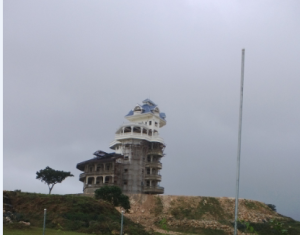
10,000 Miles Straight Ahead – Friday Fictioneers

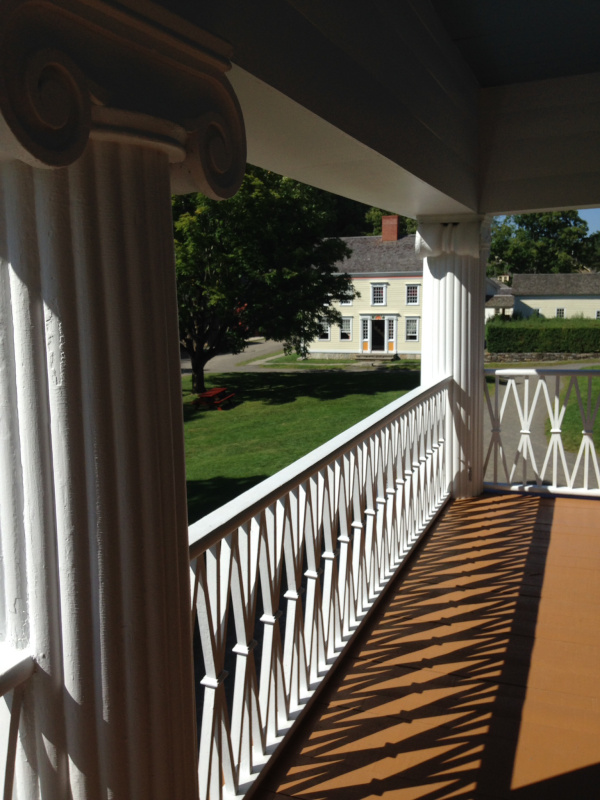
copyright Dawn Landau

copyright Dawn Landau

10,000 Miles Straight Ahead

My sister Olivia left to ride the rails when she was sixteen. She only told me, but I was 10 and scared. I tattled.

Too late.

Olivia came back three years, 22,400 miles, and an entire lifetime later. She had the best stories. Mom was furious. Dad wiped away a tear and hugged her.

“Stay around,” I said. “For me?”

She nodded, but two weeks later I found the note by my bed.

“That’s who she is,” Dad said.

“Will she ever change?”

“She’s like a train,” he said. “10,000 miles straight ahead, but not an inch left or right.”


5 Annoying Things About the Apocalypse

copyright Joe Owens

copyright Joe Owens

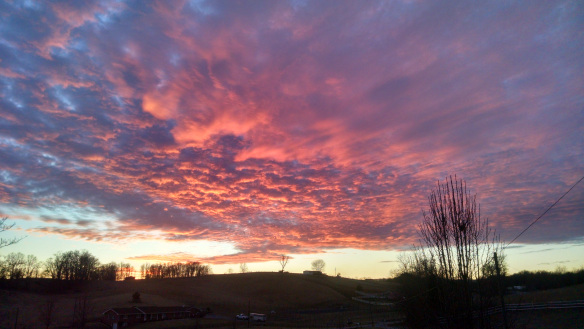
It was the end of the world in a few hours. Yep, no doubt about it. The news had confirmed it and they were never wrong. Half the population was cowering and the other half was making fun of it or partying.

She clicked on a comedy site link: 5 Annoying Things about the Apocalypse.

  1. We’re never going to be able to make a movie about this.
  1. We’ll never be able to eat up all the canned beans in our fallout shelter in time.
  1. Game of Thrones will never, ever be finished.
  1. Bruce Willis really dropped the ball on this one.
  1. Despite all our pop culture about the apocalypse, absolutely no one saw this coming.

Cassandra looked sadly over at her sandwich board lying by the door, The End is Nigh scrawled in her spidery handwriting. She opened up her blog where the last entry: WE’RE ALL GOING TO DIE! sat with no comments and no likes. It had been posted a week before the news of the monster asteroid had been announced.

The phone rang. “Hey Cassandra, let’s go out with a bang!” her friend said. “A group of us are going over to the bar to get drunk.”

“It’ll be closed,” Cassandra said.

“No it won’t. Come on!” Her friend hung up.

Sigh.


Endy and the Office

Endy was a baby enderman. In that way, he was an enderboy, if such a thing existed. Endy didn’t know; he couldn’t even remember his parents, except that they were tall, shimmery, and had purple eyes. Just like him, minus the tall part. But Endy had teleported away from them one night and couldn’t find his way back. By morning, he had sought refuge in an office building and had gotten stuck in an office.

All Endermen can teleport, but for some reason Endy couldn’t teleport through things. He didn’t know if it was because he was young or if there was something wrong with him. This particular office had had the door open but usually it was shut and Endy was trapped. When the professor who worked there was in, the door was always shut and Endy did not dare move while it was open, in case he was spotted.

When he was alone, though, he could do what he wanted. He quickly made friends with the computer mouse.

Endy and the Office

“Let’s go for a ride!” Endy said. He teleported to Mouse’s back

“Okay, here we go!” Mouse said and reared up like a horse and slid over the mouse pad as far as its cord would allow.

“Go further! More! More!” Endy had said the first time. Mouse stopped and his scroll wheel blushed deep red.

“I can’t,” he said. “I’m not wireless. If I were, I could anywhere, but I’m stuck here. My dream is to leave and scroll across the world, double-clicking on everything I see.” Mouse was a little weird, but he was a good friend.

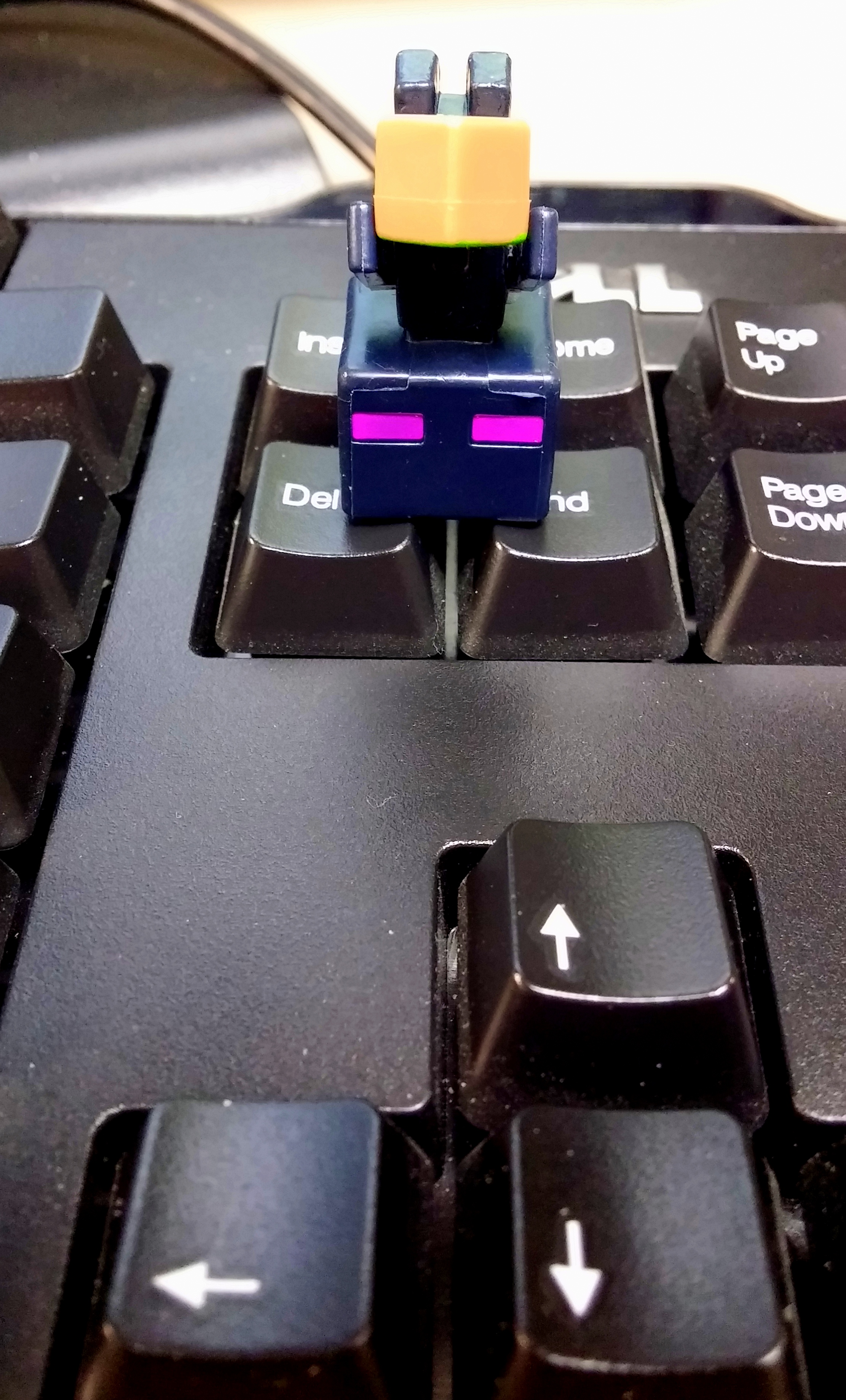
Endy tried to make friends with the keyboard too, but that was harder. The keyboard could not talk like Mouse but it could push its keys down and spell things out. Endy couldn’t spell well, but with the help of an elderly electronic dictionary that lived in the top drawer, he soon learned all the keys.

“Hey, this one says End!” he exclaimed. “That’s almost like my name.”

“What does the one above it say?” the dictionary asked.

“It says Home,” Endy said. “Does it work? When I push it, can I go home?”

“Only if you live at the beginning of a line,” the dictionary said, which did not make any sense to Endy.

Endy and the Office

The keyboard was a little gruff and would sometimes put down its Shift key and burst out with a series of *%$#@ expletives if Endy got too rowdy, but it was usually protective. Endy would play around the keys, especially near the End and Home keys, which he liked the best.

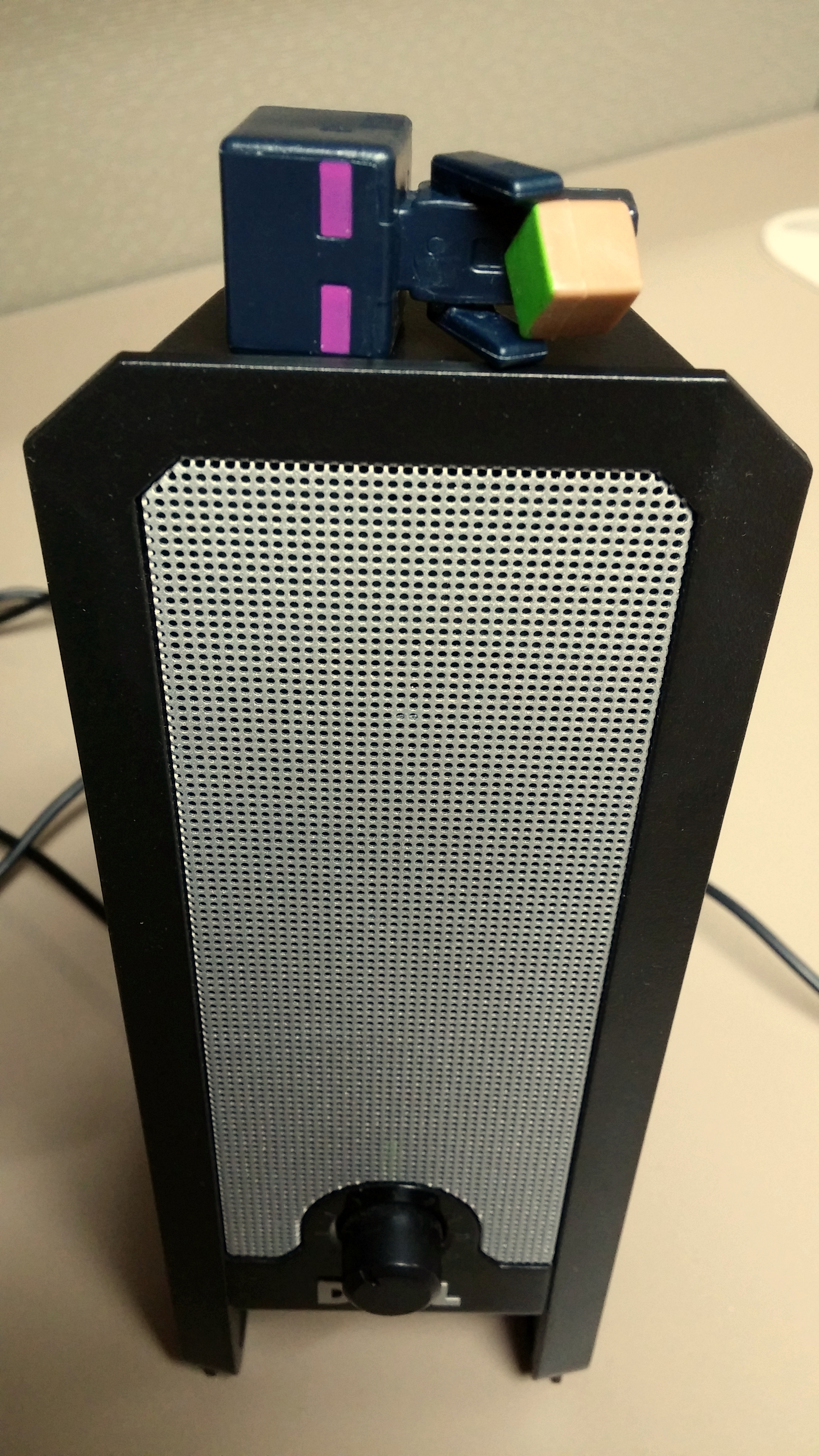
At night, Endy slept on top of one of the speakers. It played soft music for him to fall asleep or occasionally, if Endy was feeling homesick, parody songs about his people that it found on Youtube.

Endy and the Office

One day, the professor got up to go to class. He was late and in a hurry. Endy looked up and saw that the door was still partially open.

“The door’s open,” Endy told Mouse. “What should we do?”

There was a furious clacking from the keyboard. It was repeating pushing down it’s uppermost left key.

“What’s it saying?” Mouse asked.

“It’s saying ‘Escape,’” Endy said.

“Go on,” Mouse said. “You deserve it. Go find your family.”

“No, we’ll do it together,” Endy said. He jumped on Mouse’s back. “Come on, try! Try to break free.” Mouse strained and pulled and then there was a pop and his cord popped out the USB slot. They were free.

“Good bye, Keyboard! Good bye, Speakers,” Endy said. “If I can, I’ll come back and say hello again. Good luck.”

Ctrl-C, the keyboard typed. With that, Endy and Mouse rode out the door.


Death Maker – Friday Fictioneers

copyright Marie Gail Stratford

copyright Marie Gail Stratford


I

make death:

long, beautiful

annihilation.

We all do here

at  the forge,

but  Harold,

who’s a klutz,

makes  axes:

tree   death,

and William

shapes animal

slaughter for

the butchers.

I am the best.

I make human

death. I sweat

at  the  steely

altar of Hades,

heated crimson

like future blood.

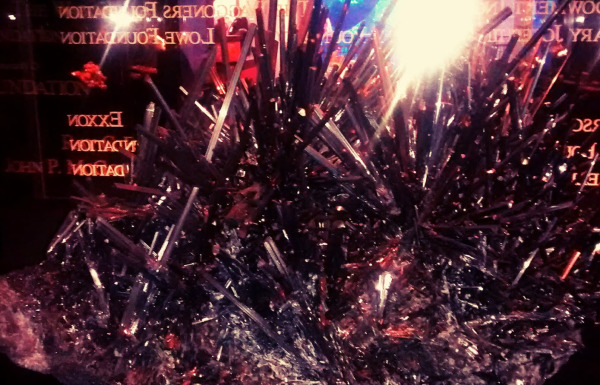
My masterpiece was for the king. It took a year to make. The hilt was set with a

fountain of diamonds, like the seeds of mourning lilies.

It won me a

citation. I

cannot read it,

but I know what

it  says.  The

best  death

maker  in

the realm.


5 Mind-blowing Facts about English that Historians Don’t Want You to Know

Please share this post. People deserve to know.

It’s easy to take our language for granted and not think about where it came from or what it looked like only a short time ago. However, the English language has had a twisted and bizarre past, and historians have tried to cover up some of the most startling facts. Here are five facts about the English language that they don’t want you to know, which will literally blow your mind.

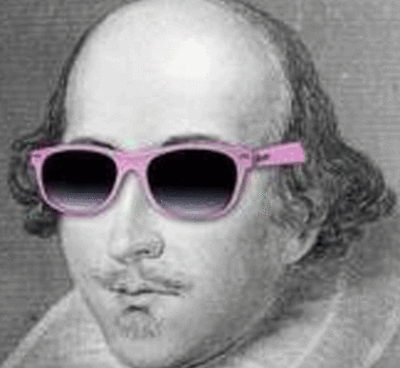
5. Shakespeare created the future tense.

This is hard to imagine but before William Shakespeare, there was no future tense. Time in that period of history was divided in two: past and present. This was the case not only for English but every other language up until that point.

The main reason for this was that in ages past, life was very hard. Hopes for the future were slim or non-existent and people did not dwell on it. A popular proverb in Old Germanic translates as, “Let it be so: we shall all die today anyway.” Today, in this case, meant either the present or the future.

We still have a vestige of this in today’s grammar, in the expression “to be going to” as in “I am going to eat a bucket of gerbil heads.” Even though we know this means the future, it is still technically the present.

Shakespeare, however, was the first person in history to have both hope and a way to express it: i.e. through his writings. He created the future tense and then, when trying to think of a word to use for it, decided to use his own name. At first, people were confused at this new word will, but Shakespeare cleverly always used it with a future time phrase and soon people accepted the new word and the idea of the future. Eventually, many other languages noticed this and formed their own future tenses.

4. Spaces Between Words Were Created During WWI.

This one may surprise you, but take a look at any book written before 1914 and chances are, there will be no spaces between the words (later editions of these books have since put in the spaces for the benefit of the modern reader). The reason for this was that paper was extremely expensive and so publishers would push all the words together to save space. Authors were allowed to have one blank line between chapters, although they were charged 1 cent per line by the publisher (this is where the term “publisher’s penny” comes from, when referring to line breaks.)

Actually, spaces between words used to be a hot issue, with many authors in the 19th century fighting for their use. Other authors, however, were against them. Jane Austen once famously said, “I want my words huddled together so as not to catch cold, when read upon a cold winter’s night.” To give you an idea of what this looked like, here are the first few sentences of Pride and Prejudice, as they would have looked when first published:

jane austen no spaces

Jules Verne, another supporter of no spaces, declared that reading novels with no spaces “caused the reader to strive mightily and through great toil, to attain the true meaning of the text.”
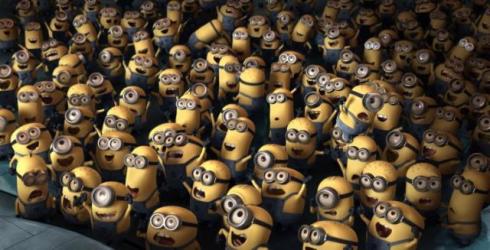
Kind of like this, but with words (copyright Universal Pictures)

Kind of like this, but with words (copyright Universal Pictures)

World War One, however, changed all that. Suddenly, troops at the front were having to read dispatches quickly and accurately. They began to put spaces between words to make them easier to read in the trenches. After the war, authors who had been soldiers adopted this practice and within a few years, it had become standard, to the point that now it seems inconceivable to have text with no spaces in it.

3. The Semicolon was Created in a Bar Bet

semicolon cat

[*]

In 1871, two writers, Lewis Carroll and Benjamin Disraeli, were drinking together in a tavern in Oxford. Carroll argued that there were no more innovations to be made in literature and that the art form was more or less dead. Disraeli declared that he could create an entirely new punctuation mark and have it accepted within 5 years. They wagered a Nebuchadnezzar of fine Bordeaux wine on the attempt. Disraeli drew a period and a comma on a napkin and although he meant to draw them side by side, his hand was shaking and he accidentally drew the period above the comma. He liked the effect and this is how it has remained.

Its usage was somewhat in debate at first. Disraeli first declared that it was designated for “full stops that have not yet a full-committal” or as Punctuation Daily editor Mark Groobinsky put it, “when you think you want to stop, but you’re not sure.” It would take fifty years or more before the modern usage of the semicolon came into standard practice.

Over the next few years, Disraeli included this new mark in all his writings and even gave talks on it. Initially, he called it the ‘perio-comma’ but it was later renamed ‘semicolon’ since it “partially resembles that particular body part.

The semicolon was slow in catching on and Disraeli eventually lost his bet. However, by the turn of the twentieth century, the semicolon was an accepted punctuation mark.

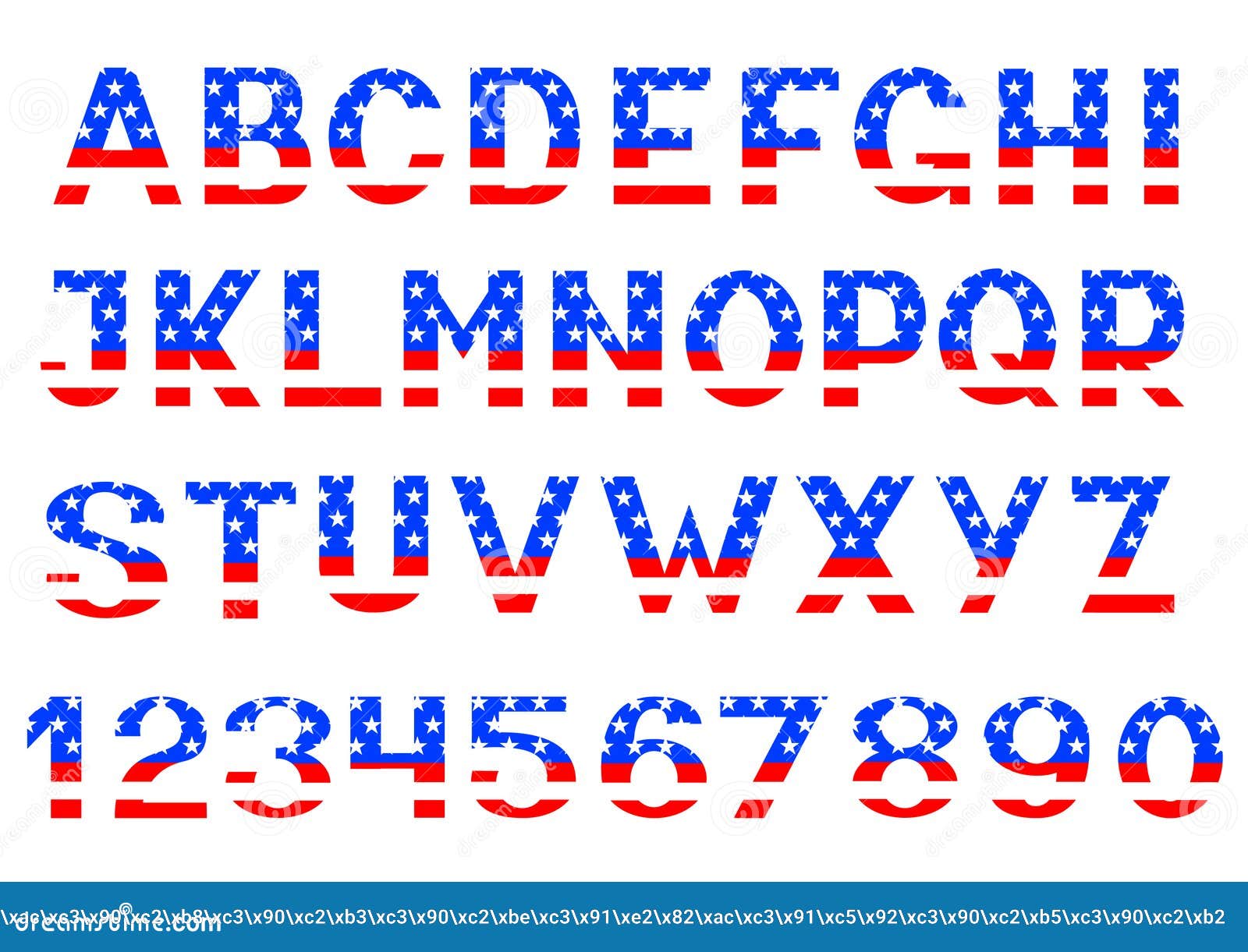
2. The US Almost Adopted its Own Alphabet

Although the US has never had an official language, back in 1795, it almost had its own alphabet. Right after the Revolutionary War, there was a great deal of anti-British sentiment in the United States. It was generally agreed that changing the language would be too hard, but some senators proposed changing the alphabet to make it purely American.

It was known as the Stockton-Bloodworth Plan, named after the two senators who proposed it. The idea was to replace the standard letters with American symbols that started with those letters. Thus, “T” was replaced by a sketch of a turkey and “G” was replaced by an upright gun. Today, there are only a few examples of this type of writing in existence, all of which are stored in the Library of Congress archives.

The current American alphabet [*]

The current American alphabet [*]

Critics of the plan pointed out that many of the symbols were not uniquely American (the letter “H” was a horse); some were very hard to draw (the letter “F” was an American flag, complete with all fifteen stars and fifteen stripes); and others simply did not make sense (the letter “X” was represented by a picture of a man kicking a puppy.) Ultimately, the proposal was defeated in Congress with a vote of 18-14.

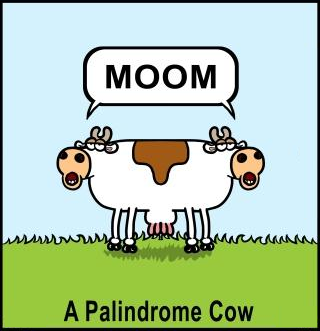
1. For a Period of 300 Years, All English Words Were Palindromes

Henry II was crowned king of England in 1133 AD. He always had trouble reading and in 1135, his court doctor declared that he “had a right-moving globe of Apollo”, as opposed to most people, whose globe of Apollo apparently moved left. This meant, according to the doctor, that the king could best read words from right to left. To facilitate both types of reading, the king declared that all words be made into palindromes, so that they could be read from either direction. The court scholars worked for two years to perfect this system (some of these words, such as “level” and “refer” still persist in English today).

The king trumpeted the achievement as a great step forward for both right- and left-moving globes of Apollo, despite the fact that he was the only person to have ever been found in the former category (historians now believe this was actually a form of dyslexia.)

Here is a sample of this type of text from the Old English version of Orosius’ The Amazons, converted to palindromes:
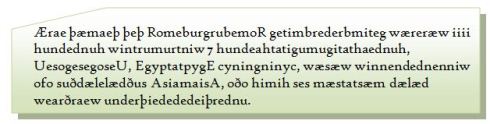
Old English Palindromes

Spaces added later for modern readability

This type of writing became established and persisted long after Henry II’s reign. It was finally abolished in 1443 by Henry VI when a major ink shortage caused the king to look for ways of shortening the language. Still, whenever you talk to an “Anna” or do anything “civic”, think of Henry II and his right-moving globe of Apollo.


The preceding article has been rated “S” for satire.


Paper Dolls – Friday Fictioneers

I am super late this week in posting my story for Friday Fictioneers. There are several reasons for this, including being very busy at work, but one main one is that I am finding Friday Fictioneers stories harder and harder to write. It’s not that I can’t think of a story: I could probably sit down and write a hundred stories in a row for any given picture. It’s just that as time goes on, my standards for myself for originality and quality keep increasing and after 113 100-word stories, I feel like everything has been done. That’s one reason why I play around ways of presenting stories: I feel like I’m stagnating or at least I don’t want to. Sometimes a story that I like comes right to me, but usually it doesn’t and these days, I often agonize about it for days. If you do Friday Fictioneers stories, do you ever feel this way? Is it just me?

copyright Rochelle Wisoff-Fields

copyright Rochelle Wisoff-Fields

Paper Dolls

Snip, snip. A line of identical dolls appeared.

Elise picked up one of the crayons from her father.

“Make them colorful,” he’d said. “Bring them to life.”

She left the first one blank; drew a happy face on the second. The third had clothes and hair.

The tenth took all week. Finally, the light glowed off her perfectly shaded face. Her name was Galatea; Elise had ten pages of history for her. She was Greek. And liked chocolate and rainbows.

Elise put down the pencil and Galatea’s arm floated up as if waving, blown by an imaginary breeze.

Elise smiled.


The Elephant's Trunk

🐘 Nancy is a storyteller, music blogger, humorist, poet, curveballer, noir dreamer 🐘

Thru Violet's Lentz

My view, tho' somewhat askew...

The New, Unofficial, On-line Writer's Guild

Aooga, Aooga - here there be prompts, so dive right in

Just Joyfulness

Celebrating joy

Tao-Talk

You have reached a quiet bamboo grove, where you will find an eclectic mix of nature, music, writing, and other creative arts. Tao-Talk is curated by a philosophical daoist who has thrown the net away.

H J Musk

On reading, writing and everything in between ...

Clare Graith

Author, Near Future Sci-Fi, Dystopian, Apocalypse

Kent Wayne

Epic fantasy & military sci-fi author.

Rolling Boxcars

Where Gaming Comes at you like a Freight Train

Lady Jabberwocky

Write with Heart

Fatima Fakier

Wayward Thoughts of a Relentless Morning Person

Life in Japan and Beyond

stories and insights from Japan

The Green-Walled Treehouse

Explore . Imagine . Create

One Minute Office Magic

Learning new Microsoft Office tricks in "just a minute"

lightsleeperbutheavydreamer

Just grin and bear it awhile

Linda's Bible Study

Come study God's Word with me!

Haden Clark

Philosophy. Theology. Everything else.

Citizen Tom

Welcome to Conservative commentary and Christian prayers from Mount Vernon, Ohio.

The Green-Walled Chapel

Writings on Faith, Religion and Philosophy

To Be A Magician

Creative writing and short stories

My music canvas

you + me + music

Eve In Korea

My Adventures As An ESL Teacher In South Korea

Luna's Writing Journal

A Place for my Fiction

Upper Iowa University

Center for International Education

Here's To Being Human

Living life as a human

jenacidebybibliophile

Book Reviewer and Blogger

yuxianadventure

kitten loves the world

Strolling South America

10 countries, 675 days, 38,540km

It's All in Finding the Right Words

The Eternal Search to Find One's Self: Flash Fiction and Beyond

Reflections Of Life's Journey

Lessons, Joys, Blessings, Friendships, Heartaches, Hardships , Special Moments

Ryan Lanz

Fantasy Author

Chris Green Stories

Original Short Fiction

Finding Myself Through Writing

Writing Habits of Elle Knowles - Author

BEAUTIFUL WORDS

Inspiring mental health through creative arts and friendly interactions. (Award free blog)

TALES FROM THE MOTHERLAND

Straight up with a twist– Because life is too short to be subtle!

Unmapped Country within Us

Emily Livingstone, Author

Silkpurseproductions's Blog

The art of making a silk purse out of a sow's ear.

BJ Writes

My online repository for works in progress