Tag Archives: fiction

Cartman – Friday Fictioneers

copyright Janet Webb

copyright Janet Webb

Cartman

Ross polished the bars of the shopping cart until they shone. He had status now and he had to act accordingly.

After Boom-day, when gasoline ran out, bicycles were big. But as tires cracked and chains broke, they were discarded. Now, the man with a shopping cart was king.

Ross overtook Jenks on Broadway, carrying a huge load on his back. Ross nodded officiously; Jenks sneered.

“So high and mighty with your cart, aren’t you? But that front wheel is wobbling pretty bad. How long until you’re like me?”

Never, Ross thought. He was somebody now. He couldn’t go back.


The Day “R” Said Good-bye

One day, people woke up to find that “R” had said good-bye. No one knew why it left, but all keyboads suddenly had a blank between “E” and “T”. It was quite distubing.

It affected the Bitish and the Fench quite a bit, along with the Koeans, although I think the Ussians complained the loudest (not that Bazil was too thilled). Canada didn’t mind, although people began calling Toronto “Toonto”, when they knew full well it should be hyphenated. Huge swaths of the population became cold and hungy as they suddenly had to eat ice all day: beakfast, lunch and suppe (ice pilaf is just not the same.) Potatoes stayed the same, but bakeies began selling nothing but bead.

What made me the saddest was that all my friends became fiends.

R


The World is my Stage – Friday Fictioneers

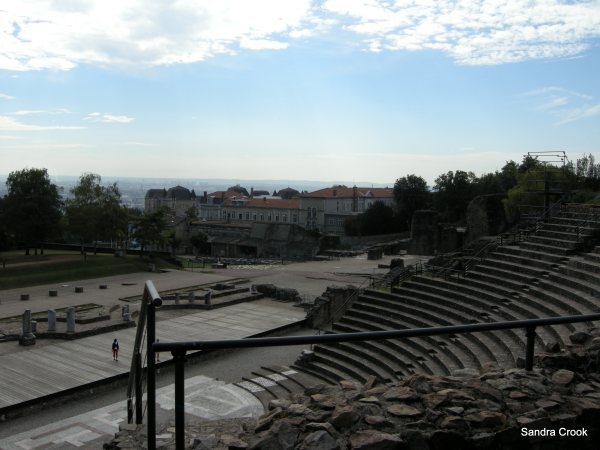
copyright Sandra Crook

copyright Sandra Crook

The World is my Stage

“1 billion hits by midnight or New York City is gone!” screamed the title of the live Internet feed. Seven hours left: 540,000,000 hits needed. The CIA considered them a credible threat and now the whole world watched, breath held.

Jason sat in front of the nuclear weapon mock-up, webcam capturing everything except his own screen. Members were reporting from all over the country. Everything was almost ready, and then the real strike, the hammer blow of vengeance, would fall.

The first rule of sleight of hand, Jason thought. Keep the audience focused anywhere but where the real action is.


Screams at Midnight

I woke up suddenly to screams coming from the road below my apartment. I jumped up and went to the window. It was almost midnight and the road was deserted. Then I saw the small figure shrinking back against the wall on the edge of the streetlight’s circle of light.

night alley

What should I do? I had only been in the country for two weeks and I didn’t know the language beyond basic phrases. I stood there for a few moments, listening to the cries and praying other neighbors would call the police and relieve me of any responsibility.

The windows across the road from me remained dark and I saw one light go off and unseen hands pull the shutters closed. So that’s how it was.

I thought of just going back to bed, but how could I sleep like that? How could I stand by and do nothing while someone was suffering? I had always been appalled at stories of people who heard muggings and murders going on outside their apartment and did nothing for fear of getting involved. On the other hand, I didn’t want to go get involved in something that was none of my business.

Finally, I got dressed slowly and went to the door. I would at least go try to get a better idea of the situation. I went down the stairs and peered out the front door.

The figure—it was definitely a woman—was in the same defensive position, but I could not see anyone else. I took a step outside, still scanning the shadows. The fact that she was apparently alone alarmed me almost as much as if someone had been there beating her.

I walked into the circle of light and the woman abruptly went quiet. The next thing I knew, she was clinging to me, looking back over her shoulder at the empty road. She was talking to me, fast, but I had no idea what she was saying.

She seemed to be in her 20s, long black hair, and almost freakishly thin. Her skin was cold against my arm. Strangely enough, she smelled of wood smoke, a smell I have always loved.

“Uh, are you okay? Okay?” I said. She gave me a look of incomprehension.

What was I supposed to do? Finally, I asked, “Do you want to come up for tea? Tea?” I made a drinking motion, then hoped she didn’t interpret it as alcohol. I remembered the word for tea and said it and she nodded.

I lived alone and my apartment was not exactly neat. I blushed and tried frantically to clean up, at least superficially, as we walked in. She didn’t seem to notice—just sat on the couch and looked around. I was glad she had calmed down, at least.

As the water was boiling for tea, I tried to make small talk, which is very hard without a common language. I showed her my language study book and she seemed to approve. Then we silently sipped at our tea and smiled at each other when our eyes happened to meet. Finally, she stood up and took a deep breath.

“Thank you,” she said, one of the few phrases I knew in her language. “Thank you, thank you.”

“No problem,” I said, completely forgetting the appropriate response.

She walked to the door and put on her shoes.

“Uh . . .” I began—she had walked out with my mug in her hands. But then she turned and gave me such a radiant smile that I let her have it. “Have a good night,” I said. “Bye bye.”

“Bye bye,” she said, in English, and giggled.

The next day, I asked my landlord about her. It took him a few minutes to understand. “Ah, I know. I know the girl,” he said at last. “Yes, she is not . . . not okay in the head, you know? Sometimes she cries at night on the street. Don’t worry, don’t worry.”

“What happened?”

“Years before, she had a boyfriend, he was very bad. He hit her a lot, very badly. Then one day he hit her on the road right there and she hit him back with rock and killed him. No trouble with the police—not her fault, but after that she not okay in the head. If you see her, don’t worry.”

“Okay,” I said. I didn’t tell him that I had made her tea in my apartment and that she hadn’t seemed crazy to me.

Two days later, I opened my door to go to work and found my mug sitting in front of the door. It had been washed and was stuffed with money, mostly dirty and wrinkled bills. There was about $25 worth in all. After that, other cups and containers appeared in front of my door, all filled with money. After six months, I had over $300 collected.

I didn’t spend the money—I felt bad just having it. I wanted to give it back, but I never saw the woman again. I looked for her but couldn’t find her. No one seemed to know where she lived. Based on the smell of wood smoke, I even wandered out into the forest, wondering if she lived in a cabin out there.

Even now, a year later, the money still comes from time to time. I’ve thought of hooking up a camera to catch her in the act. I just want to tell her thank you, that I don’t need the money, that I want to know more about her. All I can do now is study the language and keep my eyes open.

What else can I do? What would you do in my place?


The Delights of the Cage – Alastair’s Photo Fiction

The Delights of the Cage

“If only,” Col said, and sighed as only a pigeon can. “Look how strong those bars are.”

“They could hold off anything,” Umbi murmured. “Cats, rats, even dogs.”

“And they’re indoors, and they’re allowed to be,” Dae said. “I once flew into a Walmart and I had people whacking at me with brooms for an hour before I got out.”

“Food all day long, just sitting there, ready to eat,” Col said.

“Warm in the winter, cool in the summer,” Dae moaned.

“I hear they even get a bell to play with, or a mirror.”

“What’s a mirror?”

“It’s like a magic window. It has another bird inside that can’t get out. I hear they’re very entertaining.”

“Shoo! Get away from here!” The three pigeons scattered and took flight, just in time to avoid the kick the pet shop owner had aimed at them.

“If only we could live in a cage,” Umbi said as they flew away, in search of something to eat. “That would be the life.”


Raise a Glass for the Phoenix

This story is based on a real place. There is a restaurant in my city called the Phoenix that is shaped like a huge sailing ship. It caught fire about 12 years ago and now just stands there, abandoned and left as it was on the day of the fire.

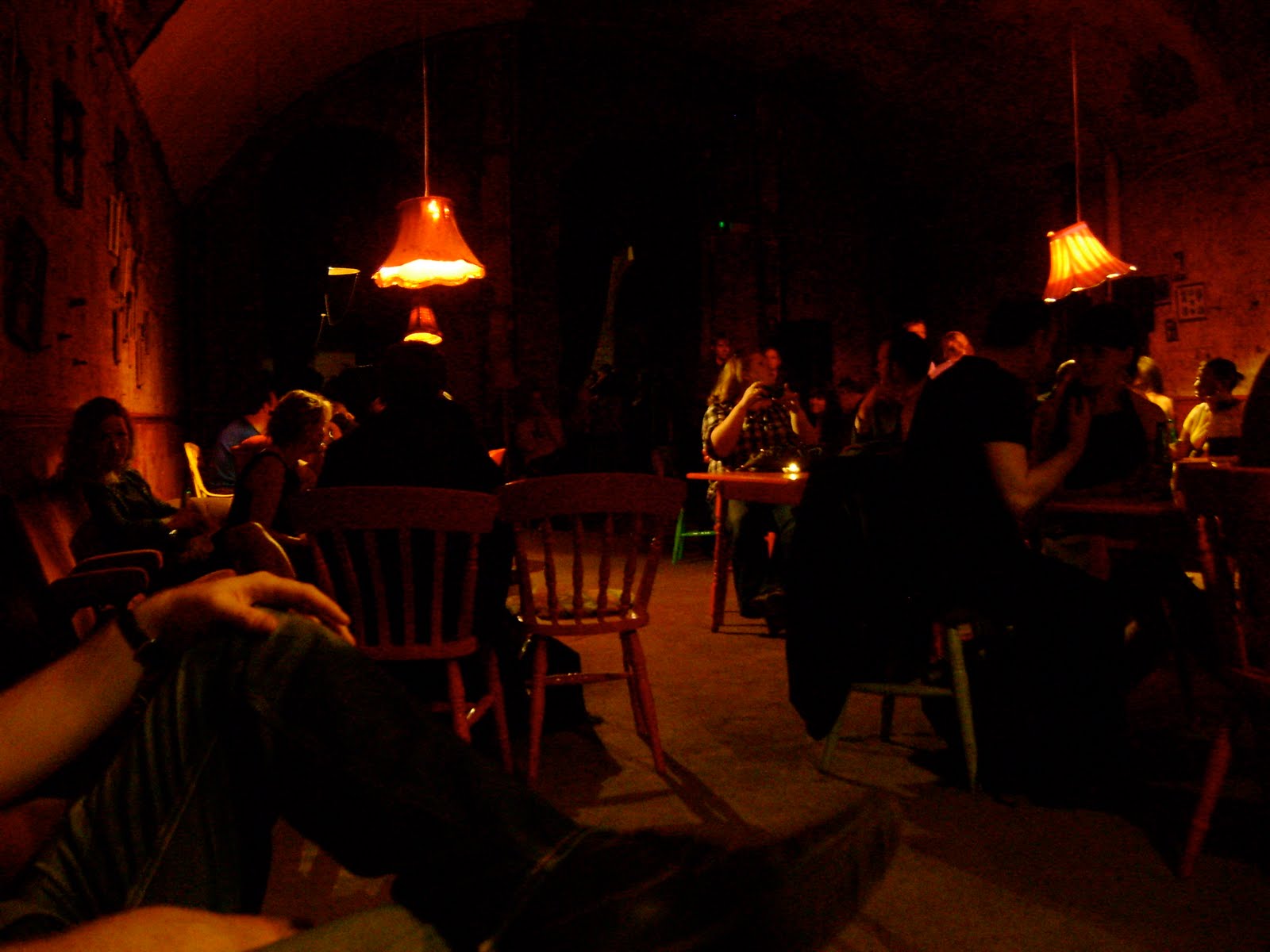
dim bar

“Raise a glass for the Phoenix.” I heard glasses clink.

The bar was dim but I could see a small group of older men hunched together around a table. The empty glasses on the table showed they had already been drinking heavily for some time.

I should have left it alone, should have gone back to my drink and cell phone game and continued waiting for my friend to arrive. Still, I have a need to know, like a compulsion. When people say “curiosity killed the cat,” I reply, “Yeah, but at least he died satisfied.” That’s my motto.

“Excuse me, I said, sidling up. “I know this is impossibly rude, but I’ve heard the name Phoenix several times before. I was wondering what it meant.”

The men looked up at me, giving me a stony glare that showed I was interrupting and not welcome. Then one of them spoke. “You’re not from here, are you?”

“I moved here six months ago.”

The men looked around at each other. A few had doubtful expressions. “I’ll tell you,” one of them said finally.

“You really going to do this, Ryan?” one of the other men asked.

“Sure, why not? We need more for the party, right?” The other man shrugged, drained his glass, and then he and another left.

“Don’t mind them,” Ryan said. “So, a drink?”

“Yeah, sure,” I said. He signaled the bartender, who brought me a beer in a tall glass.

“For the Phoenix,” Ryan said and we dutifully clinked glasses all around the table. He waited until I had taken a drink before beginning.

“It’s a restaurant,” Ryan said. “The Phoenix. It was, at least. It was way out in the middle of the forest, all by its lonesome. It looked like a big old sailing ship, always in full sail, never moving. The owner, Brett Narrock, was that weird mix of hermit and exhibitionist. The restaurant was just like him: a kind of Vegas built out in the mountains.”

I still didn’t see what was so special about it that it required constant toasts.

“Did you go there a lot?” I asked.

“Go there?” Ryan said, looking surprised. “No, the guest list was very exclusive and by reservation only. I hear that they booked months ahead. No, I was a chef there, the sous-chef under a man named Balodis. The slogan of the Phoenix was: ‘Be Reborn’ but Balodis would always say, ‘When pleasure is old, when the perverse is banal, when the shocking makes you yawn, come to the Phoenix.’”

Ryan brought his face closer to mine and I smelled the sour alcohol on his breath and saw the white-stubbled wrinkles of his cheeks. It was the face of experience. “We made things in that kitchen that defied reason, even sanity,” he said. “It wasn’t about nourishment or any sort of satisfaction of the stomach, it was about experience, titillation, and novelty. Culinary miracles, or nightmares came out it into the dining room. There were bowls of live meal worms that burst in a puff of glowing narcotic when you bit them; potatoes grown on blood; and strange, chemical cocktails tailored to produce specific emotions. One of the appetizers we made was a bowl of chocolates where every fifth one was poisoned. Balodis said a lethal dose was five.”

“And the customers knew you were doing this?” I asked.

Ryan nodded. “Oh, they knew. They paid a lot of money for it. Every night you would see them drive up in their black cars to the underground reception area, or be shuttled in by limo from the helipad.”

“It must have been huge,” I said.

Ryan shook his head. “Not really. It could probably hold a hundred people, may a few more. The clientele was ultra elite. It was nice enough, but it wasn’t covered with gold and jewels, or anything. The customers had all those things already. That’s not why they came.”

“So why did they come?” I asked.

“Unpredictability, loss of control,” Ryan said. “Nothing was the same from one night to another. One night the meals were free, the tables were naked women and the aperitifs were shots of squid ink; the next night, each meal cost five thousand dollars, there was a live tiger roaming the room and the hostess slapped them in the face when they walked in. They lived for that kind of unpredictability.

“Narrock, the owner, gave them everything they wanted and more. He and Balodis were of the same mind about things: both obsessed with pushing things further, trying to find the last untasted experience.”

He paused and took a drink. The story seemed to be over, so I pressed him. “So, what happened to it? They couldn’t have just closed it down after all that?”

Ryan shook his head. “No, there was a fire one night in the kitchen. Balodis was experimenting with some sort of combustible chemical. The whole place went up quickly and spread out into the dining area. Fitting end for a place called the Phoenix.”

Ryan stopped and on an impulse, I raised my glass again. “Well, here’s to the Phoenix. It must have been a hell of a place.”

The others just stared at me and I saw open hostility in more than a few of their faces. “What do you mean by that, exactly?” Ryan asked.

“I—just that it sounds like quite a place.” I felt as if I’d misjudged the situation somehow.

“Weren’t you listening?” one of the other men asked. “The place really was hell. Ryan left out most of the terrible stuff, but I was a waiter there: I know. They tortured animals; they even killed people. They had this place in the middle called the Pit. Once it was glassed in and filled with water for a shark fight. A girl fell in and got torn apart. No one tried to help her. They said it was an accident, but I don’t think so. They once set a live cow on fire and just sat and watched as it crashed around, burning. When it was dead, they cut it up and served the raw, smoking flesh to the diners. There was worse, but I’m not about to speak the words. The nightmares are bad enough.”

“But, then why did you toast it?” I asked. “I thought you liked it.”

“I’ve never hated a place worse in my life,” Ryan said. “After the fire, Narrock tried to rebuild but by then the area had had enough of him and they refused. Before he left, he said, ‘When the party starts to die down, the Phoenix will rise again.’ I don’t know what he meant by that, but it was the sort of cryptic thing he would say. We just started toasting it, hoping that would be enough to keep the Phoenix down. It might seem like superstition but you didn’t know Brett Narrock.

“Where was the Phoenix, anyway?” I asked.

Ryan just shook his head, as if to say, young people these days. “You want to go there, after all I’ve told you?” I nodded. “If you want to go bad enough, you’ll find it. But I won’t tell you. And if you go, if you wake up the spirit of that place, then don’t say I didn’t warn you.”
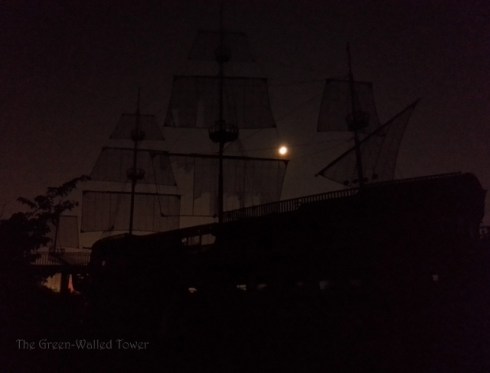
Moonlit Phoenix

The Phoenix

(I should have listened to him, of course, but I was younger and cockier then. The story continues, soon.)



Enough to Go Around – Friday Fictioneers

I admit: I found this prompt pretty hard, although it doesn’t help that I’ve been pretty tired for the last few days. I vacillated between dark and humour and ended up with dark humour.

Copyright E.A. Wicklund

Copyright E.A. Wicklund

Enough to Go Around

“I never saw the harm, you know?” Dean said. His seventh beer was leaking into his words. “Girls fighting over you—that’s good, right?”

The same old story.

“I was dating Amy then,” he said. “You remember Amy? The wrestler?”

“I remember.”

“It was after a tournament and her friend starts flirting with me. Awesome! Then Amy finds us, grabs my arm. Her friend grabs my other arm. I say, ‘Ladies, there’s enough of me to go around.’” He starts crying.

“Come on, let’s get you home.” I ease his coat over his cold, prosthetic arms and lead him outside.


It’s the Sky’s Fault

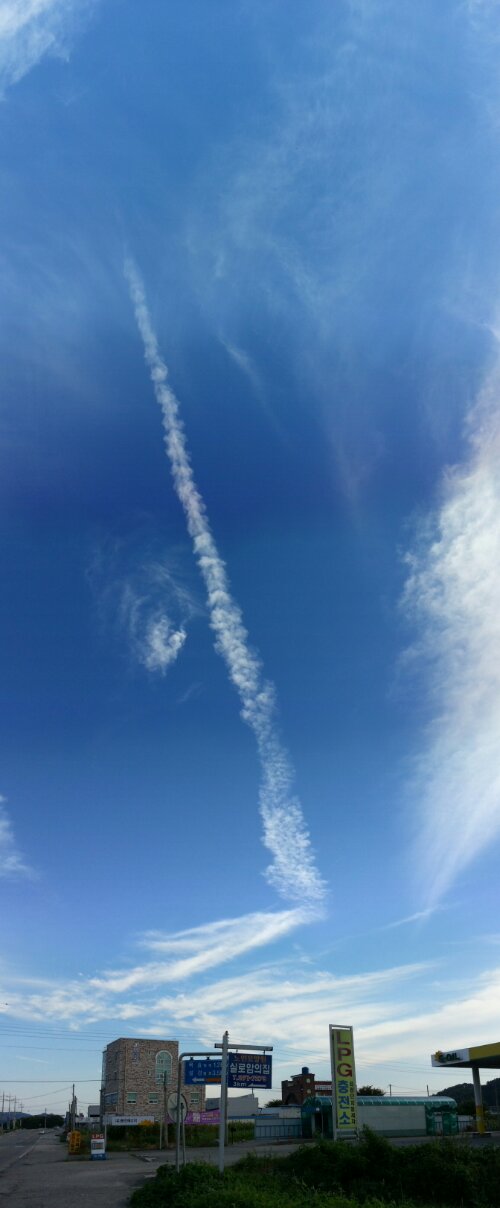
It was the sky’s fault, of course.

image

Seriously, who could keep their eyes on the road with such a stunning parorama spread out above them?

The police were suspicious at first, but after my third one-car accident with no trace of alcohol or drowsiness, they started to believe me.

After the last accident, the officer told me he would give me a ticket if he even saw me driving on a nice day.

Oh well. I wonder if there’s such a thing as a glass-roofed bus.

image


Strangely, Not True

Strangely Not TrueCoincidences.

They bind us all together. They divide us. They are unlikely, yet they happen every day. They are a mystery, waiting to be unlocked by an enigma in the shape of a key.

On this episode of Strangely, Not True, we look at the case of two brothers; originally the best of friends, but ultimately struck down by Coincidence.

These two brothers were twins named John and James Smith, from Winnipeg, Manitoba. However, in order to protect their identity, we shall refer to them as Rufus and Halibut.

Rufus and Halibut were the best of friends. They were so close that they rarely spoke to their parents. They only grunted at their teachers. They had no other friends. If anyone tried to talk to them, the brothers would turn on them and beat them until the unfortunate person ran away, sobbing.

That was just how close they were.

All of this changed one day when they had a sudden falling out…

…of an airplane.

The fight started innocently enough. The two brothers were going sky-diving. The door opened and the light turned green.

“After you,” Rufus shouted over the noise of the wind.

“No, after you,” Halibut shouted back.

“I insist,” Rufus bellowed.

“So do I,” Halibut screamed.

This quickly degenerated into a full, knock-down fight and a minute later, the two boys were spinning through the air, falling to earth and exchanging punches. Luckily, their parachutes opened automatically. They gently floated to the ground, still whaling on each other, and from that day forward, they never spoke another word to each other.

Rufus moved to Spain and became a bullfighter. He married an Italian stockbroker and had five children.

Halibut moved the outback of Australia and became a world-famous didgeridoo maker. He did not marry but was an object of attraction for all of the Aborigine women in the area.

Still, the two brother did not forget each other. At times, Rufus would be in the bullfighting ring and he would suddenly see his brother’s face in the crowd. At other times, he would be eating paella and suddenly think of joke that Halibut had told and he would laugh so hard that paella would spray across the room.

Halibut was no different. One evening he heard a kookaburra laugh in a tree nearby and thought, “That is just how Rufus would laugh when I tickled his nose. And he loved eating cute and cuddly things, like that wallaby over there.”

Rufus tried to contact Halibut but it was impossible. Halibut was not on Facebook. Halibut’s efforts to contact Rufus were likewise in vain: Rufus did not have a Twitter account. It was hopeless.

Finally, one June day, Rufus returned to go sky-diving alone where he and Halibut had gone. Halibut went hiking alone to the place where they had landed and seen each other last. As Rufus was falling through the air, the parachute did not open. He realized he did not know how to open it. Last time it had opened by itself while he had been fighting. He tried punching himself in the face a few times, but it did no good

Halibut stood at the site where the two of them had seen each other last. “Oh, Rufus!” he cried. “If only I could see you again, just for a moment.”

He looked up just as Rufus landed on him. Both were killed instantly.

Take this tale of two brothers as a cautionary tale. Be sure to correct anyone who says that the fate of these unfortunate men was due to mere chance. It was not chance: it was Coincidence. Be on guard, lest coincidence strike you too, when you least expect it.

Until next time, this has been Strangely, Not True.


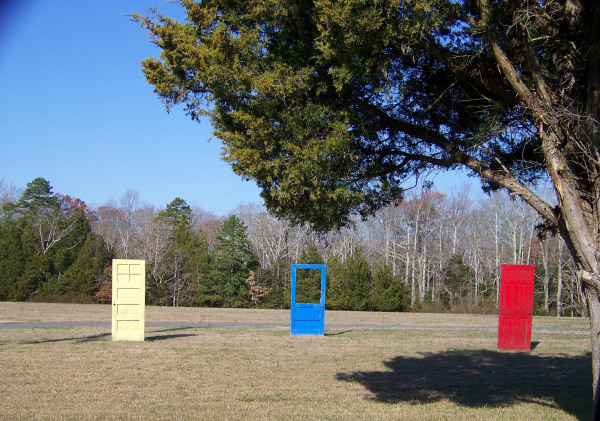
They Say – Friday Fictioneers

Well, it’s Friday Fictioneers time again. First of all, my apologies for not being able to read very many stories last week. I was out in the mountains for most of the week and even though I had a smart phone, it is very difficult to read a lot on it as well as write meaningful comments. I will do better this week.

Copyright Rich Voza

Copyright Rich Voza


Teenager, blue hat:

“They say the house’s invisible; only the doors are visible.”

Teenager, smoking:

“I heard it’s haunted.”

Teenager, red hair:

“My brother’s friend knew a guy who said the red one leads to Hell.”

Blue hat:

“I heard if you say ‘bloody skull’ in front of the white one at midnight, a witch appears.”

Red hair:

“They say they glow on Halloween.”

Smoking:

“They oughta know.”

Old man, long scar, approaches:

“I got caught in the white door when I was young. There really is a witch there.”

All three:

“Shut up, old man. You’re such a liar!”


The Elephant's Trunk

🐘 Nancy is a storyteller, music blogger, humorist, poet, curveballer, noir dreamer 🐘

Thru Violet's Lentz

My view, tho' somewhat askew...

The New, Unofficial, On-line Writer's Guild

Aooga, Aooga - here there be prompts, so dive right in

Just Joyfulness

Celebrating joy

Tao-Talk

You have reached a quiet bamboo grove, where you will find an eclectic mix of nature, music, writing, and other creative arts. Tao-Talk is curated by a philosophical daoist who has thrown the net away.

H J Musk

On reading, writing and everything in between ...

Clare Graith

Author, Near Future Sci-Fi, Dystopian, Apocalypse

Kent Wayne

Epic fantasy & military sci-fi author.

Rolling Boxcars

Where Gaming Comes at you like a Freight Train

Lady Jabberwocky

Write with Heart

Fatima Fakier

Wayward Thoughts of a Relentless Morning Person

Life in Japan and Beyond

stories and insights from Japan

The Green-Walled Treehouse

Explore . Imagine . Create

One Minute Office Magic

Learning new Microsoft Office tricks in "just a minute"

lightsleeperbutheavydreamer

Just grin and bear it awhile

Linda's Bible Study

Come study God's Word with me!

Haden Clark

Philosophy. Theology. Everything else.

Citizen Tom

Welcome to Conservative commentary and Christian prayers from Mount Vernon, Ohio.

The Green-Walled Chapel

Writings on Faith, Religion and Philosophy

To Be A Magician

Creative writing and short stories

My music canvas

you + me + music

Eve In Korea

My Adventures As An ESL Teacher In South Korea

Luna's Writing Journal

A Place for my Fiction

Upper Iowa University

Center for International Education

Here's To Being Human

Living life as a human

jenacidebybibliophile

Book Reviewer and Blogger

yuxianadventure

kitten loves the world

Strolling South America

10 countries, 675 days, 38,540km

It's All in Finding the Right Words

The Eternal Search to Find One's Self: Flash Fiction and Beyond

Reflections Of Life's Journey

Lessons, Joys, Blessings, Friendships, Heartaches, Hardships , Special Moments

Ryan Lanz

Fantasy Author

Chris Green Stories

Original Short Fiction

Finding Myself Through Writing

Writing Habits of Elle Knowles - Author

BEAUTIFUL WORDS

Inspiring mental health through creative arts and friendly interactions. (Award free blog)

TALES FROM THE MOTHERLAND

Straight up with a twist– Because life is too short to be subtle!

Unmapped Country within Us

Emily Livingstone, Author

Silkpurseproductions's Blog

The art of making a silk purse out of a sow's ear.

BJ Writes

My online repository for works in progress