Tag Archives: fiction

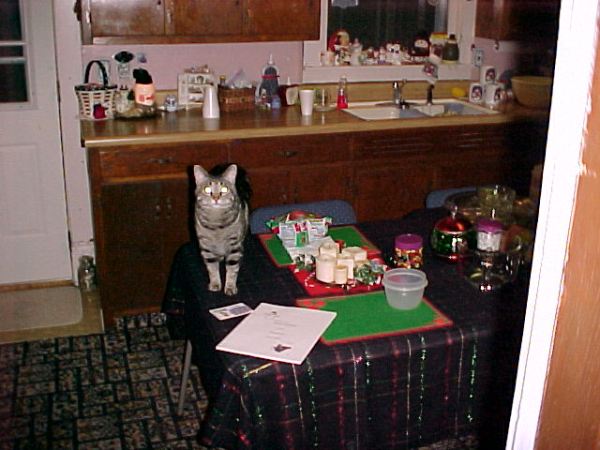
Feline Relations – Friday Fictioneers

The Christmas edition of the Friday Fictioneers. Click here to look at some more stories.

Copyright Scott Vannatter

Copyright Scott Vannatter

You are dreaming.

“…I’m dreaming.”

Cats don’t write Christmas cards.

“…Cats don’t write Christmas cards.”

You will mail these cards tomorrow without question.

“…I’ll mail those cards tomorrow. No questions.”

Go back to bed.

“…I’m going back to bed now.”

And open a can of tuna before you go, would you? The good stuff.

“…Uh …okay.”

(two weeks later)

“Hey honey, I just got some Christmas cards in the mail. Do you know someone called Mr. Lynx? Also, there’s one from a family by the name of Ocelots. Oh no, the cat just grabbed them. Now he’s staring at me…”


The Circle of Unbeing, Part 4

Click to read Part 1, Part 2, and Part 3 of the story.

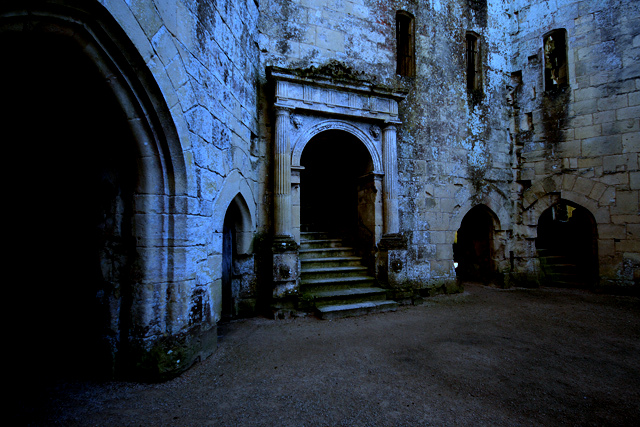
midnight courtyard

The wind was fierce and the cold was numbing, but Pavel did not mind. It numbed the conflict in his mind, blocking out all but simple directives. Go to the castle. Climb the tower. Find the dagger.

The streets were deserted as he made his way through the town and started up the wooded hill. He wondered where the creature—he still could not think of it as human, much less as his father—was now.

Inside the castle, he made his way up the steps of the keep and inside the unroofed hall. He had no light, but the full moon shone a phantasmal light over his path. Parts of the castle had been burned in the revolt, but the floor of the main hall was stone. He came to the high tower, its door splintered and rusted, and began to climb.

The steps were wet with slime and circled up and up until they ended in a wide chamber. Its roof had been burned away and part of its walls were gone, but Pavel could still see the remnants of broken glassware and rusted instruments that had once filled his grandfather’s study. He wondered now if his grandfather had been a monster too, or if he had found a way of transforming his son into one before he died. Whatever the case, it had happened in this room.

Pavel started searching, clearing away old bird’s nest and the accumulated detritus of fifteen years of exposure. He cut himself on a shard of glass, but kept going. His numb fingers were groping along the floor underneath a collapsed shelf when he felt the outline of a small box. He pulled it out and opened it. Inside was a dagger. Its handle and blade were black and a large ruby nested in the pommel. This had to be it.

He made his way back down, stepping carefully on the pitch-black stairs. He had just stepped out into the courtyard, when a dark shape slipped through the gate. As it crossed into the moonlight, he saw that it was the creature. It had seen him and was shambling towards him with surprising speed.

“Do it . . . son,” it rasped. “The mayor has . . . found me. He is coming. He will . . . imprison me again . . . if he can. Quickly . . . before he comes.” The creature pulled its thin garment away, exposing its skeletal chest.

Pavel held the dagger, willing himself to strike. As he looked at the monster in the moonlight, he could see more of its features. He had never known his father, or seen a picture of him, but now he could almost imagine what he had looked like when he was a young, handsome man. For the first time, he saw it as a person, who had lived in tortures unimaginable for fifteen years: locked away, starved, fed human flesh and blood. This was his father, who needed him. He set the point of the dagger between the exposed ribs and pushed the blade into his father’s heart.

“Stop!” a voice cried from behind him. Pavel looked up to see the mayor stepping through the gate, a lantern in his hand. Wadim, the night guard stood behind him. The mayor’s face was frenzied. “You release my prize from his cell and now you try to destroy him.”

The mayor stopped and let out a cry. “Crina! Crina! If it were not for this whore’s spawn, you would still be alive.” He looked back at Pavel. “You unlocked the door. You let the thing escape! My Crina was on the point of death when I brought her here. No medicine could save her, but this creature’s blood would have kept her alive, alive forever. She would have been changed, but she would have been stronger and mine still. I would not have starved her and kept her weak. No, she would have been well-fed, and powerful—powerful enough to help me. Oh my lovely daughter!”

The mayor drew his sword and advanced towards Pavel, who backed up the steps into the main hall. The mayor stopped and laughed.

“Yes, stay here. Stay here, Lord Pavel, with the ghouls of your ancestors. Stay here, where I burned your grandfather and kept your father as my pet. I will keep Wadim at the gate to make sure you stay, until hunger or cold lofts your soul on demon’s wings to join them. I am off to see your mother. She will burn tonight, in that hovelish prison where I have kept her.”

Pavel ran down the steps as soon as the mayor had left. He had to get back to help his mother, but he did not know how. The main gate was the only way out of the castle and he could see Wadim just outside the gap, spear in hand. He would have no sympathy for Pavel, not when it meant risking the mayor’s wrath.

He looked down at the dagger in his hand, still wet with his father’s blood. He could not defeat Wadim with such a small weapon. All he could do was kill himself. Yes, he would kill himself, but not yet. First he would drink his father’s blood and be changed. Didn’t the mayor said it would make him strong? His father had been old and starved, kept weak by design, but Pavel was young and strong. He would go save his mother and then kill himself with the dagger, ending their unfortunate line forever.

Pavel bent over the figure of his father. Dark blood was still welling up from the wound in his chest. He bent down and began to drink, sucking it into his mouth. It was cold and bitter, but burned like fire as it went down his throat.

His father’s eyes flickered open and then widened as he saw Pavel. “No!” he said, in a voice that was little more than a breath. “Do not do this. You . . . do not . . . know. I did not know . . . when my father told me . . . to drink from his . . . veins. Flee this hideous . . . unbeing.”

“It will not be for long, I swear,” Pavel said. “I must save my mother. Then I will join you and all will be finished.” He continued to drink, forcing down the foul blood until it stopped bubbling up from the wound.

The first thing Pavel felt was the cold, as it seemed to melt away from him. He still felt the wind, but now it held no bite. He stood up and looked around. The darkness had lightened and he could see into every corner of the dark courtyard. A wave of strength came over him. He looked at the cut on his hand and as he watched, it closed and disappeared.

A surge of joy went through him and he was off, running through the narrow gap in the gate, slipping past Wadim before he could even react. Pavel felt like the wind, moving effortlessly along the ground, devouring the distance. Ahead of him, he saw the mayor walking uncertainly down the path. He turned just as Pavel reached him and Pavel was glad to see the look of terror in the mayor’s eyes as he stabbed the dagger into his chest.

“You will never touch my mother. This I promise you. And this is vengeance for my grandfather, whom you murdered, and my father, whom you tortured.” With each name, he stabbed again. The mayor collapsed, dead on the path.

It was over. His mother was safe. Pavel turned the dagger to his own chest, preparing to end his own life. Then he stopped. It wasn’t over. There were still the thane and master of lands, both of whom were wicked men who had shared a part in his family’s misery. He would take care of them as well. But then? The town would be leaderless, defenseless against the next petty lord or robber baron who could seize it and use it for their own purposes. He could lead them well. He could do good, and help those who had been so oppressed under the mayor’s rule. He was, after all, the rightful heir. It was his duty.

Pavel dropped his hand to his side and was turning to go up to the castle when he felt a vague discomfort in the back of his mind. It was a hunger for something he had never felt before. He remembered the taste of his father’s blood on his tongue, so repellent then, but now . . . now he had a need for it, a thirst.

And it was growing.

ruined castle


The Circle of Unbeing, Part 3

Click to read Part 1 and Part 2 of the story.

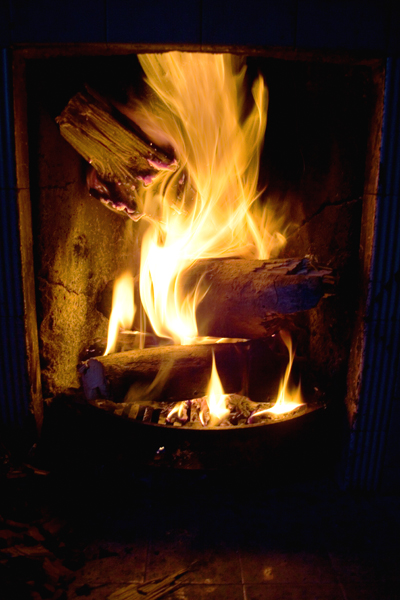
fireplace

When Pavel reached the house, he took the axe from behind the door and began to sharpen it. His mother looked up from the hearth, where she was cleaning out the ashes.

“What are you doing home? What’s wrong?”

Pavel looked at her, hesitated. “Wolves,” he said.

He stayed home all day, sharpening knives, watching, and fidgeting, until his behavior began to frighten his mother and he left. No one from the mayor’s manor came to summon him, which both relieved and worried him at the same time.

Night eventually came and Pavel and his mother sat silently in front of the fire—her with her mending and Pavel staring into the fire, the axe on his knees. He looked up to see her gazing at him.

“Do you think you will need that here? Do you think the wolves will come into the village—break into our house?”

“I—I’m not sure,” he said.

“It’s not wolves you’re worried about, is it?” she said.

There was a clattering outside, like wood falling off the pile. Pavel jumped, then went to the small window by the door. The moonlight was shining on their small path and garden but there was no movement.

At that moment, the chickens behind the house began to scream. Pavel had never heard them make such sound—did not know they could make such a horrible, rending shriek. He put his hand on the door handle but could not will himself to open it.

“Well, are you going?” his mother cried suddenly. “You got the axe. If wolves are at the chickens, you’d better go now or they’ll all be killed.”

Still, Pavel could not make himself open the door or explain why. He felt paralyzed. The chickens stopped abruptly and there was total silence for a space of several breaths. Just when he thought it was safe, there was a thump against the door. It came again. Someone, or something, was knocking with heavy, irregular strokes on the outside.

Thump . . . thump . . .

“Are you going to open it?” his mother asked. “Pavel, are you okay? What’s wrong? If it were wolves, they wouldn’t be knocking. Pavel, let the poor person in and out of the cold. Pavel?”

His hand was still resting on the door handle, but all he could think of was some way to barricade the door. Pull the beds across and push them against it. Block the window. Anything and everything to keep the evil outside. He looked up to see his mother next to him and before he could do anything, she pushed him aside and threw the door open.

A gust of frigid wind burst into the room, causing the fire to gutter. Pavel heard a rasping, croaking sound and then that hideous deformed face he had seen in the dungeon emerged into the light of the fireplace. His mother gasped and stepped back. The creature shuffled over the threshold.

Pavel stepped in front of his mother, brandishing the axe, but he was too transfixed with horror to strike. Now that he could see the monster in better light, he saw that it looked like a man, although one shriveled and twisted by some evil force. Its skin was yellow and thin and its eyes were bloodshot and roving. They latched onto his mother’s face and the mouth opened.

“Ah . . . An . . . Anca.” Pink spittle dribbled from its mouth as it expelled the word. Pavel’s mother was staring at the creature, her eyes growing wider and wider until she started to scream. She fell back on the floor, covering her face with her hands and screamed and screamed. Even when she fell into a coughing fit, she continued to writhe and tear at her hair.

“Mother!” Pavel ran to her side, trying to make her stop. He kept his eyes on the monster. It pulled itself a little closer.

“Pa . . . vel,” the monster rasped, staring at Pavel with its bulging eyes. And then, in a moment ghastly revelation, Pavel knew what the slavering ghoul in front of him was. It was his father.

It had been, at least. Now, one could hardly call it human. Pavel felt nothing but loathing for it and he wished he had the resolution to cut it in two with the axe. But he could not. Not now.

The monster that been his father saw the swaying of the axe in his hand and moved closer. “Kill . . . me,” it said. “The axe . . . will do nothing. In the high . . . tower there is . . . a dagger. Only it . . . can . . . kill me. I will . . . meet you . . . there.” It stopped and started to hack in short, sharp croaks. Pavel could barely look at it. “Kill me . . . son,” it said again and then, suddenly, it pulled itself around and was gone through the open door.

Pavel shut and locked the door. The fire had sunk low and the room was dark and icy. “Mother, sit up. Please,” he said, going to her and helping her up. All the strength seemed to have left her, but she got up, unresisting, and let him guide her to her chair by the fire. She picked up her mending and started to cry. The sobs came, stronger and stronger until they were shaking her thin body. The dam she had built triple-strong against the grief of her life had finally broken.

Pavel stayed by her until she finally quieted. He was putting more wood on the fire when she finally spoke. “You must do it, Pavel. You must kill him.”

“I don’t want to go near that thing again,” he said. “That is not my father. He died when I was a baby.”

“You must!” she said again. “I said good bye to your father a long time ago, and I cannot live now, knowing he is being tortured like that every moment of the day. You must kill him or I will never have peace. Do it for me, if not for him, son.”

Pavel nodded slowly. “I will go now,” he said.

moonlit night

(to be concluded tomorrow)


The Circle of Unbeing, Part 2

Click to read Part 1 of the story.

Midnight Forest

The frigid wind whipping through the tower door greeted Pavel as he reached ground level. He wanted nothing more than to run home and sit huddled by his fire but instead he crouched in dread in a protected corner until the three men of the Inner Circle reappeared, again wrapped in their rich cloaks.

“My lord, a messenger came here saying that your daughter is sick, to the point of death,” Pavel said.

The mayor looked at him hard, but then nodded. “Then let us hurry, boy,” was all he said. Pavel picked up the lantern and led the way back down to the town.

Pavel left the mayor at the door of the manor and went back to his small house. His mother was up when he returned. She looked up from her sewing, the weariness indelibly etched on her face. She never complained to him, but as Pavel had gotten older, he began to realize how hard the last fifteen years had been for his mother, the former daughter-in-law of a viscount and wife to the heir. Now, she was only a peasant woman and the least skillful of them all. When Pavel had been young, he had only thought about his own discomfort and yelled if the food she made was burned or tasteless. He would hide from the other children if his clothes were ill-mended. But she remained always like a lamb to the slaughter, though the execution stretched out over years of toil.

Pavel went and stood by the fire, still trying to process the horror he had seen in the dungeon of the castle. “The mayor’s daughter is on the edge of death,” he said after a moment. His mother’s hand went to her mouth but then dropped as she looked up hollowly at him.

“What will he do to us this time?” she asked plaintively. “When the crops were bad last year, he took a double share from our stores and when one of his cows broke its leg, he took our only one.”

“This is not our fault,” Pavel said.

“When has it ever been?” she asked. “He will kill us yet, even if it takes another fifteen years. He has a vendetta.”

“But why should he?” Pavel asked. “He killed my grandfather, but I was a baby and you were only his daughter-in-law. What could we have done to him?”

“I never told you,” she said softly, putting calloused hands over her face for a moment. “Perhaps I should have. My only crime was that I would not be his wife. I rejected his proposal and later married your father. I thought he had forgotten about it, until that night, when the people rebelled and he, their leader, took the title of mayor. A civil enough title, but he is as ruthless as any noble.”

She faced the fire, but continued to speak, slowly repeating to herself a litany of grief and injustice, dredged up for yet another bitter dose of recollection. Pavel went to bed before she had finished and her dreary murmuring cast ominous shadows over his dreams.

Nerakrist

Pavel had just woken up the next morning when someone pounded on the door. He opened it to see their neighbor, Domnul Iorga.

“Warning,” Iorga said immediately. “Wolves are about, they say. The Cernea farm was attacked and six sheep were killed and mutilated. Also, one of the farmhands who was sleeping in the barn is dead. Carry a blade with you if you go out.”

“Thank you, I will,” Pavel said. “Have you heard any word on the mayor’s daughter?”

“Dead, they say. Last night,” Iorga said. He gave Pavel a meaningful look and crossed himself. “God be with you and yours.” He turned and went up the path to his house. Pavel looked back, but his mother was busy at the fire and had not heard. He would not tell her, at least not yet.

Pavil worked as a messenger for the mayor, as well as his duties as the midnight lantern carrier for the Inner Circle’s gatherings. He arrived at the mayor’s manor after breakfast and the guard Andrei informed him that he was summoned directly to the mayor’s study. “God be with you,” the man murmured after him.

“Is it true that Crina died in the night?” Pavel asked.

“So they say,” Andrei said. “Wadim was on night watch and said that the mayor came back after the first hour and then left again, carrying his daughter with him in a carriage. Wadim swears she was alive when they left, but an hour later, when they returned, she was covered with a sheet. I would have thought they’d go to Domnul Florea, the surgeon, but his assistant said no one came there all night.”

Pavel only nodded and hurried inside. All he could think of was the hideous monster he had seen in the dungeon of the castle, and how it had attacked Iosif. Was it possible the mayor had sacrificed his own daughter to that thing? There were rumors that the Inner Circle was involved in satanic rituals in the castle late at night. He had never believed them, but now a shock of fear ran through him as it occurred to him that what he had seen might have been the devil.

He was ushered into the mayor’s study immediately. He bowed and stood in front of the narrow wooden desk with the ceremonial mace lying across the front.

The mayor had changed overnight. His hair and beard were uncombed and his face looked haggard and wolfish. His dark-rimmed eyes bored into Pavel as if he were trying to read his thoughts.

“Did you go down into the tower last night?” the mayor asked immediately.

He knows. He knows everything, Pavel thought, as a chill of terror went down his back. “I would never go into the tower, my lord,” he said.

“Liar!” The mayor’s fist crashed down on the desk. “Sergiu saw you go in.”

“No! He was gone before—” Pavel hesitated. “I mean, yes, I did open the door to see if you were coming, but then I shut it again. I did not go in, I swear.” He was desperate in his denial; not matter what guilt his soul might endure from lying, it was far better than admitting he had gone down into that dungeon now.

“A door in the dungeon that is always kept locked somehow became unlocked. Who could have unlocked it, but you?”

“I do not know, my lord, but I swear that I did not go into the tower,” Pavel said. He could feel the sweat trickling down his back and hoped his guilt did not show through onto his face.

The mayor gave a snarl, but then collapsed back into his chair, as if his strength had suddenly deserted him.

“Go,” he said, “but may calamity find you swiftly if you are lying.” Pavel fled.

“I’m glad to see you still in one piece,” Andrei said when he had reached the courtyard again. “Did you hear about the other fatality last night?”

“Yes, the Cernea family’s farmhand,” Pavel said. “Domnul Iorga told me. Wolves, he said.”

“I have not heard of that one,” Andrei said. “I mean Doamna Korzha. Her husband said they were getting ready for a bed when a monstrous face appeared in the window. Big green eyes and teeth like a wolf, they say. The old woman screamed and fell down dead, her fare suddenly paid in full for her journey to heaven. Her husband said it was a face like a devil. Hey, where are you going?”

Pavel had taken off running towards home. There was a monster loose in the region and it was his fault. He had to get home and keep that thing away from his mother.

(to be continued)


The Circle of Unbeing, Part 1

An unusual Saturday post! This is the first story in what I’ve decided to call Invitational Prompts. This is where I ask one person to give me several prompts they’d like to see made into a story. This set of prompts is provided by my good friend, Sharmishtha Basu. Go check out her stories and thoughtful posts here, here, here or here.

The prompts were: a vampire, a small town, an old castle, and a scary tone (more mystery and spook than gore)

Sincere apologies to Sharmishtha for taking so long to finish writing this.

ruined castle

The town of Nerakrist slept, but on the overlooking hill, four figures picked their way up the overgrown track to the moldering ruins of the castle. The lead figure, a boy, carried a lantern to light the way. The contrast in their clothes was striking: the boy shivered in the fierce wind that whipped through his patched rags, while the three men behind him wore rich furs and thick woolen cloaks. They were the leaders of the town: the mayor, the thane and the master of lands. The boy’s name was Pavel.

They reached the rotting gate of the old castle and Pavel held the light for the men to enter through a gap in the timbers. They walked straight to a low door in the right-hand gate tower and the mayor unlocked it. Then they stepped inside and closed it, leaving Pavel alone.

Pavel hated the castle, but as the servant of the mayor, he had to accompany the Inner Circle whenever they held their midnight meetings there. He huddled on the ground, hugging his thin jacket around him. The lantern burned feebly and the deep shadows of the barren courtyard outside the circle of light seemed to hold creatures just beyond his vision. The castle was surely haunted, if not with spirits then with dark history. He hated being there, not because he felt he did not belong, but because he was terrified that he did.

Fifteen years ago, Pavel’s grandfather had been the viscount in the castle. His mother never talked about it, so Pavel had only the rumors and gossip of the townsfolk to rely on. They said his grandfather was a monster, a sorcerer, a devil-worshipper who captured and tortured the peasants of the region. They said that the viscount even murdered his own son, Pavel’s father, in the highest tower of the castle, even as the revolting peasants were breaking through the gate. So they said, at least.

Pavel heard footsteps outside the gate and he stiffened. No one would be foolish enough to come to the castle at any time, let alone during one of the Inner Circle’s midnight meeting. Not unless something was seriously wrong.

“Hello? Is anyone there?” a fearful voice called.

“You can’t be here,” Pavel said, looking through the gate and holding the lantern up. It was Sergiu, one of the mayor’s house servants, looking cold and scared. “Go, quickly.”

“I was sent by the mayor’s wife. His daughter Crina has taken a turn for the worse. She may die.”

“I will die if I go down there and disturb them at whatever they are doing,” Pavel said. “Wait here, if you want, or I will tell him as soon as they come back up.”

“What do you think he will do to you when he finds out his daughter died while he was away because you withheld the message?” Sergiu said.

Pavel looked towards the closed door. “It’s probably locked anyway,” he said, although without conviction. He tried the latch and door opened.

“Go! Tell him now,” Sergiu said. “He will not mind an interruption for this.” Both of them knew this was not true. Sergiu disappeared and Pavel heard his running footsteps disappear down the slope.

The mayor would be furious—it was inevitable at this point. All that remained was to determine which action would make him less angry. The Inner Circle had many meetings here, perhaps several a month, but the mayor only had one daughter and Crina was the world to him. Pavel stepped inside the door.

The inside of the tower was a barren, circular room with stairs going up and down. The Inner Circle’s cloaks hung on hooks along one side of the wall and tracks in the dust headed towards the descending stairs. There was a very faint odor of old decay that hung in the cold air.

Pavel started down the steps slowly, holding the lantern above him. The steps curved down to the right and then split, with steps going left and right. There were no tracks here and the air was totally still as if he were sealed in lead. After a moment’s hesitation, he took the left-hand stair.

It descended, straight and narrow for almost a hundred steps until Pavel reached two heavy wooden doors. One was locked, but the other was only barred with a heavy bolt slid across it. Pavel stopped and listened at the door. He should not have come. It had seemed the right thing to do, to warn the mayor about his daughter, but now that he was actually outside the chamber where the Inner Circle held their clandestine gatherings, he knew it was foolish. Any interruption for any reason would be punished harshly. But it was as if he were sliding downhill, with no way to stop. Pavel placed the lantern on the stairs and carefully slid the bolt back from the door.

The door did not squeak, which was strange for a ruin, but a blessing for him. As soon as the door had opened a crack, a vile stench of rot and death hit him and almost made him sick. The room beyond was dim, lit from somewhere far beyond. He could see black bars ahead in the gloom and voices talking.

“Please, please let me go! I’ll do anything you want. For God’s sake, think of my family.” The voice was thin and cracked from dehydration. Another voice spoke further off. It was fainter and Pavel took a few steps in to hear better.

“We are the executors of justice,” the second voice said. “The keepers of righteous violence. You do not want us to think of your family as well. You were brought here because of wrongdoing. It was you who were supposed to take care of Crina’s horse. When she was out riding, it threw a shoe and she had to walk back in the rain. It is because of you that she is gravely ill.”

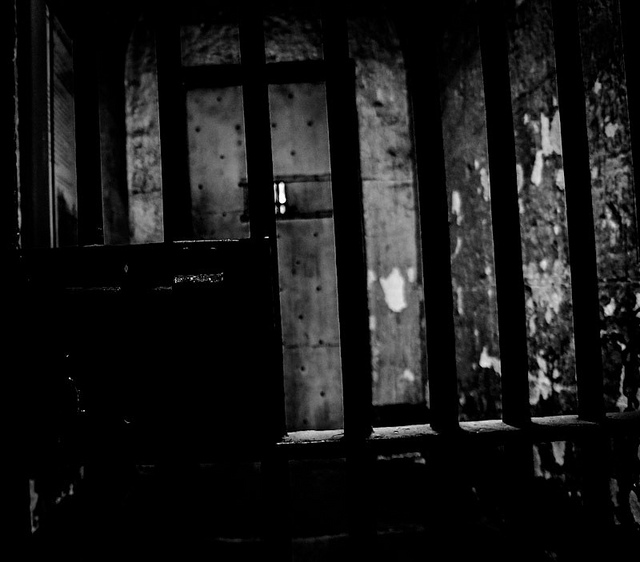
Pavel moved forward and found the way blocked by a barred door, standing ajar. Through it, he could see a wide arena bordered with more dark cells. In the middle of the area knelt a man in ragged clothes, his face upturned in supplication. Fifteen feet above, three figures stood looking down from behind a breastwork of stone. They were robed in white and wore masks, but it was clear to Pavel who they were.

“Mercy!” the man cried. “I did my best. I could not have known that the horse would lose its shoe.”

“Nevertheless, the damage was done and because of your actions, my daughter may die,” one of the masked men said. He took off the mask and Pavel saw the mayor’s face contorted in hate. “There is only one thing you can do now, Iosif: die and ask God Almighty for mercy. You will get none on this earth.”

Iosif, Pavel thought with a shock. He recognized him now. Iosif, the mayor’s stableman had disappeared the night after Crina had gotten sick. They said that the wolves of the Dark Forest had gotten him as he was bringing a load of hay back to the barn. That was four days ago.

One of the other masked men, reached up and pulled a rope that was hanging from the ceiling. Across the arena, there was a click and a barred door opened. Iosif gave a moan of dread, as if he knew that the moment of judgment had come, although not its form.

Something moved in the darkness of the cell. It shuffled forward into the lamplight and Pavel saw with horror a blighted and hairless scalp, stretched thin and tight over a protuberant skull. The monster reached out a ghoulish hand towards Iosif, pulling itself forward with the other, as if it were not used to walking. Iosif turned and ran, stumbling into the gloom towards where Pavel was hiding. The creature paused for a moment, then leapt with claws outstretched onto the unfortunate man’s back. The last thing Pavel saw before he ran was the monster’s lips pulling back to reveal long, stained fangs. Pavel fled back into the hall and up the steps, not bothering to rebolt the door he had opened.

(to be continued)

jail cell


Playing Theo – Friday Fictioneers

Another offering for the Friday Fictioneers. Click here to look at some more stories based on this picture.

The unfinished world

Theo sat, transfixed by the world he saw in his mind. The images burned with HD clarity: icy spires towering over pristine valleys where the twelve-tusked geffalo stomped beneath skyscraper-high orchids; the Umon people soaring above their island homes; and the Baruk tribes labouring deep in their frozen caverns. Everywhere there was life.

He could see the whole of his tiny, perfect little world spinning like a pearl in his mind, every neuron bursting with the ecstasy of pure creation. He wanted more though: he wanted it to be real.

He started with the globe. That was the easy part.


The Making of the Squid, Part 6

The Making of the Squid, Part 1     Part 2     Part 3     Part 4     Part 5

You can read the rest of the Aftermath stories here or here.

Well, this is the final installment of this story. Thanks for reading thus far. Please forgive the length of this one; I decided to just post it instead of breaking it into yet another installment. This last part is much darker, but after all, this is not the end of the story: it is the beginning. I will pick up with Edward “the Squid” Morrison again on the other side.
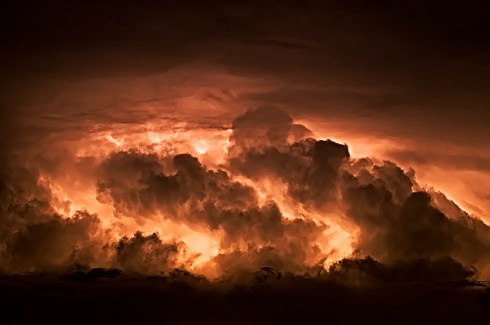
storm clouds

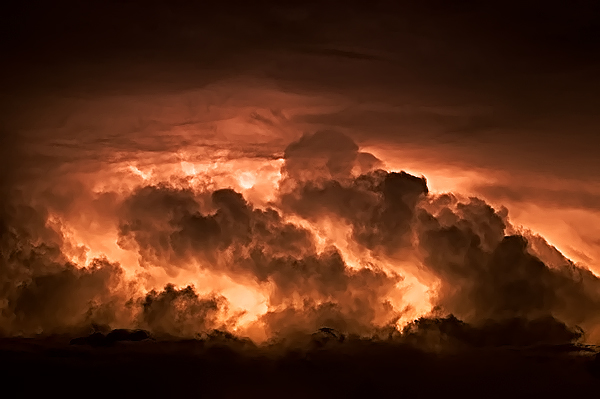
There was a storm brewing. For days now, they could see clouds seething in the south, thunder rumbling distantly, like a monster that was slowly wakening. It seemed to be growing, creeping ever so slowly towards them.

Harlow had become an unfriendly place for Edward. The other residents barely spoke to him now and the men worked together on the other cisterns, leaving Edward’s half finished.

Edward did not worry about this—he did not need their approval—but what did worry him was Sean. The boy was spending more and more time outside, staring off in the distance. Edward knew he was watching for his parents. He was becoming paler and had developed a cough.

Several days after Edward had gone to his last committee meeting, he was walking along route B180, back towards his old house. The afterglow of sunset was fading to black when a car drove down the road towards him, headlights glaring. It was the first working car he had seen in almost a month. It stopped and the window went down, revealing a woman wearing a diagnostics headset and stylish clothes.

Hestia's car

“Evening, crackerjack,” she said. “I thought this whole space was blitzoid. You the only one around here?”

“There’s a whole town of us, back there in Harlow,” Edward said. “You come from Cambridge?”

“Yeah, that much you know.” She took her silk-gloved hands off the wheel. “You do know about the storm coming? The gee-sees all show the radiation as being right up there. A regular slam-bang.”

“Is it any safer in Cambridge?” Edward asked.

“We have some deep cellars, but we’re probably all well snuffed together, you and us. Once it gets into the drinking water and we’re all swilling fallout cocktails, well…” She shrugged—what-are-you-gonna-do? “I came down on a scouting mission, looking for clues of its trajectory.”

A thought flashed through Edward’s head. This was his one chance. “Can you do me a favor? I have children at my house—orphans. Take some of them with you, if you can. I don’t want to, but I can’t take care of them all.”

The woman frowned, as if thinking. “Let me see them,” she said finally. “Hop in.”

The woman introduced herself as Hestia Wolfe. As they drove back to town, she showed him her e-device, with news and images from around the world, including pictures of the devastation of London. There was already a remnant of the UN that was trying to stagger back. The US capital had been moved to Denver. Wales had been untouched by the missiles, but decimated by fallout. The list of tragedies and triumphs went on and on, weighted heavily on the side of tragedy.

“We’re fortune-kissed to be in this area,” Hestia said. “The winds didn’t bring much our way—until now, it seems.”

Hestia met the children and they had dinner together. The kids had made a concoction of corn and pinto beans, with jellied cranberries on the side. Hestia complimented them on their skill and even had seconds. After the meal, she took Edward out onto the porch.

“I can take the four youngest ones,” she said. “Let me see: Ernesto, Kaveh, Cala, and Lalasa. Two boys and two girls. I’ll be able to find them good homes. They’re all relatively healthy and I know of a few families who will welcome them.”

“Will you sell them?” Edward asked.

“I will find them good homes,” Hestia repeated. “Money—or goods, I should say—will change hands, but that’s how the world works, you know? I’m not a human trafficker, if that’s what you mean.”

“I’d ask you to take Sean, but I don’t think he’d go. I’m worried about him.”

“I wouldn’t take him anyway,” Hestia said. “He looks pretty hacked up—sick, that is. I can’t take the risk.”

They went back in and Edward told the kids what was going to happen. They took it much better than Edward had expected. None of them clamored to go or begged to stay behind. Life had hit them with so much pain and uncertainty that the possible positives and negatives of going to Cambridge cancelled out into a dull neutral. Cala sat on Edward’s lap and cried a little, but when he told her to go get packed, she went upstairs with Lalasa without complaining. Hestia left with the four chosen kids thirty minutes later. Edward watched them go but no one waved good bye.

It was not until the next day that the house felt emptier. Hugo began to fight more with Meredith. Portia and Hazel retreated into their room and would not come out all day. Sean stood on the porch, looking flushed. Edward found him there in the evening, his legs curled against his chest, eyes glazed. His skin was on fire.

No, not him too. All Edward could think of was the shock of Ramya’s cold cheek against his hand. It couldn’t happen again. Edward put Sean to bed, got his gun, and went to the Crawfords’ house.

Nikola opened the door a crack when he knocked. She immediately tried to slam it shut again, but Edward stuck the butt of the rifle in the gap and forced the door open.

“For God’s sake, Edward, what do you want now?” Her voice was dull, but her eyes flashed with hate.

“Sean’s sick. I need you to come treat him, or at least give me some medicine. Please,” he added.

Nikola looked at him and then stepped forward and very deliberately spat on his shirt. “I wouldn’t treat you or any of your mud-grubbing pack of rat bastards to save my life,” she said. She spoke slowly, enunciating every word.

Eight-year-old Trav Crawford appeared in the doorway to the kitchen. Before Nikola could react, Edward strode towards him and pointed the rifle at his head. “Not to save your life, eh? How about his life? Is his life worth a bit of medicine to save my boy?”

Trav gave a small shriek and started to run towards his mother, but Edward pushed him back. Nikola was staring at him, frozen and pale. “Don’t hurt him,” she said softly. “Tell me the symptoms. I’ll tell you how to treat him, if you can.”

Edward described Sean’s condition to her. She went upstairs and came back with several small boxes of pills. Edward stayed behind with Trav.

“I can’t guarantee this will work,” she said, after she had told him how to give it to Sean. “Please, if he dies, don’t come take it out on us.”

“We’ll see,” Edward said. “Come on, Trav; you’re walking me to the door.”

Edward started to walk backwards towards the front door, holding Trav in front of him. Nikola gave a cry and leapt towards her son. Edward pointed the gun at her. At that moment, something hit him in the back. He slammed the butt of the rifle backwards, feeling it strike something solid. The gun went off and Nikola fell back, an expanding red hole in her blouse. Behind him, Noah Crawford lay on the floor, next to the piece of wood he had used to hit Edward. Edward left, quickly.

He ran all the way home, intent on getting back to Sean and unable to process what had happened. He had just killed someone—a mother, in front of her son. It had been an accident, of course, but it had still happened. He couldn’t think of it now.

He gave Sean the medicine as Nikola had instructed him. Then he set Portia and Hazel to watch him. He was just going downstairs when he heard a shot and a bullet ripped through the front door.

“Squid! Get out here, Squid!” He peeked out the side of the front window. Noah was standing in the street, holding Kaine Bowlery’s rifle. Kaine, Heston and few of the other men were standing nearby.

Edward opened the front door and stood to one side. “Go home, Noah. It was an accident. Just get out of here.”

“You killed my wife, you bastard!” Noah screamed and fired another shot through the doorway. “I’ll kill you. I’ll rip your guts out.”

Edward looked around. Where were Hugo and Meredith? The others were upstairs, but if a stray shot hit one of them…

“This is your last chance, Noah. I didn’t mean to shoot Nikola. It was an accident and I’m sorry, but don’t you dare fire that when my kids are around.”

“Your kids? You pointed a gun at my son’s head. You shot my wife!”

Edward stepped into the doorway and raised the rifle. He felt a bullet whiz by him and he fired. Noah fell to the ground.

Before anyone could react, Edward rushed out and grabbed the other rifle. Noah was not moving—the bullet had gone through his neck. “I didn’t want to do it,” he said.

Kaine Bowlery held out his hands and when he spoke, his voice shook. “Please, Eddie. We don’t want any trouble. Just go. Leave us in peace.”

“I can’t,” Edward said. “I have to stay here, for Sean. Take him and bury him. Then, go home.” They picked up the body and left without a word.

Over the next week, Sean was slowly restored to health. One evening, he and Edward were looking out the south window. Far away, the storm clouds still rolled and boiled, but they had not come any closer

“Aren’t they moving?” Sean asked. “I’ve never heard of a storm that didn’t move. Does that mean we’re safe?”

“No,” Edward said. “There’s no such thing as safe anymore. I don’t know what will happen, but that’s the world we live in now.”

They continued to watch the storm, as around them the darkness grew.

Epilogue

Time passed and they struggled on, against hunger, sickness, against the other residents of the town that gradually became known as Free Frall. Sickness ravaged the survivors, eating away at their numbers. The town began to decay and decline, as did its residents, until they were little more than ghosts, creeping forth at dusk to scrape out a miserable existence from the blighted earth.

Hugo died the first winter and a year later, Hazel. Edward buried them away from the house and with each death, he became more and more the Squid. Portia left four years later to join a group of wanderers and returned a year later to take Meredith with her, who was only eleven. Edward let them go. Then, it was only he and Sean.

One night, close to dawn, Edward returned home to find Sean gone. It took a week of searching for Edward to finally accept that he was not coming back and his transformation to the Squid was complete. He went out and stabbed the first person he met. He buried the body and tried to forget he had ever known anyone named Sean, or Portia, or Meredith, or even Ramya. The memories brought too much pain.

And so, Edward Morrison lived as the unofficial king of the decaying residential area known as Free Frall. They called him the Squid, and he liked it.

Aftermath

(continued in the story Saturday 4am)


The Making of the Squid, Part 5

The Making of the Squid, Part 1     Part 2     Part 3     Part 4

You can read the rest of the Aftermath stories here or here.

box of cans

“Eddie, what are we going to have for supper?” Sean asked. The older children were taking turns cooking supper, now that Edward was trying to do more work at night.

“I don’t care. Whatever’s in there.” Edward went to the pantry, pawed through the box on the floor, and pulled out two cans of sardines, canned potatoes, and canned tomatoes. “Here, we can eat this.”

“What, cold?”

“Or heat it up over the fireplace. I don’t care.”

“Lalasa doesn’t like tomatoes,” Sean said.

Edward clenched his fists in frustration. “Then don’t make them. I don’t care, but this is all we have. I will try to get more today, but I don’t have any control over what I find.”

“But—”

“Do whatever the hell you want, okay?”

Hazel put her head into the pantry. “Eddie, we’re almost out of Abadocil.”

“Then I’ll go get some more!” he shouted. He pushed past them, ignoring Hazel’s hurt expression. I can’t do this, he thought. I gotta get out of here.

Edward walked through the twilit streets towards the Crawfords’ house. They had moved the boxes of Abadocil there for convenience and to keep them safer from looters. He knocked on the door and Nikola answered.

“Hey. I need more Abadocil,” Edward said. “Just give me a case, so it’ll last a while.”

Nikola hesitated. “Eddie, we’ve decided not to give out any more.”

Edward looked hard at her. “What? To anyone?”

“No, just to those children staying in your house. We’re running low and it’s going to be gone soon.”

“So who decided that?”

“Noah and I. Listen, Eddie, I’ll give more for you, but we just can’t afford to give them all away, just like that.”

He stared at her until she looked away uncomfortably. “Why the children, Nikola? They only take half the dose an adult does. Are you stopping them for your children too?”

“No, just the ones in your house.”

“Just mine?” he shouted in disbelief.

“They’re not yours, Eddie,” she shot back. “If they were, we’d do something, but they’re not. They’re orphans. I don’t like it either—I hate it, but there’s nothing we can do. The truth is that if we use them all up, we could all die. It’s for the greater good.”

He continued to stare at her, too furious to speak. “Look,” she said. “All the Geiger counters are dead, but who knows? Maybe the radiation has decreased. Maybe they’ll be okay.”

“Maybe?” he shouted. He reached out and grabbed her by the throat, slamming her back against the door. “Maybe? Why don’t you stop the meds and see for yourself what maybe looks like, you scrygging cow?”

“Get your filthy hands off my wife, Eddie.” Edward turned and saw Noah just inside the door, pointing a hunting rifle at him. Edward let her go and she staggered back, gasping.

“This is what I’m going to do,” Edward said slowly. “I’m going to come in and take a case of Abadocil and I’m going to go home. Okay?”

“You don’t get to make the rules, Eddie,” Noah said. “You’re not the law.”

You’re not the law. The words echoed in Edward’s head. There was no law now. No law. It was an exhilarating, terrifying thought. He could do whatever he wanted, and so could anyone else.

“You’re wrong,” he said to Nikola, who was holding her throat and looking up at him with murder in her eyes. “When you said those children aren’t mine. They are mine now, and I’m going to do everything I can for them. Okay?”

Without warning, Edward grabbed the muzzle of the gun, thrusting it into the air. The rifle went off, shooting high. Edward smashed the stock back into Noah’s chest, knocking him down and wrenching the gun from his hands.

Five minutes later, Edward left, carrying the rifle and two cases of Abadocil. He had stuffed all the bullets he could find into his pockets. He strode down the road, cursing and kicking rocks furiously out of the way. He hated the Crawfords for trying to play God with his kids; he hated the Central Bloc for starting the war that ended civilization; he hated his own government for bungling negotiations and refusing to compromise on that small strip of land, which had ratcheted up tensions until there was no going back. He hated Ramya for dying and leaving him all alone, and he hated himself most of all: for losing his temper, for being weak and incompetent, and for thinking unfair thoughts about the dead. Tears started down his cheeks at the thought of Ramya and he hated them too.

Supper was ready when he got back. Sean and Portia had made a concoction of potatoes and sardines, mashed together and heated up, with tomatoes on the side in deference to Lalasa’s tastes. Edward had to admit it was pretty good, all things considered.

“Listen,” he said. They looked up at him expectantly. “I have medicine for all of us for a while. All of you have to take three pills a day, okay? No matter what. Make sure Ernesto takes his too. We have to hide it though because people might try to take it. I made some people mad today. Keep the doors locked all the time. Nobody—nobody except us ever comes in here, okay? Promise?”

He made them promise and the solemn looks on their faces showed him they understood the seriousness of the situation. He was glad.

“Now, there is a committee meeting tonight. I’d better go and make some things clear,” he said, standing up. “Lock the door and don’t worry; I’ll be back soon.”

The meeting had already started when he got there, but everyone stopped when he walked in. He carried Noah’s rifle, loaded, but held casually in one hand.

“What’s gotten into you, Eddie?” Kaine Bowlery asked. “Weren’t you the one that said this was about us, not you, and now you assault the Crawfords and steal medicine?” Noah was there, glowering darkly at him.

“Stealing?” Edward said. “I thought we were in this together. If one person refuses to help another, telling him that his kids can go die, is that any better?”

“Are you trying to be the boss, Eddie?” Kaine asked.

“I’m here to stick up for my own, and I’ll stick up for you too,” Edward said. “What if the Crawfords decide next week that there isn’t enough medicine for your family, Kaine? Or for you, Abdul? What if only the white people are allowed medicine, or only those whose last name is Crawford?”

A few people were nodding, but most looked doubtful. “We are going to have one rule in this town,” he continued. “Everything is free. Everything. It’s free for all. That means that if I have more than I need, then I’ll give to you, and if you have more than you need, you give to me. No hoarding.”

“You’ll never have more than you need with that gaggle of brats,” someone said. “It’ll just be you, taking and taking from the rest of us.”

“Hey, I took them in when none of you would. What can I do: I’m their Uncle Octopus.”

“More like a squid,” Noah said, “sticking your tentacles into everyone else’s business.”

“So a squid is worse than an octopus?” Edward asked, but no one answered. A few minutes later, he left and went home.

The next morning, Edward got up before sunrise and walked through the town, looking for untouched houses where he could scavenge for food. He walked past the main roundabout and saw a new message spray-painted under his:

It’s free f’r all, as long as you pay the Squid first.

For some reason, it amused him and he laughed as he continued on his way.

(to be concluded)


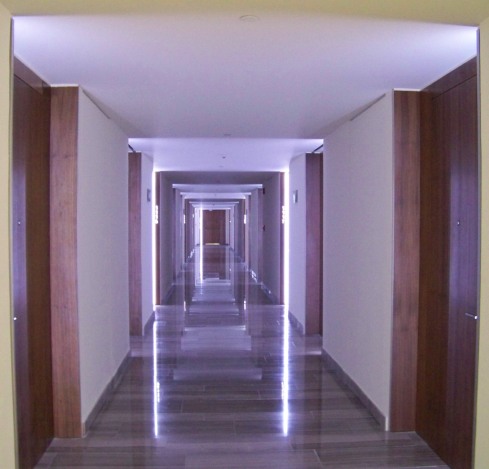
The Hallway Games – Friday Fictioneers

This is my first foray into the world of the Friday Fictioneers, and I’m excited. Thank you Amy for inviting me. For those of you who aren’t familiar with the Friday Fictioneers, it’s a flash-fiction group that writes 100-word stories every week, based around a photo prompt.

Click here to look at some more stories based on this picture.

The tension in the air was palpable. Donald looked down at his brother Brad, sitting on the skateboard and wearing a battered football helmet.

“Are you ready?” Donald asked. Brad nodded.

With a jolt, they were off, Donald propelling Brad in front of him. At Room 301, he let go and Brad took off, the skateboard vibrating wildly under him.

Senior citizens stood in their doorways, waving canes and cheering as he rocketed past. “Go, Brad, go!”

He started to slow. Room 312 . . . 313 . . . 314. Brad stopped and they cheered louder. “A new record!”


The Making of the Squid, Part 4

The Making of the Squid, Part 1     Part 2     Part 3

You can read the rest of the Aftermath stories here or here.

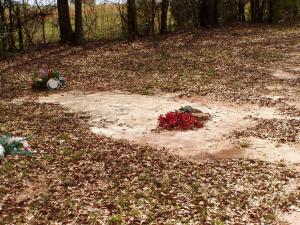
unmarked grave

Edward buried Ramya in the backyard of the house, between two beech trees. There was no funeral, but a few of the residents came to give their condolences. The children clumped together around the edges of the yard, looking lost.

“What are we going to do now?” Hazel asked when they had all gone back inside the house and were sitting despondently in the living room.

“What are we going to do?” Edward repeated, forcing a smile onto his face. “We just gonna—we’re gonna keep going, right? I’m Uncle Octopus, remember? I got this.”

A few of the younger ones smiled at this. Then Meredith came over and climbed onto his lap. Cala and Lalasa followed, with Ernesto toddling behind and after a moment, all the kids—even Hazel and Portia, the older ones—were around him, crying and hugging him. Part of him wanted to fling them off and go get blackout drunk somewhere, but he restrained himself and soon he felt the tears trickling down his own cheeks.

The rest of the community responded to his plight and for a while once again, women came in from time to time to help him cook and clean. Portia, Hazel, and Sean helped as well, although never as much as Edward wanted. He had to remind himself that they were children, and children who had just lost their families and the only life they had ever known. Sometimes they would break down in tears out of nowhere, and go off by themselves for hours at a time.

As for Edward, he threw himself into work, drugging himself with exhaustion. Life soon fell into a routine: up at sunrise to make breakfast for the children, then out collecting food and supplies from abandoned houses. Back to make lunch and clean the house around noon, and then do it all again in the afternoon and evening. He fell into bed soon after sunset, too tired to even think.

The electricity had died soon after August 4, the day the missiles fell, but the water kept running in the taps. Kaine Bowlery told him that the water system was all automated and should go for months by itself. But of course at some point it would break and the water would stop. So, with the help of some of the other men in the town, they were building huge cisterns to catch rain water. It was slow, frustrating work and none of them had had experience building anything before.

Eight days after Ramya died, Edward was resting outside after lunch. The calendar said it was September 1 and the weather remained warm and deceptively cheerful. Sean came over and sat by him. They sat together in silence for a moment.

“You don’t go back to check our houses anymore,” Sean said.

“The note’s still there,” Edward said. “Your parents can find their way here. I just don’t want to waste power, now that we can’t charge the cars anymore.”

There was a moment of silence. “They’re not coming back, are they?”

“We don’t know that,” Edward said. “Roads are a mess. It could have taken weeks for your mother to find your father and it could take longer to get back here. They could be on their way back now, especially if they have to walk.”

“I just wish I knew,” Sean said.

“I wish I did too,” Edward said. The fact was that he truly did not know. None of them did. The Internet was still working somewhere, presumably, but with the electricity out in Harlow, all battery-powered devices had died within a few weeks. Two weeks before, just before his device battery had given out, England was still in chaos. It was reported that on August 4th, there had been 96 nuclear strikes on twelve different countries. The most reliable estimates were of 150 million casualties on that day alone, not to mention the hundreds of millions who would probably die in the next year or two.

There was a scream from across the yard and Edward jumped up. It was Hugo, running towards him crying, with Kaveh and Meredith running behind. Hugo stopped in front of him, holding out his arms. Edward saw they were covered with tiny blisters, as if the boy’s skin had bubbled.

sunburn 2nd degree

“Get in the house, everyone!” he shouted. All he could think about was fallout, and cancer bombs, and Ramya throwing up her lifeblood on the upstairs carpet.

Edward examined them all and found that others kids had similar blisters and severe sunburns, although none as bad as Hugo. Meredith, Hazel, Kaveh and Lalasa were all dark-skinned, but even their skin was tender to the touch in places. Still, he felt better about fallout. “It’s just a bad sunburn,” he said. “I don’t know why, but stay out of the sun for now.”

They stayed inside for the rest of the day. Edward stayed with them, until he had to go out in the afternoon to get tampons for Portia. She had locked herself in the bathroom in embarrassment and it had taken her an hour to admit the reason. Edward was embarrassed as well, and was glad they had the talk through the bathroom door.

I can’t do this, he thought. It seemed to be a thought that came to his mind every day now. It wasn’t just buying tampons for teenage girls, it was everything. This isn’t me. I’m not Uncle Octopus, I’m Eddie Morrison, a 25-year-old illustrator. He felt like he was pretending to be something he wasn’t and that it was only a matter of time before everything came crashing down. Either he would make a mistake and one of the kids would die or he would just snap and take off, leaving them to their fate. Did he even want to? He wasn’t sure.

That night, he left the kids in the care of Portia and Hazel and went to the committee meeting. Others there had bad burns and blisters from the sun and they debated it at length.

“It can’t be radiation because we’ve been taking six pills a day and I still got it,” Gray Hassick said. “And this guy over here doesn’t have a bit.” He pointed to a black man who only went by the name Abdul.

“I think I know what it is,” Heston Bowlery said. “I think the Ra-Shield has gone down. That would explain everything.”

“That’s impossible,” someone else said. “What about the triple redundancy they went on about? They said the facilities were even hardened against nuclear attack.”

Edward had almost forgotten about the Ra-Shield. It was just a background part of normal life, like running water and electricity. 40-odd years before, the UN had built a huge, globe-spanning system of machines that helped protect against ultraviolet radiation, after the ozone layer had been dangerously depleted. He didn’t know how it worked, but if it was gone . . .

“So, if that’s the case, what do we do?” he asked. “Stay inside except at night? Bring an umbrella?”

“On top of cancer bombs and fallout, we have to worry about skin cancer too?” someone said. “Humanity is screwed.”

The committee looked around at each other dismally and Edward could feel the weight of depression settle over them all.

(to be continued)


The Elephant's Trunk

🐘 Nancy is a storyteller, music blogger, humorist, poet, curveballer, noir dreamer 🐘

Thru Violet's Lentz

My view, tho' somewhat askew...

The New, Unofficial, On-line Writer's Guild

Aooga, Aooga - here there be prompts, so dive right in

Just Joyfulness

Celebrating joy

Tao-Talk

You have reached a quiet bamboo grove, where you will find an eclectic mix of nature, music, writing, and other creative arts. Tao-Talk is curated by a philosophical daoist who has thrown the net away.

H J Musk

On reading, writing and everything in between ...

Clare Graith

Author, Near Future Sci-Fi, Dystopian, Apocalypse

Kent Wayne

Epic fantasy & military sci-fi author.

Rolling Boxcars

Where Gaming Comes at you like a Freight Train

Lady Jabberwocky

Write with Heart

Fatima Fakier

Wayward Thoughts of a Relentless Morning Person

Life in Japan and Beyond

stories and insights from Japan

The Green-Walled Treehouse

Explore . Imagine . Create

One Minute Office Magic

Learning new Microsoft Office tricks in "just a minute"

lightsleeperbutheavydreamer

Just grin and bear it awhile

Linda's Bible Study

Come study God's Word with me!

Haden Clark

Philosophy. Theology. Everything else.

Citizen Tom

Welcome to Conservative commentary and Christian prayers from Mount Vernon, Ohio.

The Green-Walled Chapel

Writings on Faith, Religion and Philosophy

To Be A Magician

Creative writing and short stories

My music canvas

you + me + music

Eve In Korea

My Adventures As An ESL Teacher In South Korea

Luna's Writing Journal

A Place for my Fiction

Upper Iowa University

Center for International Education

Here's To Being Human

Living life as a human

CryptofBooks

Book Reviewer and Blogger

yuxianadventure

kitten loves the world

Strolling South America

10 countries, 675 days, 38,540km

It's All in Finding the Right Words

The Eternal Search to Find One's Self: Flash Fiction and Beyond

Reflections Of Life's Journey

Lessons, Joys, Blessings, Friendships, Heartaches, Hardships , Special Moments

Ryan Lanz

Fantasy Author

Chris Green Stories

Original Short Fiction

Finding Myself Through Writing

Writing Habits of Elle Knowles - Author

BEAUTIFUL WORDS

Inspiring mental health through creative arts and friendly interactions. (Award free blog)

TALES FROM THE MOTHERLAND

Straight up with a twist– Because life is too short to be subtle!

Unmapped Country within Us

Emily Livingstone, Author

Silkpurseproductions's Blog

The art of making a silk purse out of a sow's ear.

BJ Writes

My online repository for works in progress