Tag Archives: fiction

Outside the Gates of Cambridge, Part 1

(An Edward Morrison chapter)

Read the previous story, The Road to Cambridge, or the ones that came before.

Cambridge was a gulag of order, where only the richest could afford imprisonment. It stood like a candle in the ravening darkness, the afterglow of a civilization long swept away. And just like a candle, it drew the hopeful, the lost, the destitute masses to its light until it was surrounded and inundated by more souls than its walls and barricades could ever contain. Still, the people came, encircling the enclave with ghettos where people scrabbled for entry and for the means to survive.

This was the crowded, tangled scene that Edward Morrison encountered as he reached the Silver Street Bridge gate and was denied entry into Cambridge. The guards saw his tattered clothes and dismissed him summarily. Cambridge was full. Droog started to go through the gate on his own and would have gotten his circuits smashed out, if Edward hadn’t intervened at the last second.

He had been walking for three nights along the M11, carrying the little boy he called Sean in his arms or on his back. The boy had woken up long enough to eat a little and drink water, but he never said a word, even when Edward asked his name and where he was from. Edward gave him what food he could spare, but saved most for himself, so that he would have the strength to keep walking. After the first night on the M11, he avoided other people, instead finding protected hollows to shelter in.

“Please, can I get a place to stay for the day,” Edward asked a woman at a cottage nearby. Dawn was near—already the eastern sky was lightening with omens of the sun’s approaching wrath.

“You got any food?” the woman asked, looking at Edward disdainfully. “Don’t bother offering the kid—we don’t eat ownflesh here.”

Edward soon found that everyone wanted food; even technology was worth almost nothing. He saw someone trade an e-device for a small meal of shrunken vegetables. He felt unarmed and alone. In Free Frall, he had been the king, with anything he wanted at his fingertips for barter, extortion or theft. But here, everyone was smarter and more ruthless than he had ever been. He had nothing left to trade, no threats to use, and dawn was coming.

He went back to the gate. The guards were already locking the gate and moving the day barriers in place on the near side of the bridge.
“Please, I’m friends with a citizen of the town. His name is Blake. He traded me this robot.”

The guard looked unimpressed. “Blake who? If he’s expecting you, then he should be here to vouch for you. If not, you don’t have a chance of getting in.”

A man had been watching them from a canopy on the side of the road and now he approached Edward. “Do you need a place for the day? It won’t cost you no food, and I can give you a bit too, for you and your boy. You look strong—just work for me during the nights and you can stay as long as you like.”

On the surface, the man’s expression was caring and sincere, but Edward could see the greedy look in his eyes. Swindler, he thought.

“What kind of work?” Edward asked.

“Search and salvage,” the man said. Theft and digging, Edward thought, if he was lucky.

“I’ll try it one night. What about the boy? He’s not mine. Can you give him a home?”

The man shook his head. “He’s too small to do work. Get rid of him now, if you want. If you bring him, my girl’ll take care of him while you’re out working, but his food comes out of yours.”

“Fine,” Edward said.

The man grinned and stuck out his hand. “Hinsen,” he said.

“Squid,” Edward replied, not smiling.

The cottage Hinsen led them to was tiny and already held eight people, but it had thick walls and kept out the sun. Two women were serving out thin soup when they got there. Edward got half rations since, as Hinsen explained, he hadn’t done any work yet. Then they all lay in rows on the dusty floor and went to sleep. Droog stood in a corner near Sean, watching over him.

Edward had trouble sleeping. Mosquitoes and burn flies came up through the floorboards and through chinks in the walls, buzzing around and biting. The air was stifling and smelled like filthy people and excrement. He wondered if he had done the right thing. He had abandoned Free Frall and his life there because of a song that had captivated his imagination, but now he was hungry, out of his depth, and sharing a filthy hut with nine other people, with prospects of doing manual labor to earn his keep. He considered leaving everything and fleeing back to Free Frall.

Outside, the sun climbed higher in the sky and before it reached its zenith over the blighted world below, Edward had slipped into a troubled and fitful sleep.

(to be concluded tomorrow)


Visual Fiction – Mountain Valley Map

What do you see when you look at the picture below? My wife said it looked like an amoeba. What it is, is a topographical map I drew of part of a world I’m creating. Here’s what I see:

  • It’s a valley with steep mountains around it.
  • This map was originally 16 pixels to a mile, so it’s about 35 miles across.
  • Each elevation line is 1000′, so the highest peaks are about 16,000 feet off the valley floor.
  • The darker areas are the mountains. The green areas in the middle are depressions in the valley floor.
  • There are 137 mountain peaks, ranging from 3250′ to 16,340′ tall.
  • The circular area on the right is a deep lake with high mountains all around it. There is a waterfall falling off the northern face.

This is why I love drawing topographical maps. I can look at them and see the places in my head. To some people, it may just be a bunch of lines, but for me, it’s truly inspiring.


Brent Thomas: World Scout

Read the first part of this story, See the World Through a Cardboard Tube! or read the other stories about Klista here.


A gust of wind blew down the street, knocking a battered circle of cardboard out from behind Brent’s glasses. He dove for it and managed to grab it before it blew into the gutter.

“What is that, like a monocle?” a voice said. Brent turned around to a young woman standing behind him. She was holding a stack of books, evidently on her way to class.

“It’s nothing,” Brent said, closing his fingers gently over the cardboard circle.

“I’ve seen you around before, with that thing propped up behind your glasses. You always seem to be walking around in your own little world. You look happy.”

Brent nodded awkwardly, just hoping she would leave. Instead, she stuck out her hand. “I’m Desiree, by the way.”

“Brent Thomas,” he said, shaking her hand. “You probably think I’m weird. Is it really obvious? The cardboard?” He indicated the circle in his hand.

“Not unless someone looks at you closely,” she said with a smile. “Are you busy? Can I buy you some coffee?”

“Um, sure,” Brent said. “That’d be great.”

They started walking down the leaf-scattered path towards the university coffee shop. “So,” Desiree said, “why do you wear that circle under your glasses? Is it just to be weird?”

“You wouldn’t believe me if I told you,” Brent said.

“Try me.” He just smiled and shook his head.

Desiree dropped the subject and they chatted over their coffee about their majors and school life. Brent liked her and he asked her out the next weekend. They started seeing each other regularly. A month after the windy day when they had met, the two of them were curled up on the couch in Brent’s townhouse, watching TV.

“Do you trust me?” Desiree asked suddenly.

“Of course,” Brent said. “What’s up?”

“Tell me, why do you wear that cardboard circle under your glasses? You don’t do it when you’re with me, but when I’ve run into you, I’ve seen it. You always take it out as soon as you can. What is it?”

“I’ll tell you, but you still won’t believe me,” Brent said. “It lets me see into other worlds.” He saw her expression and preempted her next question. “Look, I can’t explain it—it’s like magic or something. When I was in middle school, this van came to my school and a man and woman said they had a cardboard tube that let you see into other worlds. A few other people tried it and swore they saw strange and amazing things through the tube. Later, I found out that the woman had paid them to say that. The thing is, when I looked inside, I really saw into another world. The woman let me keep the tube. I used to spend hours looking through it—you could not imagine the things I’ve seen. Anyway, I tried cutting a thin slice off the end of the tube and that still worked. That’s what it is.”

Desiree was frowning slightly, as if thinking. “You’re kind of scaring me,” she said at last. Then, “Can I see?”

“Yeah, I guess, as long as you promise not to tell anyone else. Be careful with it.” Brent pulled out a small metal case and gingerly handed the cardboard circle to Desiree. She put it up to her eye and then hit him on the arm.

“You are so full of it.”

“Why? What do you see?” he asked.
“I see you and the rest of the room, of course.” She flipped it around. “Still just you.”

“Give it to me.” Brent put it up to his eye. Desiree and the living room disappeared. In front of him was a dark sky with stark mountains looming up as far as he could see. Fountains of glittering white shot up thousands of feet in the air. In the sky above him wheeled a disc of fiery color unlike anything he had seen before.

He took the circle down from his eye and gave a small laugh. “Well, I guess it’s broken.” She laughed too, gently mocking his weirdness, and turned back towards the TV.

That night, Brent was awakened by his cell phone ringing. When he answered a female voice said, without preamble, “Open your door. Your bell’s broken.”

“Who is this?”

“Just open the door.”

Brent went downstairs and opened the front door. A tall woman with long black hair and a red cloak stood in front of him. She stepped inside before he could react.

“Well, Brent, you’re looking well. How are you?”

Brent stared at her. “Who are you?”

The woman made a noise of irritation. “Didn’t I tell you to remember my name?”

He thought back, trying to remember that name. “Klista? You gave me the cardboard tube, back in middle school. That was five years ago. How did you find me?”

“How could I have lost you? You’re important to my plans, Brent. I see you have been using the tube quite a bit. That’s good. You need the experience.”

“What do you want from me?” Brent said. “You didn’t say back then that there was any catch.” He was about to offer her the tube back, but he stopped himself.

“I see you showed it to someone else recently,” Klista said. “A girl. It didn’t work for her, did it?” She waited for him to nod. “It doesn’t work for anyone, except you. That’s why I need you, Brent. You’re special. Almost no one can see between worlds like you can. It took me a very, very long time to find you back then. You were too young, though, so I thought I’d give you a few years to get used to the extra sight.”

“It shifts from time to time,” Brent said. “The view inside, I mean. It doesn’t always show the same place.”

“The one I gave you was just a passive Gazer,” Klista said. “Dimensions shift in relation to one another over time. The tube just shows what’s closes to you at that moment. But with training, you can see what you want to see, across multiple dimensions. That’s why I want you to come work for me. I need you, Brent, to be my scout. To look across the worlds and see what no one else can see.”

Thoughts rose and fell in Brent’s sleep drugged mind, but all he could say was, “I don’t understand.”

Klista reached over and tapped him on the cheek with her gloved hand. “Wake up, Brent. I’m offering you a job. You will never get an opportunity like this again. You can come back before long, but for right now, come with me and I’ll show you.”

“If is far?” Brent asked. He was wondering what Desiree would think if he suddenly disappeared. Then there were missed classes, angry professors, worried friends…

“Brent,” Klista said, reproach in her voice. “What is distance? Look through the tube. Another world right there in front of you. At least come and see what I have to show you. Then, you if want, come back and keep studying creative writing, making up stories about all the places you weren’t up to visiting yourself.”

“Okay, fine,” Brent said. A thrill of fear and excitement went through him at the idea of actually going to the worlds that he had seen. “Let me go get dressed, at least.”

“I’ll wait here,” she said. “Also, if you have clothes for cold weather, I’d bring those too.”

“Sure.” Brent ran upstairs, his heart pounding.


The Key of Spreading Branches

Read the previous stories about Klista here.


Bruce Riansson hung suspended in an abyss of blackness, a slender rope the only thing keeping him alive. He hated the dark and the oppressive, dead silence that he was forbidden to break. As he valued his life, he could not break it.

He was wearing bulky spectacles over his eyes. They were made to see in the dark but they could do nothing in absolute darkness and he was as blind as if he were not even wearing them. The spectacles were magic, of course. At least that’s what Klista said. Ever since he had joined her and she had whisked him away from Indrake and everything he had known, everything seemed to be magic.

Watch out for the moths, she had said, just before he had descended into the pit. They sense sound. Do not make a sound, or I will have to find another man with your abilities to help me. It was not very comforting.

The shaft had narrowed above and he had been forced to climb through, sweating and praying he would not trip or kick a rock into the chasm. He could hear the rope rubbing on the rock above him now. Scrap, scrap, scrap… It was a tiny sound, but it was magnified in the stillness of the cavern.

What am I doing here? he thought, not for the first time. I used to be an innkeeper. How did I ever get to this point? He remembered every step clearly, but it seemed so unreal—only a few weeks ago he had been a simple innkeeper in Indrake, and now he was breaking into an ultra-secure prison on another world to free a murderous, violent man.

There was a flutter of pale white in the darkness near his head. It was a moth, as big as his hand and faintly luminescent. It was beating its wings slowly, as if time had slowed down. Flap…flap…flap. More appeared around him, coming up from below, until he was surrounded in a cloud of white.

Bruce remained as still as a stone, trying not even to breathe. One of the moths landed on his sleeve and he saw its feet burn tiny holes in the fabric. A small tongue of flame came from its mouth and singed the cloth before it took off.

The moths swirled around him, but most did not seem to notice him. Bruce wondered if they were blind. They continued upwards in a shifting column of white wings until they were lost from sight. What if they were going for the rope?

At that moment, Bruce saw two small lights appear in the darkness in front of him—eyes, glowing brightly green through his spectacles. In their small light, he saw that he was hanging directly in front of a large cage. Inside stood a giant, looking out at him.

The rope shivered slightly. Bruce could imagine those tiny, burning feet walking along his lifeline as the fibers melted and popped. He held out his hand and the giant in the cage reached out towards him. Their outstretched hands were only a few feet apart. Desperately, Bruce swung his body, moving closer and closer until he felt contact and his hand disappeared inside the huge fist of the giant.

As he was being pulled towards the cage, he felt the rope give way above him. There was a jerk on his arm and a second later, he was being forced through the narrow bars of the cage. The giant man put him down and sat back, saying nothing.

Bruce saw now that the man was about eight feet tall, dressed in a dark-grey smock, with long, wild hair. For a moment, the two stood looking at each other until Bruce reached down into his bag and pulled out two circles of metal. He clasped one around his arm and gave the other to the prisoner, motioning for him to do the same. The man took it slowly and then opened it as far as it would go and slipped it onto his wrist.

“Can you hear me?” Bruce said, inside his mind.

“Yes,” came the deep reply, resonating inside Bruce’s mind. “How can I hear you if you not making any sound?”

Magic,” Bruce said with a smile. “Your name is Chirik? I am here to get you out.”

“And who are you?” Chirik asked. “Have the Feyluns sent you here?”

“I do not know who they are,” Bruce said. “I was sent here by a woman named Klista. She wants you to work for her. She said that if you agree, you would be free and would lead an army for her.”

Chirik looked steadily at Bruce and his eyes glowed a little brighter, then dimmed. “I do not know anyone named Klista, and I am a mercenary, not a general. Anyway, there is no way out of here. The bars are unbreakable and the only key to the cell door was destroyed. They pulverized it and blew the dust through the keyhole at me.”

“There is a way,” Bruce said, gingerly pulling out a large, metal key in the shape of a tree with spreading branches. “This key will open any door, Klista said. Put it up to the keyhole and it will do the rest.”

Chirik took the key. It fit inside his palm easily. He put it up to the keyhole and as the key touched the metal of the door, the spreading branches contracted and slipped through the small hole. There was a soft whine and then a loud clunk. Chirik pulled the door open.

“Magic, indeed,” he said through his thoughts. “I have sat here for time uncounted, hungering for a freedom I knew would never come. I would have killed myself if I had had the means, but instead I was left to be tortured in darkness and silence. Is this Klista a sorceress that she could find me here and find a way for me to escape?

“Possibly, but you will have to ask her that,” Bruce said. “She rarely tells me what she is thinking or how she does things, besides saying magic. She also told me to give you this.”

Bruce took out a bundle wrapped in cloth and gave it to Chirik, who unwrapped it. It was a hammer, about a foot long. Chirik held it up and as he did, it grew until it became a huge warhammer, taller than Bruce.

Chirik’s eyes glowed like white fire and Bruce could see the look of intense joy on his face. Suddenly, Chirik roared a battle-cry that echoed and re-echoed off the walls of the cavern.

“Get behind me and out of the way of the hammer,” he cried out loud—the words he spoke were foreign to Bruce, but the meaning came through to his mind. Chirik flung the door open and charged through, Bruce following as close behind as he dared.

They ran through narrow tunnels that got broader as they ascended. Bruce could only faintly see the path ahead of them by the light of Chirik’s eyes. A statue loomed up in the middle of the corridor but Chirik pulverized it with one swing of the warhammer. Another and another appeared in front of them, but all of them turned to dust a moment later. Chirik came to a huge door and started to pound on it with the hammer. After five hits, the door cracked, after twelve, it splintered, and after the sixteenth, Bruce was able to crawl out into the cool night air. A moment later, Chirik joined him.

The sky was dark blue and large red stars burned overhead, just as Bruce had left it less than an hour before. Behind them, a huge tower loomed up in silhouette against the night sky. The land about them was dead—no lights could be seen and only a faint wind sighed through the bare rocks.

“Why are there no guards in the tower?” Bruce asked.

“What guards there are, are usually sufficient,” Chirik said. He said this out loud, but it was still through his mind that Bruce understood the words. “Without your magic key and the warhammer of Clemin, escape would have been impossible.”

“I am glad to see again, Bruce,” another voice said in his head. Bruce turned to see Klista coming towards them, holding a glowing orb in front of her. She was dressed in her customary red cloak and smiling. “Chirik, my name is Klista. Remember it well, since I am your rescuer. Will you work with me?”

“You saved me from that hell,” Chirik said. “Whatever I can do for you, my lady, I will.”

“Good,” Klista said. “We have one more important person to get and then the great campaign begins.”

She touched both of them on the arm. A flash of light enveloped them and they were gone.


Begging for Trouble

This story was inspired by this post by my friend Sharmishtha Basu.

Johann Bismarck was Tangiss City’s Clean and Collect agent. It’s only agent. There had once been a whole force dedicated to collecting late taxes and apprehending criminals, but now there was only Bismarck. No one else was needed. He was seven feet tall, as strong as a mech, and as fast as a laser beam. People said he could think his way out of a black hole. He was always polite and never raised his voice, and if anyone gave him a problem, he would simply raise his eyebrows in an expression that meant, “Are you looking for trouble?” Usually, no one was. Everyone called him Trouble. It was even on his badge.

It was a Monday and Trouble had a headache. It had not been a good weekend. His wife had made him go out with friends on a cruise around Venus. It was long and tedious and the other couples had talked incessantly about their kids and their hair and their kids’ pets and their kids’ pets’ hair…

He was down in the lower levels, in Block 3442—the last stop of the day. He went to the door and rang the doorbell.

“What?” a shrill voice yelled.

“I’m from the city, ma’am,” Trouble said. “You owe 80,000 krubles in taxes.

“Go to hell!” came the reply.

Trouble sighed. It had been too long a day for this. He twisted the doorknob until it broke and then pushed the door open. A thin woman in a black vinyl suit stood in front of him, holding a laser pistol. He took it and broke it in half.

“80,000 krubles, please,” Trouble said.

The woman turned pale. “Is—is cash okay?”

Trouble nodded and she scurried off, coming back with a wad of bills. She counted out the right amount and he had her sign a paper.

“I’m sorry about your door. Next time, please be more forthcoming,” he said. She nodded quickly.

He fed the money into his pocket depositer, beaming it instantly to the bank. Then he looked up to see a group of men gathering around him, looking menacing.

“How much money you got on you?” one of them said.

“Just sent it all in,” Trouble said. His head was pounding and the last thing he wanted was more work to do. He started to walk forward but the men blocked his way.

“How about those fancy gadgets? We’ll take those.” They were pointing laser pistols at him now.

“Do you know who I am?” he asked slowly. Most people were not suicidal enough to point a gun at him.

“Yeah, I know,” one said. “You’re the guy who’s going to give us those gadgets.”

So they didn’t know. Trouble groaned. “Listen guys, could we do this another day? I’m back here on Wednesday, I swear. I have the same equipment on me every day. It will be exactly like this, but it won’t be today.”

The men laughed. “You don’t get to make the decisions,” a heavy-set man with a long mustache said. “Hand it all over.”

“I’m a city official,” Trouble said. “You don’t want to do anything to me.”

“Oh, a city official, are you?” the man said. “In that case, someone will pay good money to get you back. How about you just come along with us?”

“Yeah, I don’t think so,” Trouble said. “Look, I’ll be back on Wednesday. I’ll take care of you then.”

“I’ll shoot you in the head right now if you don’t start moving,” the leader said.

Trouble sighed. “Fine. Let me just call my wife to let her know.” He pulled out the phone and called his wife. One of the men leaped forward to grab the phone away. Trouble reached out without looking and snapped his arm in half. The man screamed and fell back. None of the others dared to get too close after that.

“Hey dear. I have a bit of a . . . meeting here at work. I might be a bit late.”

“Late!” his wife said. “You promised me we’d go out tonight at six! I got a babysitter and everything. Whoever it is, tell them they can wait until tomorrow.”

Trouble looked around at the men pointing guns at him and looking a little uncertain. “I tried but they’re quite insistent. Hold on, let me ask again.” He cupped the phone with his hand. “Are you guys really sure you want to do this? You really want trouble?”

“It’s you who’s got the trouble,” the leader said.

“Yes, apparently,” Trouble said. He put his ear back to the phone. “They want to do this now. I’ll do my best, but there are nine of them, all with laser pistols.”

“Stop making excuses,” his wife said and hung up.

Trouble put the phone away, shaking his head. “You have no idea how much of a headache I have,” he said. Then, suddenly, he lunged forward and kicked the leader in the stomach, sending him flying fifteen feet backwards. Trouble jumped into the air as half a dozen laser beams shot at him, hitting four of their own men in the crossfire. He picked up one of the men by the head and swung him like a bat, knocking down two more. The remaining man took off running. Trouble picked a heavy manhole cover out of the street and threw it after him, knocking the man flat and pinning him to the ground.

Trouble called emergency services. “Hey, it’s me,” he said. “I got a pickup for you.”

*         *         *

The next day, Trouble got a call from the mayor. “What’s this I hear about you killing six men and putting three in the hospital, down in the lower levels?” the mayor asked.

“Hey, don’t blame me,” Trouble said. “They came looking for me.”

“What? Were they suicidal?”

“Apparently,” Trouble said.


The Road to Cambridge

(An Edward Morrison chapter)

Read the beginning of the journey: Saturday, 4am, Droog’s Story

The road was there, waiting for him. He had dreamed about it for the last two nights, eager to set out, but reluctant to start. But tonight, the time had come.

The sun was almost down; it would be time to head out soon. Edward Morrison had his pack on and was waiting for the last blistering rays of the sun to disappear behind the western rubble heaps.

“What do you think, Droog? Can we leave yet?” he asked the small robot next to him. Droog went out into the twilight, did a scan, and hesitated, as if thinking. Then a green light on his shoulder went on and Edward joined him.

This was the night, the night he would set out on his quest to find those forgotten pearls of the world Before. He had spent the last two nights borrowing, extorting and just plain stealing supplies and food. He would set out for Cambridge, the only vestige of civilization that he knew of. He had never been there, but the road was long and barren. He had never heard anything good about it.

He set out walking, letting Droog go slightly ahead to scan the way. The little robot could not speak English but Edward told him what to scan for and to have the light go red if he found anything suspicious. The robot whirred quietly along, his little green light blinking every few seconds.

Edward left the Burrows of Free Frall—where most of the people lived huddled together in underground tunnels—and took the Cleanway north out of town. It had been picked clean of all useable material and was the clearest road in the area. Here and there, he could hear people coming out of their houses to forage for sickly leaves and sour berries to eat. It would hurt them, what he had taken from them. A going away present, he thought. They would be happy enough to see him gone.

Edward left the Cleanway and entered the wide highway known only as the M11. Now it was a twelve-lane graveyard.

On the day the world had ended, the M11 had been filled with cars. They were sitting there still, lined up in neat queues as they had been when the first missiles had hit London. They were ransacked, vandalized and slowly rusting away now—the home of strange creatures and dangerous men who preyed on travelers. Or so they said. Edward had never been far on the M11, just far enough to poke around a few of the cars. Now he started walking north on the left shoulder, with Droog going in front of him.

They had been walking for twenty minutes when the light on Droog’s shoulder blinked red, meaning that he had detected some life form close ahead. Edward froze. He could hear reaper birds shrieking out in the darkness somewhere and the air smelled like dust and decay. He took out his device and turned on the small light, at the same time taking out the length of steel pipe that was his only weapon.

A triple-decker cargo transport had collapsed across a line of car and just underneath, he caught sight of a tiny body, lying curled in a pile of dust. It had to be alive or Droog would not have detected it.

Edward wanted to leave it and was on the point of continuing on, when Droog approached the body and scanned it. Then he did it again and again, scanning it over and over until Edward thought that there must be a problem with the little robot.

“Droog, cut it out,” he said. He knelt down and saw it was a little boy—about six, he guessed, although by his size he looked about four. Edward could see the bones of his skull pushing out against the thin, stretched skin. He was probably about to die anyway. The boy moved a little when Edward prodded him, but did not open his eyes.

“So what do we do, Droog?” Edward asked.

Droog said something in his incomprehensible speech and tried to pick the little boy up, something impossible for the 3-foot high robot.

“Great, a robot with a social conscience,” Edward said. He sighed and picked up the boy, trying to knock some of the dust off the rags that he wore as clothes. The boy was little more than bones wrapped in dusty rags and Edward carried him effortlessly. He set off again, unsure what he was going to do with him next.

The boy stirred and tried to speak, so Edward gave him some water. He would have drunk the entire container if Edward had not stopped him. Then he put his head on Edward’s shoulder and fell asleep.

After another hour of walking, a point of light appeared in front of Edward, and grew into a campfire as he drew nearer. There was a barrier of derelict cars built across the road, the fire behind it. Several men were sitting on the barrier, playing a game with carved bones. They turned as Edward and Droog approached.

“Windrin,” one of the man said.

“Iffa please,” Edward replied. He had never used the wanderer ritual greeting before, but he knew it. The man nodded and opened a small opening in the barrier for them to enter.

Inside was a ragged group of men and women sitting around the fire, cooking rats and squirrels over the flames. They nodded unsmilingly at Edward.

“You’re welcome to stay with us for the night and tomorrow, if you wish,” the man who had greeted Edward said. “All it will cost you is half your food.”

“Half my food?” Edward wasn’t sure he had heard right.

“That’s right. Don’t worry, we won’t touch yer gadgets or anything. Just the food.”

“It took days to collect all this,” Edward said. “Why the scryg would I give it to you? I’ll keep going, if you don’t mind.” He turned, but the gate was now closed.

“The food is the price for passage, as well as lodging,” the man said. He was holding an object in his hand. It had a black metal tube sticking out of it that was pointing at Edward. Edward had never seen one, but he had heard stories. He took his pack off.

The men took out everything from his pack, put back the inedibles and divided everything else exactly in half, down the last withered lettuce leaf. Then they took half away and put half carefully back in the pack.

“I found this boy a while back,” Edward said as they settled back around the fire. “I shouldn’t have taken him, but I can’t take him any further, especially now. Can I leave him here with you?”

“Throw that one in a ditch outside,” one of the women said. “Far enough away though—we don’t want no reaper birds or wulps sniffing around here. We can’t spare no food for’em.”

Edward looked down at the frail form lying next to him with his head on Edward’s pack. He reminded Edward of someone he had known, long ago, back when . . .

“Maybe I can give him away in Cambridge,” Edward said. “I’ll take him that far at least.” He put his coat over the little boy and Droog took up guard at the sleeping boy’s head.

Sean, Edward thought with a mental sigh, as old pains long-buried resurfaced. I guess I’d better call him Sean.


Wine and Spirits

The third in the Open Prompts series. The story prompts are:

    1. 200 words ( my suggestion but I cheated: it’s actually about 570 words)
    2. a (possibly) haunted house (suggested by Tessa Sheppard)
    3. someone with an OCD problem (suggested by Amy at The Bumble Files)
    4. a rare bottle of wine (suggested by Christopher De Voss)
    5. the mention of an alien/terminator (suggested by Ripley Connor)
    6. a shift in tone from funny to sinister (suggested by Sharmishtha Basu)

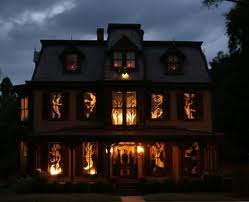
It was Halloween and the mansion of Lord Fufflington was crowded with party-goers. The sommelier, Roderick, was busy in the private dining room of the lord.

“Oh, Roderick, can you recommend a good wine?” Lord Fufflington asked. “Maybe something white.”

Roderick sighed inwardly at hearing his entire profession boiled down to one of two colors.

“Sir, I recommend a 2001 Chateau d’Yquem.” The lord waved his approval and Roderick headed for the wine cellar.

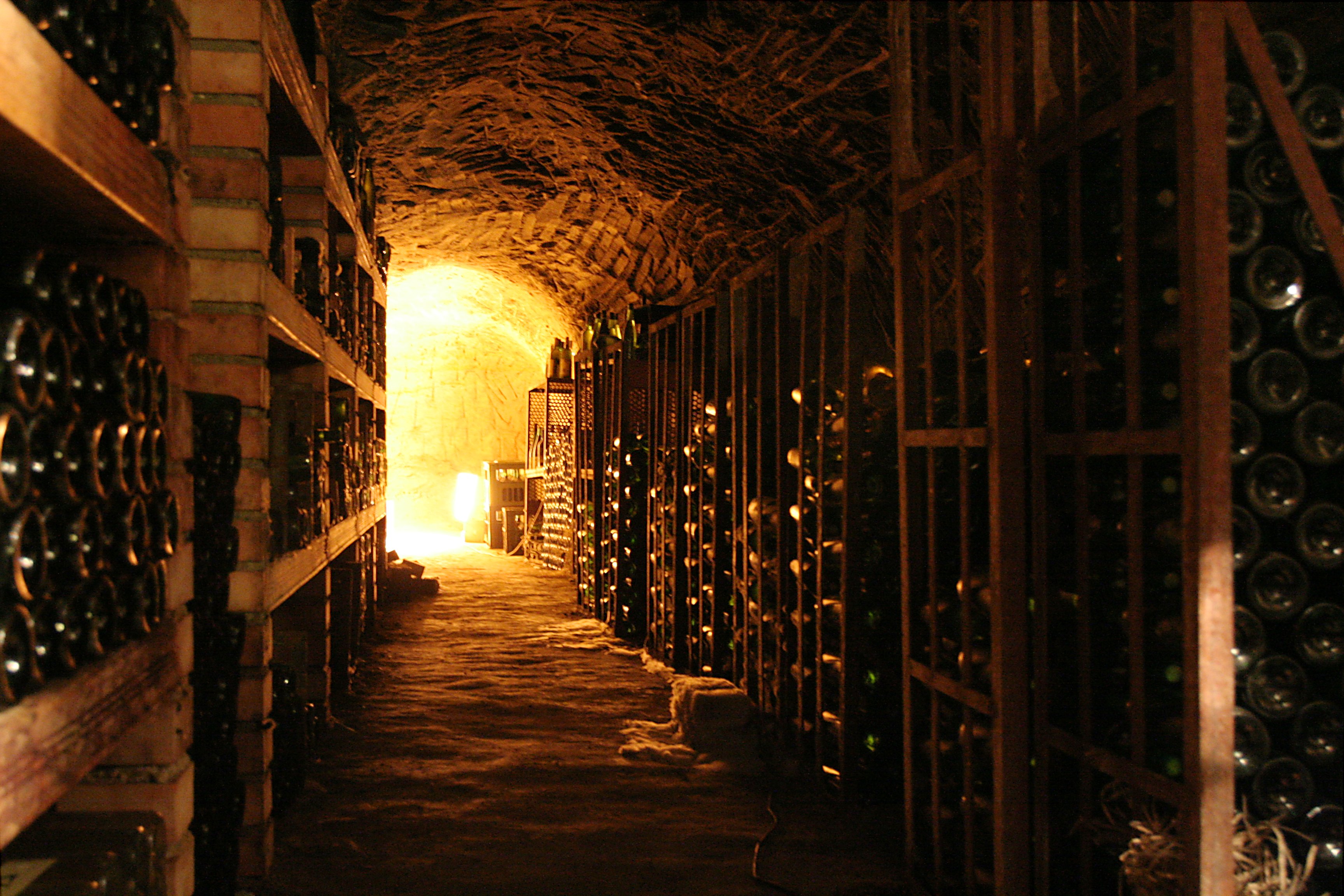
He passed a female Terminator and a smaller alien on the stairs and shooed aside a decapitated Spongebob, who was smoking in front of the wine cellar door. Inside, he found Sailor Moon making out with Captain Jack Sparrow. After kicking these out, he found the right bottle of wine and was about to leave when he noticed something that made him gasp. It was the rarest bottle in the cellar, a bottle of 1953 Domaine de la Romanee . . . on the wrong rack.

It was a travesty. He had only been the sommelier of the manor for a month, but he had totally reorganized the wine cellar in that time. The old system had been some jumble of arcane nonsense instead of his new way: reverse alphabetic order by the last name of the vineyard’s original owner. Some party-goer must have moved the bottle. He carefully restored it to its correct place, aligned the label correctly, and brought the Chateau d’Yquem upstairs, locking the door behind him.

As soon as he reached the dining room, Lord Fufflington called him over. “We’ll need another bottle, it seems, Roderick. Lord Kigglistump has just arrived.” He motioned to an obese man whose body was straining against the neoprene rabbit costume he was wearing.

Roderick returned to the cellar and got another bottle of Chateau d’Yquem. On his way out, he saw that two other bottles had been moved. On the side of one dusty magnum was a note rubbed in the dust: Wine must be arranged by phenolic content only! – Diogenes, the butler.

So the butler did it! It was obvious. Roderick stormed upstairs, intent on informing Lord Fufflington. However, the wine requests kept pouring in and he was kept busy running to and from the wine cellar all night. Every time he entered, more bottles were moved and more notes were left in dust, in the dirt, or scratched in wood. They demanded that he return to the old system and threatened him grievous harm if he didn’t. The last even threatened to stab him in the throat in his sleep if he didn’t stop arranging the bottles in his own way.

That was the last straw. Roderick stormed upstairs and into the dining room, interrupting Lord Fufflington in the middle of a bawdy anecdote involving a hang glider and the constellation Andromeda.

“Sir, I must insist that the butler stop interfering with my organization of the wine cellar. He has been rearranging wine bottles all night.”

“That’s impossible, man,” Fufflington said. “The butler has been away all night at a private function.”

“He must have returned early then,” Roderick said. “In any case, tell Diogenes to stay away from my wine cellar.”

“Diogenes?” Lord Fufflington said. “The butler’s name is Ramses. Diogenes was the old butler. He died ten years ago tonight. Why, Ramses is at his memorial right now. I saw, Roderick, you’ve turned all pale and—I say! You just dropped that expensive bottle of wine on the floor. Are you sure you’re really cut out to be a sommelier?”


The Right Turn

This is a story prompt by my good friend, Sharmishtha Basu. Read the original post and her story here, and many others on her great blogs. This story is a bit darker than some of my other work, just as a note of caution.

The lightning crashed again, blinding him for a few seconds. It lit up the old building behind the trees. He noted that the road has forked to two obscure paths a few feet away from him, the right turn led him to an old, dilapidated mansion, which perhaps had some intact rooms and a caretaker. The left one disappeared in the shrubs and bushes.

Someone has been stalking him ever since his car broke down. He could hear him or it but had not been able to catch a single glimpse even after turning back dozens of times…

artwork by Sharmishtha Basu

Philip took the turn on the right. He wanted to get to the house before the rain started. He came out onto an overgrown lawn and saw a small door partially open on the first floor. Welcoming light was spilling out from the crack. With a final glance behind him, he hurried across the lawn and through the door.

He found himself in a corridor of whitewashed stone that immediately made him feel uneasy. There was a faint, chemical smell in the air that reminded him of morgues and taxidermists. The door creaked behind him. He leapt for it, but it was too late: the door slammed and a lock clicked.

Philip ran back and pushed on the door but it did not budge. With a sense of apprehension, he turned and continued along the corridor. It ran for fifty feet until it turned a corner and opened into a glass-walled room that looked out onto a stark-white laboratory lined with machines and microscopes. The glass room he was in occupied a quarter of the room. In the center of the room were two large, clear cylinders that reached from floor to ceiling. The further one was empty. Inside the nearer one, curled and immobile, stood a nightmare.

Imp was the word that came to Philip’s mind when he saw it, then hag. It was humanoid, with spindly limbs and a face that was pulled forward with a long protuberant jaw and exposed fangs. It was female, he saw, with withered breasts that hung limply down on its stomach. Long claws grew out of its hands and feet.

A metal door slid down across the entrance to the corridor, jerking Philip’s attention away from the monstrosity in the cylinder. A moment later, a man walked into lab from another door. He was dressed in all black so that in the purely white lab, he seemed like a hole in space, a negative of reality.

“It was you, wasn’t it?” Philip said. “Who followed me from my car? What do you want with me?”

“You can undress and pile your clothes in the corner,” the man said. “You’ll have no need of them anymore. If you don’t, I’ll have to gas you and do it myself, but I’d rather not. Don’t think about trying to call for help—cell phones don’t work in here.”

“What are you going to do with me?” Philip, as a feeling of dread went through him.

“I’m sure you have noticed Hecate,” the man said, indicating the cylinder. “This is the crowning achievement of my work. I developed her with specific goals: to be ruthless, agile, cunning, and fertile. She is almost ready now, just a little more and she will be ready to wait for someone—for you, in fact.”

Philip started to ask a question and then decided he did not want to know the answer. The man saw and laughed.

“Hecate was once like you or me, just a normal girl that got lost on her way home from a party. She came to the fork in the road and turned right, ending up where you are now. It will take more than a year, I warn you, but someday, you will be like her. Then the two of you will come together, the mother and father of a new race. Now please, remove your clothing.”

“I’m more comfortable this way,” Philip said.

The man sighed. “Have it your way.” He turned away and turned on a machine on the side table. As soon as his back was turned, Philip drew the pistol that was tucked in the back of his pants and pointed it at the man’s head.

The glass was thick, but no match for a .44 bullet. The shot shattered one of the panels of glass that made up the containing room, missing the man’s head by inches. He threw himself to the floor as Philip shot again, smashing another panel of the wall.

Philip climbed out the glass room, sending more bullets smashing through lab equipment and glass partitions. The man in black kept dodging and weaving, trying to get to the door. Philip’s last bullet smashed through the nearest glass cylinder and light blue fluid poured out onto the floor.

“No! She’s not ready yet!” the man screamed. He ran to a computer terminal and started typing in commands. Behind him, the thing in the cylinder moved.

It started with a slow unfolding of its limbs, as if it were just waking up. Then it lifted its head and Philip caught a glance of its watery yellow eyes before it turned them on the back of the man in black. It took one long, delicate step out of the shattered tube and then a flying leap, silently and with claws extended.

The man screamed and the two figures fell to the floor, locked together in a frenzy of limbs and fangs and blood. Philip ran for the door that the man had entered by and ran up the stairs. He came out into a dark, musty main hall and found the front door. Just before he left, he opened his Zippo lighter, lit it and dropped it on the carpet. Then he fled out into the night.

The next day, Philip read how the old mansion on the edge of town had mysterious burned down. The damage was further increased by the explosion of several large tanks of chemicals that had been stored in the basement. The eminent but reclusive Dr. Hasgrove was found in the basement, dead from unspecified wounds. No other people or creatures were found.

Philip moved to another city a month later. He kept his eyes open for news of strange attacks or disappearances. There were none that he could find, but still, when he was out at night, he thought he could feel something behind him, stalking him.

Waiting.


The Other Side: Isabelle’s Story (Part 4)

Read the original: Isabelle’s Island

The Other Side: Isabelle’s Story (Part 1)   (Part 2)   (Part 3)

(This final installment picks up at the end of both “The Other Side: Isabelle’s Story (Part 3)” and the end of “Isabelle’s Island”)


Just as the man was going for his boat, the monster rose out of the water and tore the boat to pieces. And just like that, the man was there with her on the island, just the two of them. Isabelle was overjoyed.


The man let out a cry of horror and rushed to the small boat he had taken up to the beach. The larger boat, the one with the sail, was lying mostly under the water a few hundred feet from the beach. The monster had disappeared back into the water.

“You can’t go now,” Isabelle said, leaping forward. “The monster just sank your boat. You have to stay here with me.”

The man whirled around and there was something strange about his eyes, as if he were seeing but not understanding what was happening. “Who are you anyway?” he asked.

“My name is Isabelle,” she said and gave him a small smile. “What’s your name?”

The man turned and jumped into the small boat, rowing it frantically out to the wrecked ship. “There’s a monster there, so be careful,” Isabelle said, but trailed off as he ignored her. “You have to protect me from it . . .”

Isabelle watched as the man dove into the water and began pulling up waterlogged bags and containers and throwing them into the inflatable boat. All afternoon, he worked, salvaging things and bringing them back to pile up on the beach. Isabelle watched him uncertainly. He looked like he was planning to stay, but still he wasn’t paying any attention to her.

As the sun was setting, the man built a fire and heated up something from a can. Isabelle approached the fire and sat down to one side, looking at him.

“What’s your name?” she asked softly.

He looked up. “Tom. Tom Nedimyer.” Then, indicating the pot over the fire, “You want some?”

“What is it?”

“It’s food—beans. Are you hungry?”

“I—I don’t know,” Isabelle said, in confusion. Tom shrugged and spooned some onto his plate.

“What was that thing, anyway—that thing that crushed my boat?” Tom asked. “I was afraid it would be waiting for me down there, but I didn’t see any sign of it.”

“That’s the monster,” Isabelle said. “It’s always around, threatening me. I’m glad you’re here to protect me from it.”

“Why would it sink my boat though?”

“It wanted you to stay here”

Tom gave her a sudden, hard look that startled Isabelle. “How the hell would you know what it wants? What is it anyway?”

“I don’t know, I don’t know,” Isabelle said, thrown into confusion by his tone and language. “It’s just the monster. It wants to hurt me.”

“Does it? Has it ever hurt you?”

“No, but . . .” She didn’t know how to finish.

Tom began to eat. “Are you here alone? When I first saw you, I thought you were here with a cruise or something.”

“I live here,” Isabelle said. “I came with my family but I can’t find them now.”

“How long have you been here?” he asked. “I mean, just look at you.”

“Why? What about me?”

“Well, the clothes, the hair. How do you do it?” He saw her look of incomprehension and with a noise of irritation, he pulled a mirror of his survival kit. He held it up so she could see.

Isabelle looked into the small piece of glass and saw herself for the first time since she had been on the ship with her family. She looked just as she remembered herself, a thin, pale face with dark hair pulled back into a neat braid. It took her a moment to understand and then she felt a sudden sense of horror sweep over her. She looked so clean and neat—every hair was in place and her face and clothes looked as scrubbed and spotless as if she were on her way to church. Yet she had not touched water since the day she had climbed out the pool she had fallen into.

She turned away quickly and felt her hands trembling. “I don’t know, I don’t know.”

“How long have you been here?” he asked again. “Do you remember the date?”

She thought about it. The time on the ship, the time on the island—it was just time, with no demarcations to separate it out and make it countable. “I can only remember one date,” she said finally. “My birthday.”

“When is that?”

“July 26,” she said. “July 26, 1789.”

There was a silence as he stared at her. It made her afraid. “What’s wrong?”

“Today is August 14, 1996,” he said at last. He moved a little away.

“No . . .” she said. “No!” But she knew he was right. With rising terror, small details that she had not understood or had not thought about came back to her. Without another word, she got up and fled into the jungle.

That night was the worst that Isabelle could remember. It began to pour in the middle of the night. She hid under an outcropping of rock where she always did when it rained, shaking and trying to keep the rain off her. Now, though, her mind kept screaming at her and she could not quiet it.

I’m . . . I’m . . . She could not even bring herself to think the word. There was no other possibility though. Her appearance had not changed, she could not remember eating or drinking anything since she had fallen into the pool that night, not even sleeping for that matter. Why had she not thought of it before? Her mind was such muddle of fear and loneliness. And if what Tom had said was true, that it was over two hundred years after her birth . . .

I’m . . . dead.

The pain and fear welled up inside her until she broke down in sobs, covering her hands with her face. Then she stopped suddenly and pulled her hands away from her face. She had no tears. She felt hollow, a shell of the person she had been.

Her family was truly gone. Some part of her had known that when she had seen the graves and decaying houses, but she could not accept it. The rain pattered on the leaves all around her, embodying the ethereal prison she now felt trapped in.

Over the next few days, Isabelle watched from hiding as Tom hauled wood to the beach and built outriggers onto his small boat. She watched as he loaded it with fruit and coconuts and containers of water. She watched him prepare to go and leave her. She did not try to stop him. She did not really want him, or Louis for that matter. She wanted her father and he was gone.

She was worried about the monster though. She was worried that it did not want Tom to leave and that it would sink his small boat if he tried. For the first time, she wondered what the monster really was. She had always thought of it as her enemy, but then it had become her ally against the scary and annoying people who had come to the island. And it had kept Tom on the island. But now . . .

The next morning, before dawn, Isabelle watched as Tom pushed his boat out on the high tide. The full moon was sinking down towards the horizon and shone with a ghostly light on the water. Tom jumped into the boat and then looked back. Isabelle raised her hand in farewell and he returned the salute.

Tom turned back towards the open ocean and started to paddle. He was about a hundred feet from shore when Isabelle saw what she feared the most: the monster, rising out of the water just behind the boat. Tom did not see it; he was concentrating on paddling between the rocks near the shore. The monster was going to smash the boat and maybe drown Tom. It hated Tom for leaving Isabelle there alone.

She had to stop it, somehow. “No,” she said out loud. “Leave him alone!” She felt the monster hesitate and she said it again. For a while, she held it there, in the water just off shore, as Tom’s boat got further and further away.

Suddenly the monster gave a roar that echoed off the rocks near the beach. Isabelle had never heard it make a sound before. It turned and leaving the water, it charged up the beach straight for her. She could not control it now. It would not stop. She turned and ran into the jungle.

For the first time since she had seen the monster first step out of the jungle, she was truly terrified. She heard it crashing through trees and breaking rocks behind her as it pursued its furious course after her.

Whether by accident or unconscious desire, Isabelle realized that she was heading for the lagoon on the far side of the island. She reached it as the eastern sky was lightening with the dawn. The rowboat was still there, and the man as well, but he was not fishing now. Instead, he was sitting up, looking intently in her direction.

“Help!” Isabelle cried. “The monster is coming. You have to protect me from it.”

“I will,” he said, “but you must come here. It’s right behind you. Once you’re in the boat, you’ll be safe from it.”

Isabelle stopped at the water’s edge. “I can’t,” she cried. “Can you come up to the shore?”

“I’ve come as close as I can,” he said. “It may be uncomfortable, but the water will not hurt you.”

With a roar, the monster burst out of the forest and Isabelle stepped into the water. Instantly, she felt that same clutching panic that she had experienced in the deep pool, but she kept walking, looking straight ahead to the boat. The water rose to her knees and then her thighs and she bit her lip to keep from screaming. Then she reached the side of the boat.

The man put his hands under her arms and, as if she were a child, lifted her effortlessly into the boat. He smiled at her. “You’re free now. You’ll never see that thing again.”

Isabelle lay in the front of the boat, crying softly from exhaustion and relief. She reached up and felt real tears on her cheeks, which made her cry even harder.

“Where are we going?” she asked, as the man began to row.

“Away from here, first of all, then to somewhere better.”

“Will I see my family?”

“Soon enough. Now, just relax. I’ll do the work now.” He began to row, with strong, even strokes, out of the lagoon. They headed east, into the rising sun and slowly, the island disappeared from sight.


The Other Side: Isabelle’s Story (Part 3)

Read the original: Isabelle’s Island

The Other Side: Isabelle’s Story (Part 1)   (Part 2)

The strength was leaving her hands. “No, no, no. Papa, help me!” Her hands slipped off the root and with a scream, she fell, down, down into the blackness. The last thing she remembered was the sensation of her body hitting water.

.

..

….

……………………………………………………………………………………………………………………..

Isabelle opened her eyes to see colors and shifting patterns of light. She tried to move her limbs and found that she could move quite easily. Then she realized she was underwater.

She stood up and paddled her way frantically to the surface. The water was deep, but clear as glass. At the surface, she found that she was in steep-sided hole, like a well in the rock. It had vines trailing down its sides from far above, where the high sun made everything glow in shades of emerald and gold.

Isabelle remembered something about falling, although then it had been night. She pulled herself up by the vines, shaking off as much of the hideous water as she could. The very touch of it repulsed her now, as if it were a prison that was still reaching out to capture her.

Her body had become very light, or she had become strong, and she found herself climbing easily up the vines to the jungle floor. The air was still, with only the occasional birdcall breaking the silence.

The path through the jungle was so overgrown that it had entirely disappeared in places. She forced her way to the beach but more riddles were waiting for her there. There were two cabins there now in place of the lean-to but both looked abandoned and dilapidated, with their roof palms rotting and their sides sagging into the sand. On the edge of the forest, she found two graves, their rudely made crosses bleached and overgrown with weeds.

Isabelle tried to think, but her mind was not working properly. Where was her family? Had they just gone away and left her? Her father had promised he would come back for her, but now they were gone and she was alone.

“Papa?” she said. Then, in a scream of terror and despair, “Papa!” She collapsed on the beach, sobbing.

“You have to protect me from the monster, Papa. You said you would. It’s big, as big as a horse and has long fur and sharp claws and I saw it and it’s real you have to protect me you promised you promised you would come back for me please please papa please…”

She looked up, hoping to see her father—anyone—there on the beach. But no one was there. If the monster were real, her father would have to protect her. She could imagine it peering out of the underbrush at her. Then, as if it were perfectly natural, she saw it, just as she had described and just where she had imagined it. The monster.

It took a step out onto the beach, looking at her menacingly. It was real.

“Papa, you have to come save me. See, I wasn’t lying. There really is a monster. Papa, please.” But no one came and after a while, the monster disappeared back into the trees.

For Isabelle, days became a torture of loneliness as she wandered around the island, looking for any sign of her family. Sometimes she thought she heard their voices or saw a glimpse of one of them through the trees. Then the monster would appear and threaten her and she would cry out for help, but help never came and the monster would disappear again. She was terrified of water and spent the nights in the trees for fear of falling into it accidentally.

One day she went so far that she reached the far side of the island. Here she found a long, curving lagoon that formed a natural harbor. In the middle sat a small boat at anchor. Isabelle saw with a shudder that it resembled the rowboat that they had come to the island in, although this one was newer and cleaner. There was a man lying in it with his feet up, fishing. For a moment, Isabelle thought it was her father or one of her brothers and her heart gave a leap of hope. But it was someone else.

The man straightened up when he saw her and he put down the fishing pole. “What are you doing?” he called to her.

Isabelle hesitated. “I’m—I’m looking for my family. Have you seen them?”

The man nodded. “You won’t find them on that island though.”

“Do you live here?” she asked.

He shook his head.

“Then how do you know?”

He smiled. “Trust me.”

“You know, there’s a monster on this island,” Isabelle said. “It hunts me and I have to run away from it. Come be with me and protect me.” At that moment, there was a crashing in the trees and the monster appeared partway down the beach. “Please, come rescue me,” she said.

The man kept looking at her steadily. “You know,” he said, as if a thought had just hit him, “if you waded out here to my boat, it wouldn’t follow you. If you really want to get away from it, that is.”

“I can’t,” she said immediately. “I can’t go in the water. I’m afraid.”

“You’ll be fine,” the man said. “It’s not much above your waist, even out here. Come on, I’ll help you.”

“I can’t!” Isabelle cried. “I’ll never go in the water again. Who are you anyway? You don’t know anything about my family. I’m going to go find them.” She stormed off into the jungle, not even looking back to see the monster fade from view.

For a long while—days, weeks, she could not tell—she searched the island for any trace of her family. She secretly knew that they were not there, although where they had gone, she did not know. Still, she told herself that they could be on the move. It was a big island—they could be always missing each other. She walked the whole island again and again, except the sheltered lagoon on the far side. She did not want to see that strange man and his penetrating gaze and strange smile.

One day, just as the sun was going down, she caught sight of a figure on a rock across a narrow channel from the island. It looked like her father and her heart flamed with hope. He had come back for her. But as she approached, she saw that it was someone else. He was younger and wore strange clothing. Still, he could protect her and stay with her.

She crept closer to him, getting as close as she could without touching the water. His name was Louis, she found out, and he spoke French. Suddenly she was very glad of her tedious French lessons.

Louis said he would come to the island and protect her but he hesitated to. She made him promise he would come but still she was nervous. The sun was going down and she could not go over to him. What if he disappeared in the darkness, just as her family had done? He was so close, yet so far as well.

Just before the sun went down, the monster appeared, coming down the beach towards her. She screamed for Louis to protect her and he jumped into the water and started to swim. But then he sunk under the water and did not come back up. After a while, the monster disappeared from view.

Isabelle was crushed. Louis had been so close, but then he had escaped her too. Still, she felt hope. She had fallen into water and had come back out of it, so maybe there was hope for Louis. After all, he had promised. Every day, she went to the rocks and looked down into the churning water, hoping to catch some glimpse of him.

Time passed and other people came to the island. Some were groups of men, who sat and drank on the beach or crashed through the forest, making noise and cutting down trees. She hid from these sorts of people—they reminded her of the crew of the ship and she feared what they would do to her if they found her.

Sometimes, couples would come to curl up together on the beach, eating and drinking and kissing. They paid attention to no one but each other and they would never pay attention to her. Isabelle hated these people, especially the women.

But Isabelle discovered a very interesting thing: the monster hated what she hated. When these couples—or other people who made Isabelle feel uncomfortable—came to the island, the monster would crash through the trees or throw rocks into the water. It did this especially at night until the people got scared enough to leave.

But then one day, a man came to the island. He was about her father’s age and he came alone. She looked at him from the jungle and then, for the first time since she had talked to Louis, she decided to talk to him.

He was nice. He seemed kind and wanted to help her, but he had a boat and she knew he was going to leave her again soon. Suddenly, she wanted him to stay there, wanted it more than anything she had wanted since her family had left. She knew the monster wanted it too.

Just as the man was going for his boat, the monster rose out of the water and tore the boat to pieces. And just like that, the man was there with her on the island, just the two of them. Isabelle was overjoyed.

(to be continued)


The Elephant's Trunk

🐘 Nancy is a storyteller, music blogger, humorist, poet, curveballer, noir dreamer 🐘

Thru Violet's Lentz

My view, tho' somewhat askew...

The New, Unofficial, On-line Writer's Guild

Aooga, Aooga - here there be prompts, so dive right in

Just Joyfulness

Celebrating joy

Tao-Talk

You have reached a quiet bamboo grove, where you will find an eclectic mix of nature, music, writing, and other creative arts. Tao-Talk is curated by a philosophical daoist who has thrown the net away.

H J Musk

On reading, writing and everything in between ...

Clare Graith

Author, Near Future Sci-Fi, Dystopian, Apocalypse

Kent Wayne

Epic fantasy & military sci-fi author.

Rolling Boxcars

Where Gaming Comes at you like a Freight Train

Lady Jabberwocky

Write with Heart

Fatima Fakier

Wayward Thoughts of a Relentless Morning Person

Life in Japan and Beyond

stories and insights from Japan

The Green-Walled Treehouse

Explore . Imagine . Create

One Minute Office Magic

Learning new Microsoft Office tricks in "just a minute"

lightsleeperbutheavydreamer

Just grin and bear it awhile

Linda's Bible Study

Come study God's Word with me!

Haden Clark

Philosophy. Theology. Everything else.

Citizen Tom

Welcome to Conservative commentary and Christian prayers from Mount Vernon, Ohio.

The Green-Walled Chapel

Writings on Faith, Religion and Philosophy

To Be A Magician

Creative writing and short stories

My music canvas

you + me + music

Eve In Korea

My Adventures As An ESL Teacher In South Korea

Luna's Writing Journal

A Place for my Fiction

Upper Iowa University

Center for International Education

Here's To Being Human

Living life as a human

CryptofBooks

Book Reviewer and Blogger

yuxianadventure

kitten loves the world

Strolling South America

10 countries, 675 days, 38,540km

It's All in Finding the Right Words

The Eternal Search to Find One's Self: Flash Fiction and Beyond

Reflections Of Life's Journey

Lessons, Joys, Blessings, Friendships, Heartaches, Hardships , Special Moments

Ryan Lanz

Fantasy Author

Chris Green Stories

Original Short Fiction

Finding Myself Through Writing

Writing Habits of Elle Knowles - Author

BEAUTIFUL WORDS

Inspiring mental health through creative arts and friendly interactions. (Award free blog)

TALES FROM THE MOTHERLAND

Straight up with a twist– Because life is too short to be subtle!

Unmapped Country within Us

Emily Livingstone, Author

Silkpurseproductions's Blog

The art of making a silk purse out of a sow's ear.

BJ Writes

My online repository for works in progress