Tag Archives: Korea

The Lake – Visual Fiction

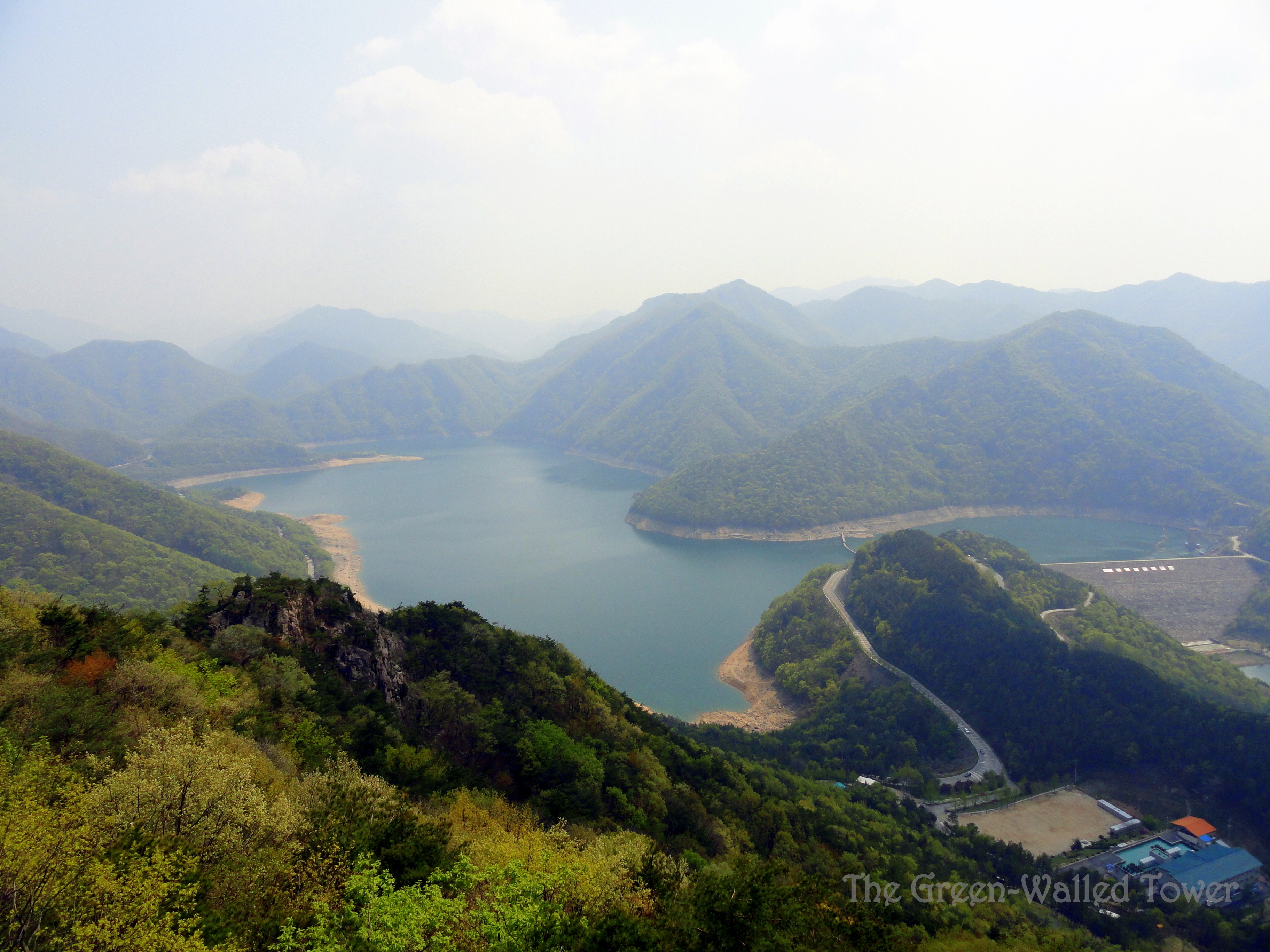
Taken in Gosan, Korea

Taken in Gosan, Korea

It looked so close, he felt he could almost touch it. On hot days, the water looked oh so refreshing. He could be on the shore in an hour if he wanted to.

But this was his domain, up here on the mountainside, with only the snakes, chipmunks, and pheasants as company, and food when he could catch them. There were springs where he could drink but they were small, muddy trickles, fit only for a monster like himself.

His mother’s words spun repeatedly through his mind: “You have a curse, my son. People would not accept you, if they saw you.” She had never shown him to anyone. Even his father, who was an officer in the army and was rarely home, had never known he had lived through childbirth. His mother had made him run and hide in the mountains whenever his father visited. Finally, when she had died of the fever, he had run to the mountains.

He looked down at the water from the shelter of a rock that was cutting the scorching summer wind. He could go at night, but even then he would have to cross the road and there were always cars driving back and forth, as if guarding the lake from his cursed touch.

Someday, perhaps he would risk it, if fear gave him a reprieve and unchained him even for a night. Someday.


Forgotten Histories – Visual Fiction

taken in Namhae, Korea

taken in Namhae, Korea

It just looked like a nice place to rest.

I came across the site while I was toiling through thick undergrowth on the side of a nameless Korean mountain. There was no gravestone to identify the person buried beneath and I barely thought about it as a grave as I threw my pack down and stretched my sore muscles.

Fatigue and a soothing bed of springy grass made me drowsy and my eyes closed on their own. All I could feel was the cool firmness of the grave under my back and the warm sun on my face.

Suddenly, it was night and I was standing in a village of houses with thatched roofs. Over the low, outer wall of the nearest house, I could see the door open and a woman was holding a newborn baby. It was crying and its face shone red in the lamplight.

The scene changed and I now saw a boy standing by the street, watching Japanese soldiers march into town. The boy was now in school, learning Japanese, whispering in Korean with his friends, and being beaten for it when he was caught.

The scenes began to move faster and faster. The boy was now a man, wearing the uniform of the South. I saw his name tag: Hong Deok-Jin. I saw him guarding a harbor, sneaking off to see his family, being caught and reprimanded, then sent to a small island as punishment. I saw him leading the counterattack against North Korean boats, then being rewarded for it.

The war was now over and the man lived in a small house with his growing family, his war medal tacked to the wall of the kitchen. I saw one fishing boat sink under him; watched him work with friends, saving money for years to buy another boat. I watched as one son and a daughter died and three more got married and set grandchildren on the man’s knees. The man’s wife finally passed on and I saw the man make his way painfully to the beach each morning to look out over the water, sitting on a rock with his wrinkled hands on his knees, looking and thinking.

Finally, I saw the procession of children and grandchildren carrying his body up the mountain slope to the grave. The family was too poor for a granite gravestone, but I saw them laboriously carry stones up the slope to build the wall around the site. Each year, family members would come to clean and maintain the grave, but then they stopped coming and the trees and undergrowth began to encroach upon the protecting walls.

I woke up with a start. Several hours had passed and the air had gotten chilly. I jumped up, suddenly apologetic about my careless use of another human being’s resting place. I was far behind schedule and needed to move on, but I couldn’t go right away. First, I cut a thick piece of wood and laid it on the grave for the next person who would come across the grave. On it, I carved in English and Korean:

Here lies Hong Deok-Jin. He once lived.


The Phonology of “Baby Teacher”

I am a teacher and in my teaching career I have probably taught thousands of students. And of those, quite a few have called me Baby Teacher.

As you may or may not know, I teach English in Korea. Normally, Korean students called their teachers seonsaeng-nim, which, like the Japanese sensei, just means “teacher”. If they need to distinguish between teachers, they add the teacher’s last name before it, as in “Kim seongsaeng-nim.”

I have my students call me David. That is the opposite of the norm here, since Koreans usually only call friends and social inferiors by their first name. I wouldn’t do that if I was teaching in North America, but over here, foreign English teachers are outside all the rules of normal engagement, so it doesn’t really matter. However, a lot of them still stick “teacher” on the end of my name to mimic the Korean style.

So how does “baby” come into it? It has to do with Korean pronunciation rules. First of all, Korean doesn’t have a “v” sound, so my name automatically becomes “Dabid”. As well, Korean doesn’t have any syllables that end with a “d”, so my name gets stretched to three syllables, as in “day-bi-deu”. This means the second syllable is now open, which in Korean means that the “i” gets changed to an “ee” sound, and we end up with “day-bee-deu”. Take off the last syllable and it’s suspiciously close to “baby”.

Of course I correct them and they usually do it just to be brats. Still, I’ve gotten used to it. I’m sure I could be walking down the road in America and if an elementary school student yelled “Hey baby!”, I’d probably just smile and wave.

This is what came up "baby teacher" in an image search. Source.

This is what came up for “baby teacher” in an image search. Source.


The Lotus Ocean – Visual Fiction

lotus ocean

Morning dawned on the world of green.

The inhabitants awoke from their verdant  beds to find that the central ocean had been replenished, as it was every night.

“Dad, where does the ocean come from?” the boy asked his father as the family walked down one of the jade veins that radiated out from the center of the leaf.

“It comes from the sky,” the father said. “Every day it dries up and then is replaced during the cool of the night.” They reached the edge of the ocean, which towered above them, curving out of sight. They could see others gathering on the far side of the ocean, their forms skewed by the curved surface of the water.

The family drank, putting their mouths to the wall of water in front of them and drinking deeply. After several minutes, when all were refreshed, they began the climb back up the leaf to their home.

“Dad?” the boy asked. “What if the ocean stops being replenished?”

“Do you mean the legends, son?” the father asked. “The legends of terrible cold or burning heat? That is not likely to happen, but if it does, we will move to a different leaf. There are thousands of them, you know.

“What if it happens to all of them?”

The father only smiled and ruffled his son’s hair but the fear tightened inside him, the fear that he would admit to no one. It was the same fear that they all felt, in the private recesses of their minds if the night was long or the weather turned strange.

What if the ocean stops coming? What if extreme heat withers the leaf? What if cold freezes everything into an uninhabitable wasteland?

What if?

lotus pond


Blue Storm – Visual Fiction

For those who are new to my blog, I do a Visual Fiction flash fiction every Sunday, based around a picture of mine that I find inspiring. If you’d like to join me in this, feel free to use the picture to write your own story. Just give me the link to yours in the comments, since I’d love to read it. I write stories of all genres and moods, although this one happens to be rather dark.

Taken in Jeonju, South Korea

Taken in Jeonju, South Korea

I knew that magic had a price, but it never occurred to me that it might extend beyond the one foolish enough to try to wield it.

*

“Jules, you’re mad! Quit it!” I shouted, trying to be heard above the rising winds. Jules was standing in the circle he had drawn in the forest clearing, shaking convulsively. At the time, I thought it was some sort of ecstasy of unholy power, but now that I reflect, it looked more like a person who has grabbed onto an electric fence and has tapped into a source of power far too vast for them to handle.

I ran, just as the clouds overhead began to seethe and spread a poisonous blue hue across the sky. It moved faster than I, and by the time I returned to my apartment, it had covered the city. A rift of dazzling light appeared in it and the last thing I saw before I shut and locked my door was a rain of dark objects beginning to fall.

*

It has been two days. I have not heard from Jules, but if he is dead, he is lucky. The city is in a panic at the unearthly scourge that has overrun it. There are many names for them: imps, goblins, demons. No one knows what they are, only that they are incredibly hard, if not impossible, to kill.

I sit and cower at home now, regretting any part I played in Jules’ mad schemes. I know that if they should find me, the concrete walls of my apartment will offer me little protection. Still, I wait and pray that this storm, like all others, might eventually pass.


The Great South Gate of Jeonju: Pungnammun Remembers

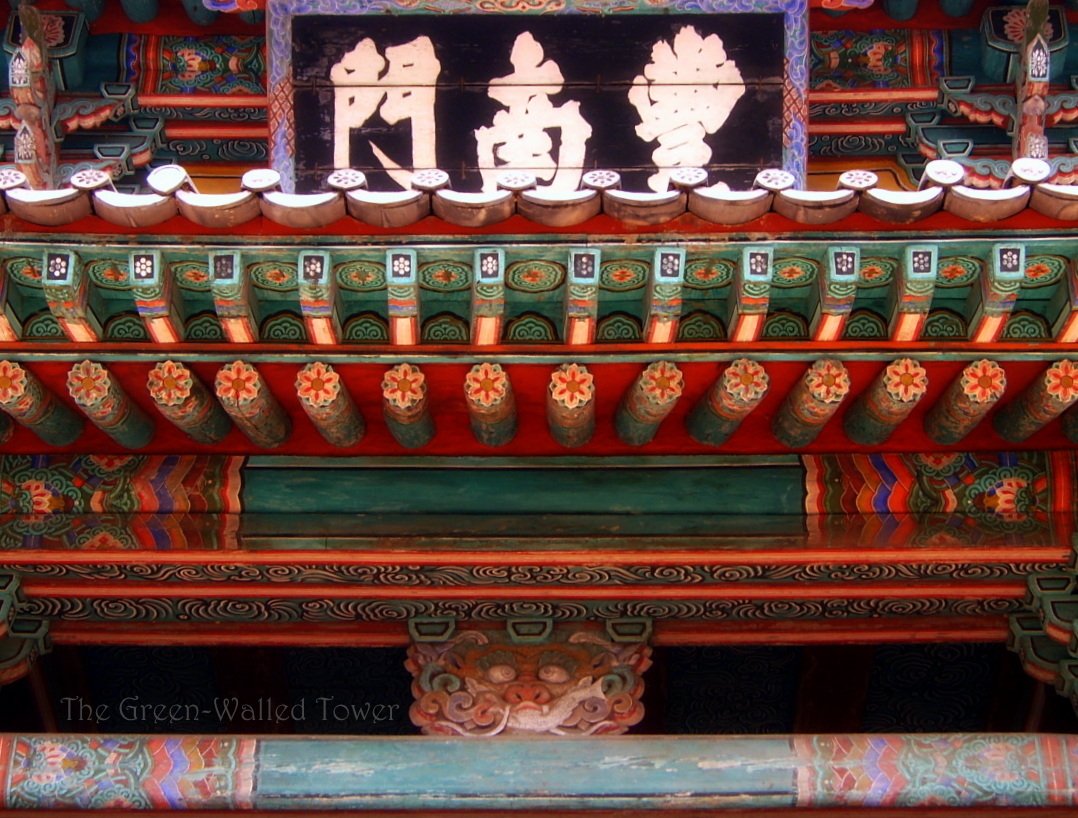
The Prosperous South Gate they named me, and I have borne that name with pride for centuries. I have been a rampart against attackers and a conduit of prosperity to my people within; the First Fortress of the Honam region, I was the first, the greatest, and now I am the last. I am Pungnammun.

Pungnammun sign

I do not track the passage of time itself beyond remarking the change from the bitter cold that grips at my mortar to the sweltering heat that bakes my stones and slate roof. Still, I remember. I remember the people, the little ones that have walked over and through me and I feel for them in their brief little lives, so full of tragedy and desire.

I remember the day when they passed judgment on three of their kind for worshipping a deity from a faraway land. They beheaded them and hung the heads from my walls. That night the skies poured down rain and soaked my stones with tears that I was unable to cry, washing the martyrs’ blood from my walls and into the eternal soil for burial. I remember an endless stream of peasants and goods entering in to sell at my markets; I remember the bodies being carried out for interment on the mountain slopes. I remember each and every one of them.

Pungnammun in the 19th century. Source.

Pungnammun in the 19th century. Source.

What I remember most happened long ago, back when my walls were intact and people and animals passed through me every day. Invaders were attacking the country from the east and a young lieutenant of the city guard left to aid in the defense. The night before he left, he met his beloved in my gatehouse and pledged to return to her, if he could. Her name was Seon-Mi; I know because he said it over and over as they held each other. I did not know his name, for she called him only “my lord”.

I never saw him again, or felt his feet on my stones and planks. Seon-Mi came every day to sit in my gatehouse and watch for his return. The tears that she shed soaked into my planks and I kept them for her, pledging silently to hold and guard her until her lord could return. I kept the rain and snow off her as she sat and waited through the years and then, one windy night, I held her body as her soul flew at last beyond the reach of my protection and help.

I am alone now. The wall has been demolished and my sisters and brothers, the North, East, and West Gates of the city, have been torn down to make way for the insatiable step of progress. Their places are forgotten, but I remain. And I remember.

Pungnammun at night

The above account is a mixture of fact and fiction concerning the iconic south gate of the city of Jeonju, South Korea, written in part for the Daily Post Weekly Writing Challenge, whose theme this week is “Iconic”.


Happy Easter from Korea

Today is Easter Sunday. So Happy Easter.

Although Christmas has eclipsed it in recent history because of the whole gift-giving thing, Easter has traditionally been the most significant holiday in the year for Christians. It is the day we remember Jesus rising from the dead, which is a bigger deal, and much more important even than him being born.

Of course, this Easter I’m living in Korea, and things are a bit tense these days in Korea, as you have probably seen on the news. The fact is that North Korea makes threats on a regular basis, but it’s never a good thing when you ratchet up tensions to this level on the most heavily-fortified border in the world. We don’t live right next to the border, but if the borders were all open, we would only be a four-hour drive from Pyongyang.

Here the atmosphere is guarded. People continue to go about their daily lives, but still, they watch and wait. Last week, I went to a Korean church service and the pastor talked in part about what our response should be if war broke out. It was the first time I’d ever heard a Korean acknowledge the possibility, although I’m sure they think about it enough.

In the Bible, the prophet Isaiah uses the term “Prince of Peace” when referring to the Messiah. That is what I hope and pray for this Easter: peace. Obviously the tensions in Korea are quite pressing on my mind, but there is also the Syrian civil war, fighting in Afghanistan, Burma, Mali, and other places. A lot of the world is a pretty scary, violent place.

I am not expecting war here, but at this point, no one knows what to expect. I’m not worried for myself but my heart aches at the thought that my beloved Korea and its wonderful people could ever go through such an ordeal.

So, Happy Easter. May the Prince of Peace reign.


Slumming on the Ceiling – Visual Fiction

Taken in Daejeon, South Korea

Taken in Daejeon, South Korea

Drunk. Bum. Loser. Deadbeat.

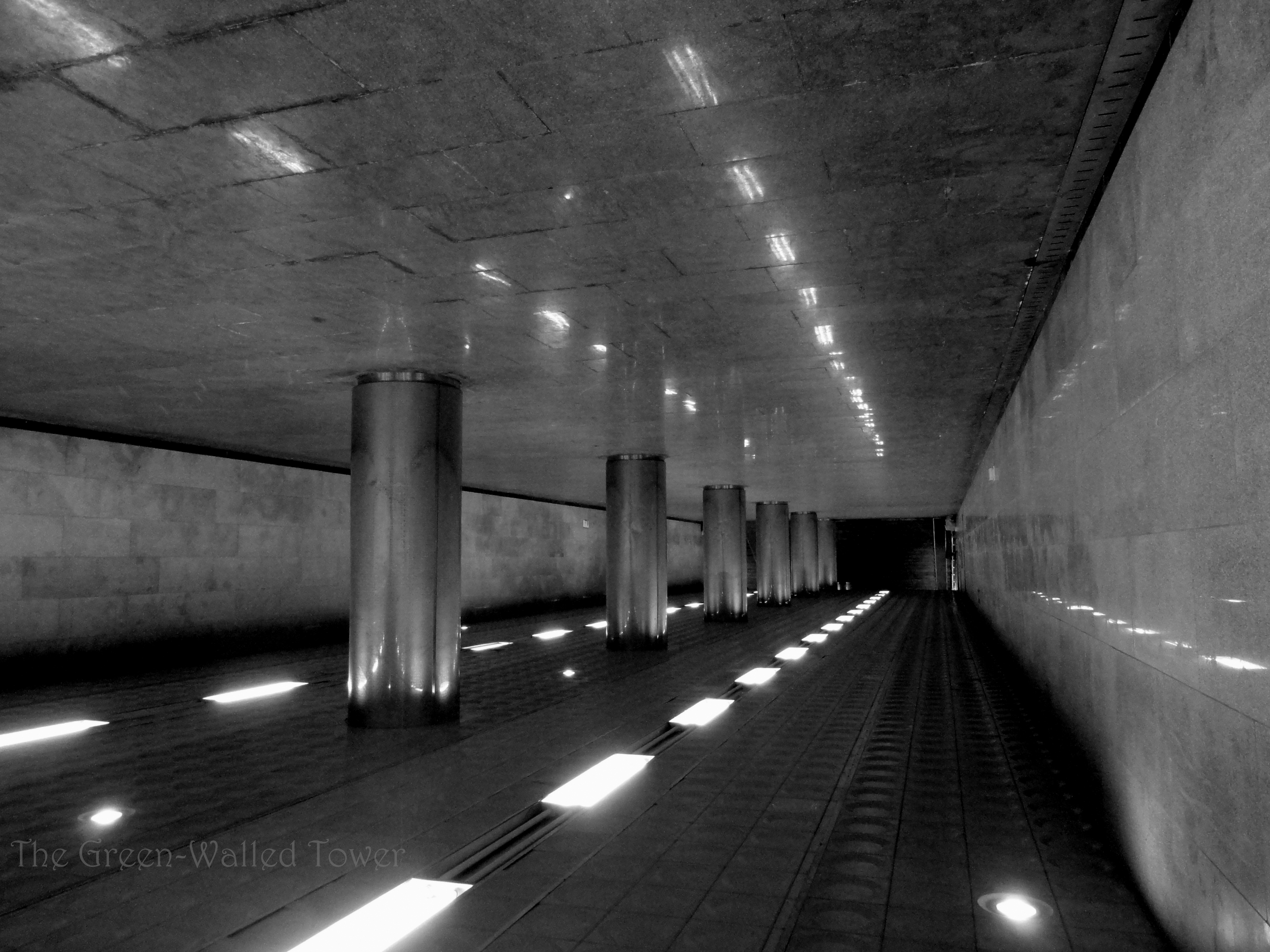
Freddie had heard them all and much worse as he sat in his underpass and watched people go by. He had a battered cardboard box in front of him with a few coins in it. Occasionally, more would be thrown in, but not usually. If the police chased him out, he waited until they walked away and then went back.

Thursday night had started as a good night. He had been able to buy a bottle of cheap liquor and had found a new blanket in a donation box. Half the bottle was gone when he suddenly began to feel lighter. Light began to filter in through the stairwells, increasing until it became as bright as day.

This is it, he thought. The angels, the angels are coming for me at last. One too many brown bag comforts, I suppose.

Freddie rose off the floor, floating up until he hit the ceiling. His perspective shifted and he found that the ceiling was now down for him, while the floor was above him. He sat in surprise and watched his handful of coins disappear into a light fixture. He tried to get them but burned his hand. It didn’t seem like he was dead.

With a shrug, he took a swig from the bottle and laid down on the ceiling. Freddie was used to life handing him surprises. Might as well make the best of it.

~*~

This is an alternate perspective on a couple of other stories I did, called What is it? and Why it’s bad to destroy the Earth.


The Sundering Fog – Visual Fiction #22

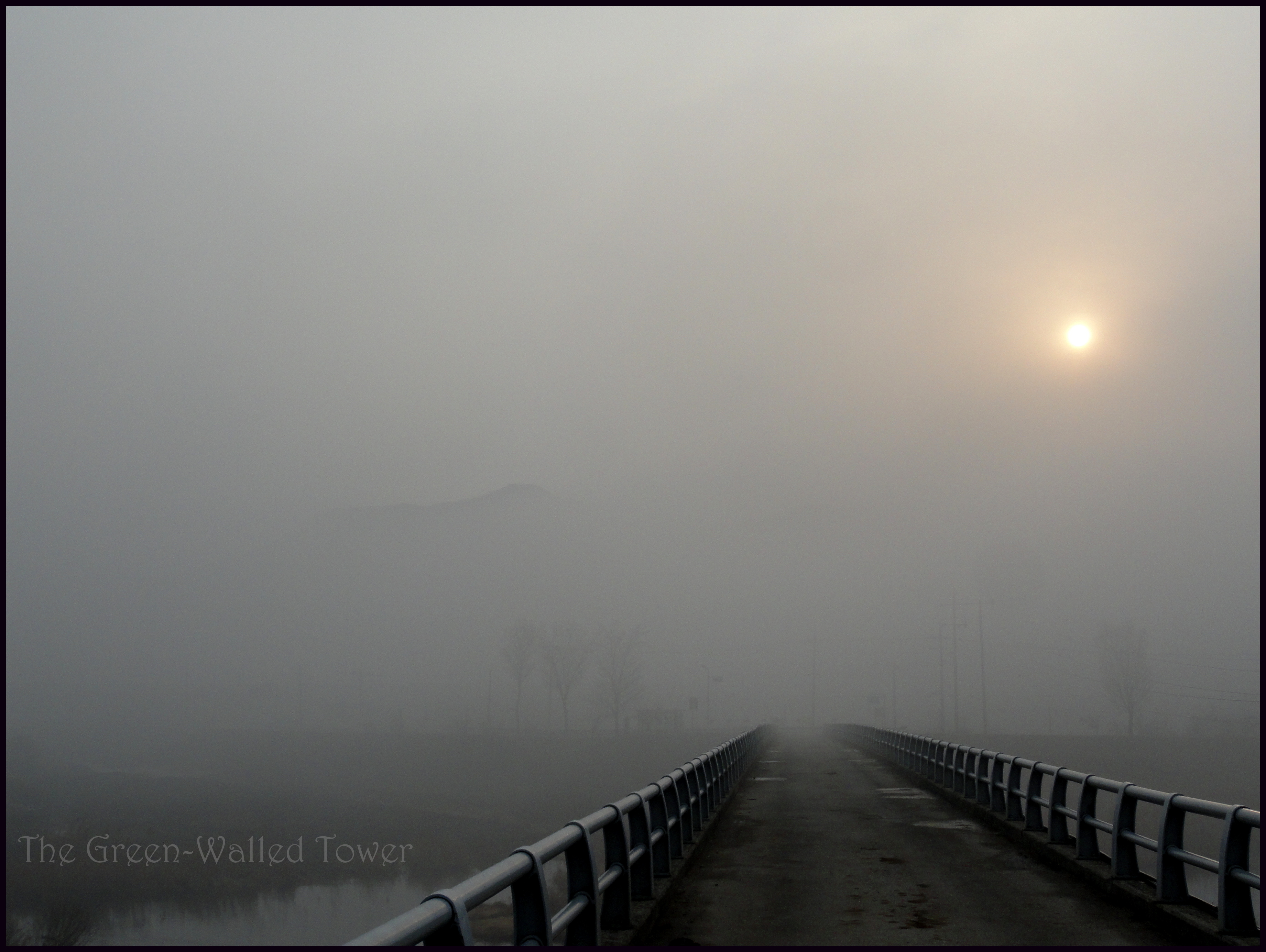
This visual fiction is the second picture I’ve used of this bridge. I like the fog on it, since it gives a much different feel. Plus, the first Visual Fiction I did, The Bridge, didn’t have a story with it. This story is the beginning of a longer one I might write sometime.

Taken in Wanju, South Korea

Taken in Wanju, South Korea

The last time I saw my son Seth was when I sent him over the bridge to go to school. The first day of Grade 4. I should have gone with him all the way to school, but that’s easy to say now. He wouldn’t have wanted me to anyway; he was so independent and on that day what he really wanted to do was cross the bridge by himself. I waved good-bye and watched as he disappeared into the fog.

I started my shift at the garage. From where I worked I could see across the river to the island where half the town was located, including the school. The fog usually burned off by about ten but that day it remaining like a blanket on the river.

About 11:00, there was a sudden crash; not an explosion, but a rending, tearing sound, as loud as a jet engine. Everyone ran outside, looking here and there and trying to figure out what had happened, until Randall Haskins tried to drive over to the pharmacy, across the bridge. I heard the sound of screeching tires and then Randall’s hysterical voice shouting, “The bridge! The bridge is gone.”

It wasn’t gone, but there was a large hole ripped from the center span of it, at least fifty feet wide. No one could see any reason for it, nor was there any concrete or rubble in the water below. The police chief took a couple of men and motored across in a boat to check on things on the other side.

They never came back. They didn’t even radio in after they went onshore. Another boat went over and the same thing happened. In total, seven boats went to the island that day and none of them were ever seen again. The police cordoned off the shore on both sides of the river all around the island and prevented anyone else from trying to go over there.

The fog cleared up the next day and we all saw the island sitting there in the river. Not a single person was visible all that day. The next day, the national guard sent four boats of armed soldiers across. We watched them with binoculars as they searched the streets. They reported back that no one was there, but we noticed as we watched that as they went in and out of the buildings, their number slowly decreased. Sometimes men would go into a building and not come out again. The men on shore tried to warn them, but they couldn’t get through and eventually the soldiers all went into buildings and disappeared.

Now the island just sits there, off limits to everyone. I stare obsessively at it whenever I can, trying to catch any glimpse of movement, trying to see my Seth. I can’t help it. I almost welcome the foggy days, when the misty white curtain obscures my view and numbs my pain and nagging worry, at least for a little while.


The Foreigner Card: Privilege Through Ignorance

Don’t you wish you had a get-out-of-jail card for small annoyances? If you’re a buxom blonde, maybe you do, but an easier way (at least if you look like me—neither buxom nor blonde) is to move to another country. In my case, Korea.

I’m not sure about other countries, but in Korea, we call it the foreigner card. It is an acknowledgement that as foreigners (i.e. non-Koreans), that along with all the disadvantages of living in a foreign culture, we have certain privileges by not fitting into the cultural system. It’s one of perks of living over here. Let me give you some examples.

  1. You are driving and run a red light. A policeman pulls you over, but upon seeing you’re a foreigner (and assuming you don’t speak Korean) he lets you go because he doesn’t want to deal with the situation.
  2. You want to return something at a store without a receipt. They refuse, saying it’s not the policy. You give them a blank look and keep nudging it towards them, saying juseyo (please give me) and eventually they just do it to make you go away.
  3. All the teachers at the school are going out to eat. Although there is mandatory attendance, you don’t want to go, so when they tell you about it—in Korean—you give a big smile and say, in English, “see you tomorrow” and just go home.

Now some of those are accidental and some are deliberate, but you get the idea. The idea is getting away with things that other can’t simply because we don’t fit in or people assume we don’t understand (or we pretend we can’t). Here’s why it works.

  1. We stand out. – I will never, ever pass for a Korean. I did have one man ask me if I was Korean, but he was either drunk or a bad guesser. I don’t stand out like a sore thumb; I stand out like a missing limb. If you happen to be black, then you stand out even more. Because of this, it is very easy for people to make judgments about us before we even speak. Here are some of the common stereotypes: foreigners don’t speak Korean; they don’t understand the culture; they’ve just arrived in Korea; and they insist on others speaking English.
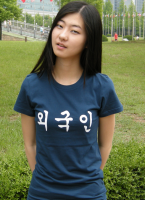
This means "foreigner" in Korean

This means “foreigner” in Korean

And so on. The point is that even before I open my mouth, the other person has formed an opinion of me in their head.

  1. A lot of the stereotypes are true. – I’m not trying to bash foreigners living in Korea: I am one, and even though I speak Korean now, I didn’t when I got here. The truth is that there is a huge demand for English teachers here and speaking Korean is not one of the requirements. People often come for a year and then leave, which means they don’t have the time or motivation to learn much of the language. Because of this, they are forced to interact with Koreans with what they have: English and gestures, which can be frustrating for everyone involved. Some Koreans get so tired of going through this time after time that they just try to avoid it. Some shopkeepers type the price into a calculator and show it to me because they assume I wouldn’t understand them if they said it.
  2. Korean culture puts a high emphasis on service. – When you are a customer in Korea, then you are a king. Tipping isn’t practiced here and it’s very common for shopkeepers to throw in a bit extra or something free, just as good service. You run across people who don’t want to serve foreigners, but usually they will err on the side of good service.

On one hand, it’s very nice that people make exceptions for us at times, since as I said before, a lot of it is deserved. It is very humbling to live here without knowing the language, since you have to rely on others to help with a lot of things: setting up an account, going to the doctor, buying a cell phone, etc. However, some people try to game the system by pretending they are more ignorant than they are. Since people already assume we’re ignorant, why not use that to our advantage, right?

I try not to use the foreigner card if I can help it. Mostly because it’s dishonest if I deliberately pretending to be more ignorant than I am, but also because after living here for so long, I really want to fit in. I am very tired of always being the exception, even when it’s beneficial.

Also, I want people to know I speak Korean, because dealing with foreigners is very stressful for a lot of people. Koreans feel that because they study English in school, they should speak English when they meet a foreigner, not that the foreigner should speak Korean. I can see the fear in their eyes when I come into their shop, as they desperately try to remember everything their middle school teacher said while they were talking in the back of the class. So, I try to speak Korean as soon as possible to put them at ease. You can see some of them, usually younger people who have studied English, visibly deflate with relief when they realize you can speak Korean.

So, there it is: a way out of minor difficulties based on stereotypes, real and perceived language barriers, and cultural misunderstanding. Still, it’s nice to have it if you need it.
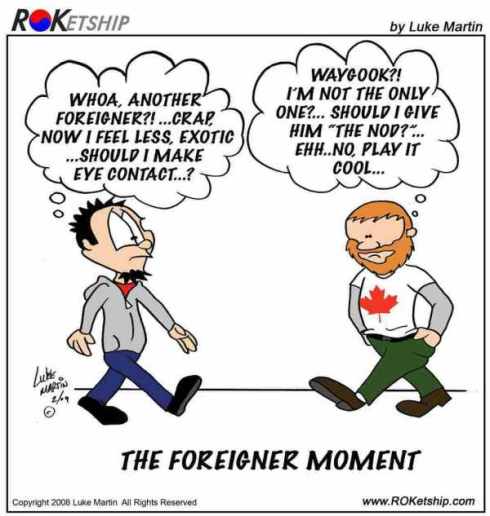
"Waygook" means foreigner

“Waygook” means foreigner. Source


The Elephant's Trunk

🐘 Nancy is a storyteller, music blogger, humorist, poet, curveballer, noir dreamer 🐘

Thru Violet's Lentz

My view, tho' somewhat askew...

The New, Unofficial, On-line Writer's Guild

Aooga, Aooga - here there be prompts, so dive right in

Just Joyfulness

Celebrating joy

Tao Talk

You have reached a quiet bamboo grove, where you will find an eclectic mix of nature, music, writing, and other creative arts. Tao-Talk is curated by a philosophical daoist who has thrown the net away.

H J Musk

On reading, writing and everything in between ...

Clare Graith

Author, Near Future Sci-Fi

Dirty Sci-Fi Buddha

Musings and books from a grunty overthinker

Rolling Boxcars

Where Gaming Comes at you like a Freight Train

Lady Jabberwocky

Write with Heart

Fatima Fakier

Wayward Thoughts of a Relentless Morning Person

Life in Japan and Beyond

stories and insights from Japan

The Green-Walled Treehouse

Explore . Imagine . Create

One Minute Office Magic

Learning new Microsoft Office tricks in "just a minute"

lightsleeperbutheavydreamer

Just grin and bear it awhile

Linda's Bible Study

Come study God's Word with me!

Haden Clark

Philosophy. Theology. Everything else.

Citizen Tom

Welcome to Conservative commentary and Christian prayers from Mount Vernon, Ohio.

The Green-Walled Chapel

Writings on Faith, Religion and Philosophy

To Be A Magician

Creative writing and short stories

My music canvas

you + me + music

Eve In Korea

My Adventures As An ESL Teacher In South Korea

Luna's Writing Journal

A Place for my Fiction

Upper Iowa University

Center for International Education

Here's To Being Human

Living life as a human

jenacidebybibliophile

Book Reviewer and Blogger

yuxianadventure

kitten loves the world

Strolling South America

10 countries, 675 days, 38,540km

It's All in Finding the Right Words

The Eternal Search to Find One's Self: Flash Fiction and Beyond

Reflections Of Life's Journey

Lessons, Joys, Blessings, Friendships, Heartaches, Hardships , Special Moments

Ryan Lanz

Fantasy Author

Chris Green Stories

Original Short Fiction

Finding Myself Through Writing

Writing Habits of Elle Knowles - Author

BEAUTIFUL WORDS

Inspiring mental health through creative arts and friendly interactions. (Award free blog)

TALES FROM THE MOTHERLAND

Straight up with a twist– Because life is too short to be subtle!

Unmapped Country within Us

Emily Livingstone, Author

Silkpurseproductions's Blog

The art of making a silk purse out of a sow's ear.