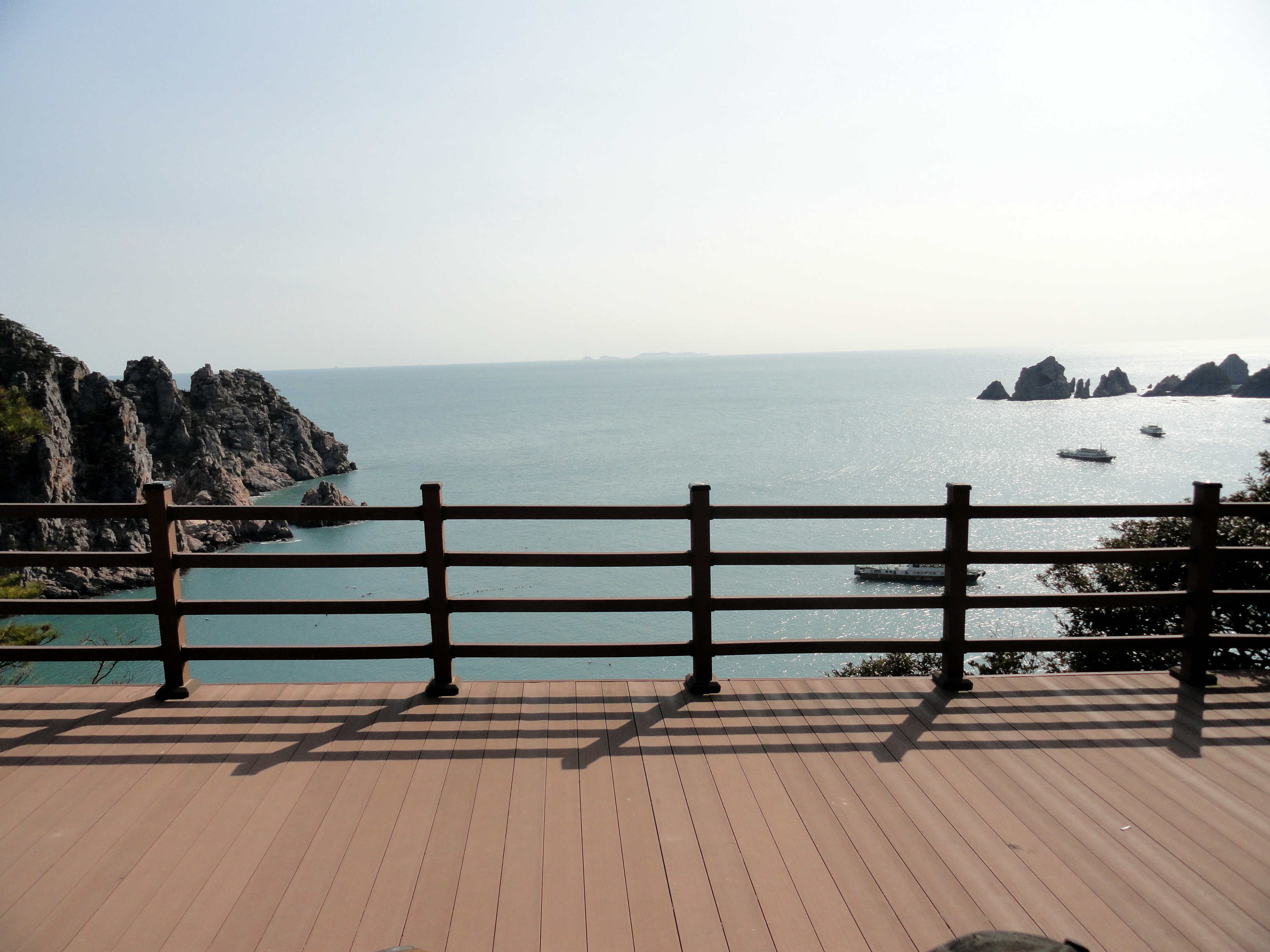
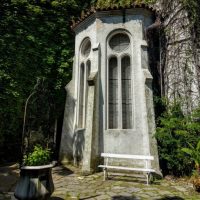
This is not really a visual fiction, in that there is no story with it, but this is a shot from where I went this past week. I went by myself and hiked around, reading and writing as well. This picture was taken on the island of Hongdo, in the extreme southwest of Korea. It was the off-season for tourists, so I was totally alone on the paths, in the restaurants, in the hotels. Here, I sat on a bench and looked out at the Yellow Sea stretching out to meet the sky. The weather was warm (for February in Korea) and there were even insects out. I sat and wrote a bit here in a leather-bound blank book my parents gave me for my birthday. It was a good time.
Tag Archives: travel
An Update on “The Woman Who Wants to Meet Bush”
Hello everyone.
I’m not here right now. That may seem like a contradiction, since I’m writing this, but what I mean is that I am not at home when you are reading this (probably). Ah, the magic of scheduling ahead. Right now, I am probably on an island in Korea by myself. Which island, you ask? I’m not sure. I plan to go to a couple, and since the ferries sometimes run in accordance to the weather conditions, I sometimes have to change my plans. However, I will take pictures and post a few here. I plan to do a lot of reading and writing and thinking.
Now, to the update. For those of you who missed it, this is an update on the post I wrote a while ago, The Woman Who Wants to Meet Bush. It was about an interesting woman who stopped me in the market near my office and asked me to invite former US President George W. Bush to come to Korea to meet her. I did send an invitation to an email address I found for him. And a couple days later, I got a reply back.
Well, I am not really surprised that he isn’t coming, it was still nice to get a reply. If I ever meet her again, I’ll mention it at least.
The Ghost Town by the Shore
I staggered onto the rickety wharf after floating for two days on the open sea. My ship and comrades were in the watery depths and I had given up hope until I spotted land.
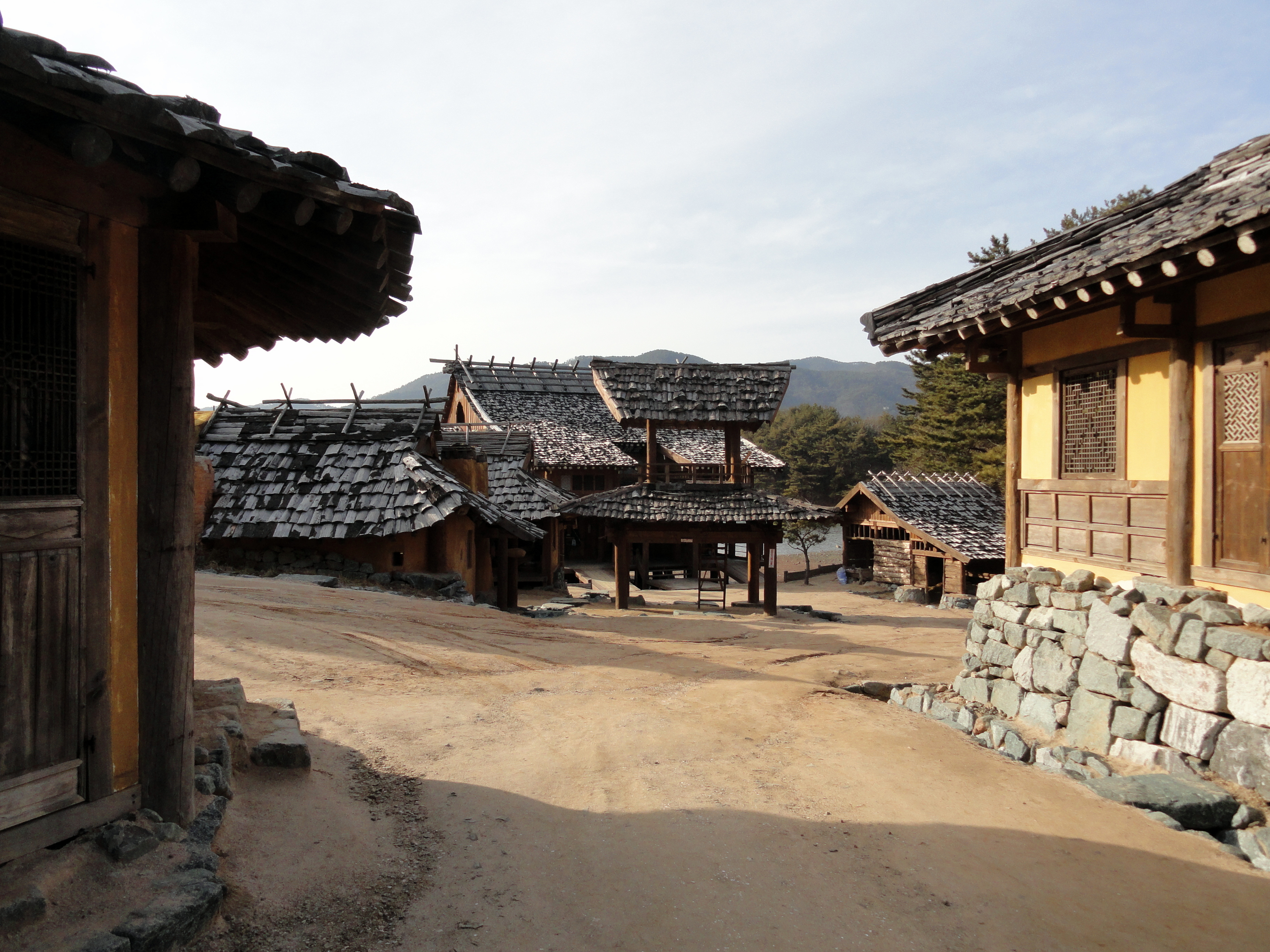
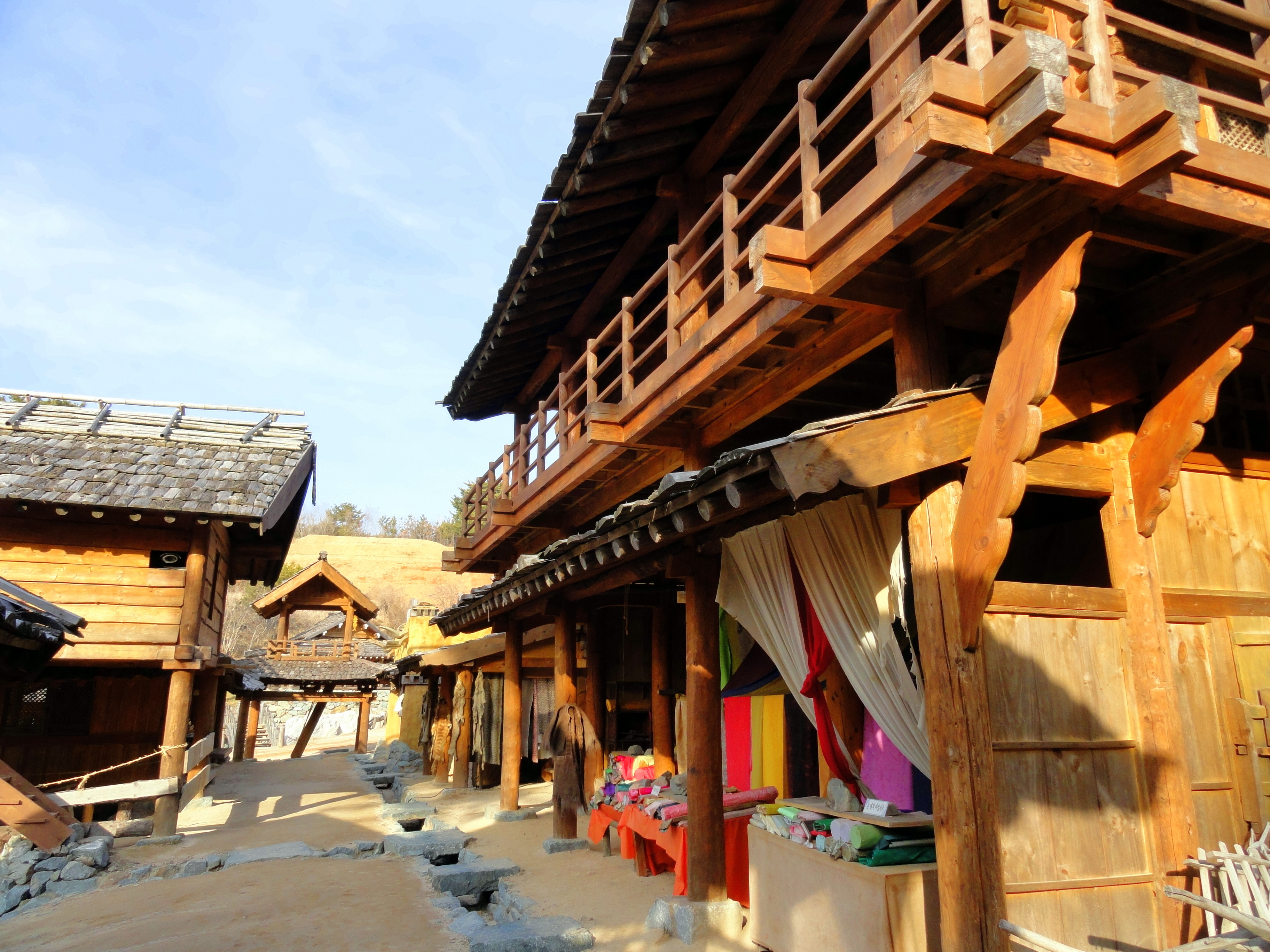
Coming into a secluded bay, I had been overjoyed to see a village ahead of me. Now I saw that the buildings were like none I had ever seen before. Everything was eerily quiet as I made my way forward.
I walked among the building in bewilderment. The entire place was deserted, yet nothing was damaged. There were no signs of war or fire or disaster of any kind. Everything was open, as if the people had simply evaporated.
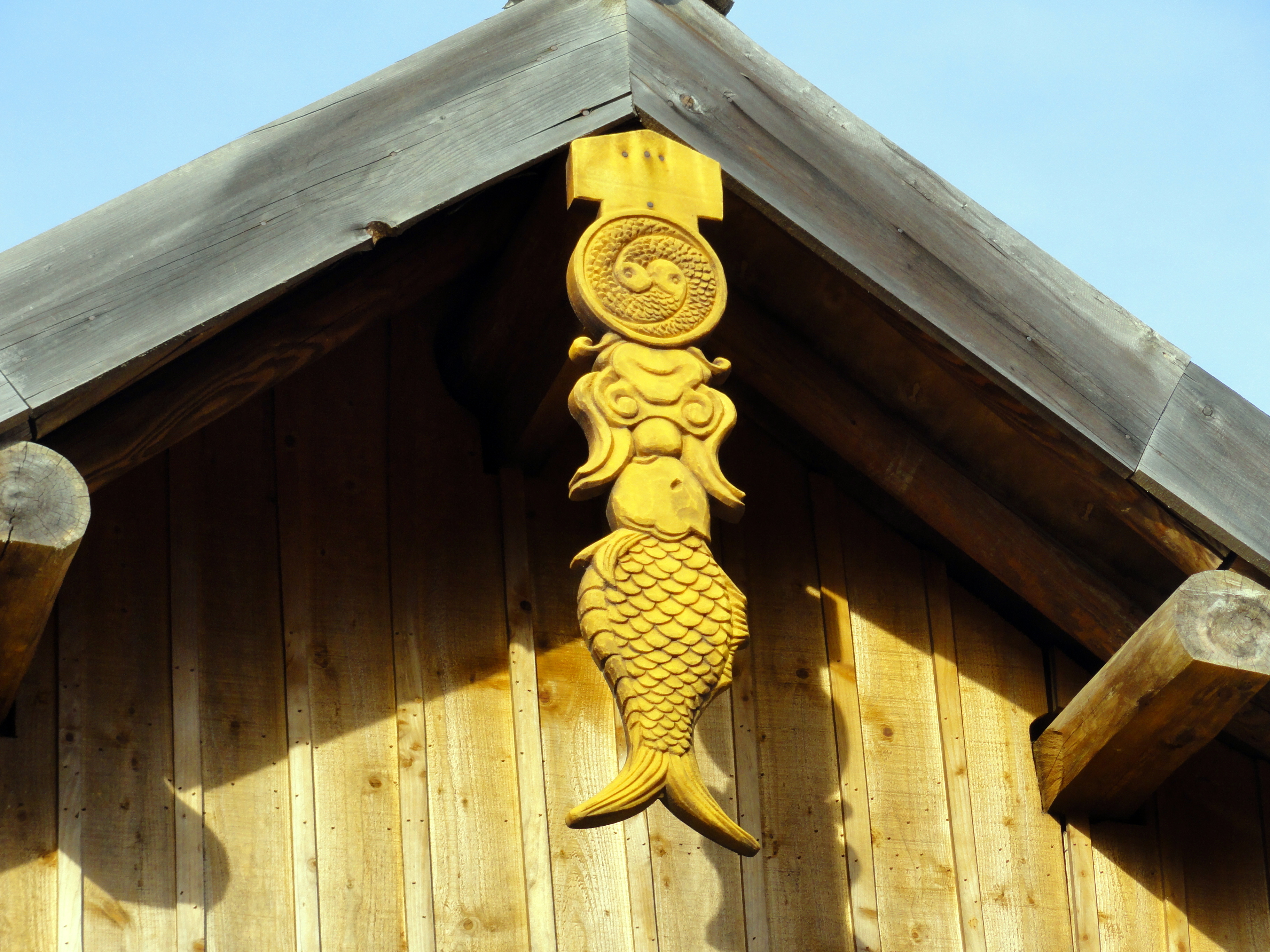
I began to wonder even what country I was in. The roofs all held a singular symbol: a stylized yin-yang swirl above a fish. The carving was amazingly intricate and I wondered if I had stumbled onto an artist colony.
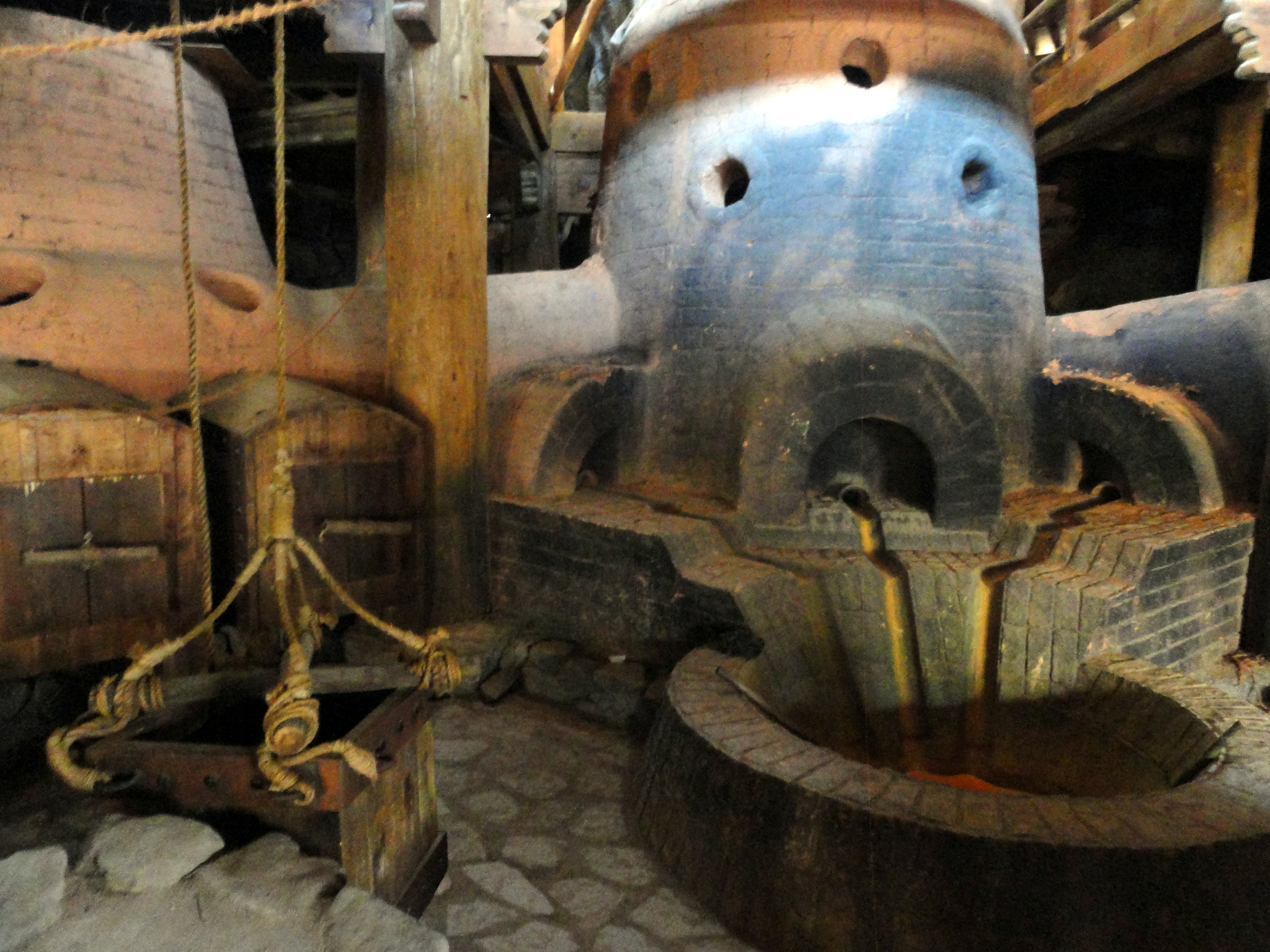
I entered one of the larger buildings and found the first signs of serious industry. It looked like a forge or a refinery and when I advanced a little further, I saw that there was still molten metal in the bottom of the crucible.
I looked closer and got the first real shock since arriving in this ghost town. All the nagging apprehension came back to me in a rush. The molten metal was not real. It looked red, but the surface was cold. I touched it, tentatively. It was glass.
I ran outside and down another street and found myself in a market. As I looked around, I saw the one sight I longed to see more than any other: food. There were stalls filled with fruits and vegetables, with no one in sight. I rushed over, but to my dismay, I found all the food to be mere imitations made of a spongy white substance and totally inedible.
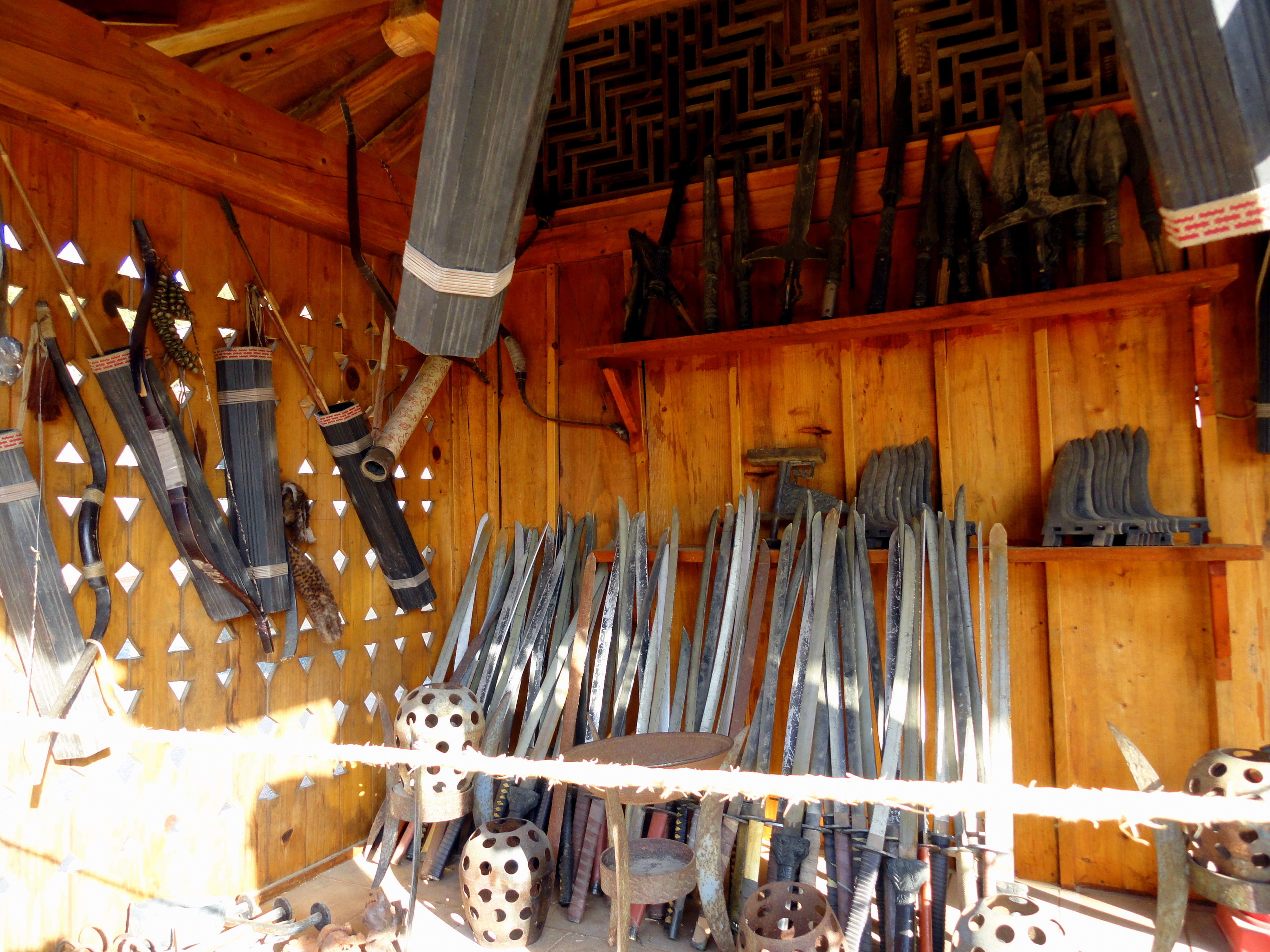
As I continued on, I found a weapons shop, loaded with enough swords, spearheads and bows to equip an army. I picked one up and found it as light as a feather. Even the weapons were not real.
I passed through street after street of shops selling cloth, medicine, animal skins, dishes, and a multitude of other things. Everything sat out as if for sale, but no one attended them. I began to wonder if ghosts inhabited the silent town, like some weird necropolis where the dead roamed after nightfall.
I was becoming thoroughly uneasy and kept looking over my shoulder. The sun was close to setting and now I was terrified of being trapped in this place overnight.
On my way back to the shore, I found myself in a large room with items displayed on each side. I caught sight of a large portrait and stop to stare at it in wonder. It showed a beautiful girl, dressed as a soldier and wielding a sword, but what was so amazing was the skill of the painter. It was completely true to life and even when I looked closely, I could not detect a single brushstroke. I fled, lest the magic that hung over the place trap me there forever. Surely that silent, unreal town could not have been made for human habitation.
* * *
Hi, David here. I guess you could consider this post a sort of Visual Fiction extravaganza. It’s based around a place I went last Friday, in Changwon, Korea. It’s a set village for filming historical dramas and is unique because the buildings are a much different style than most you see in Korea. During the off season it is left open with all the props still there and on display. When we went, there was no one there at all, which made it a very cool place to poke around and explore. And just to prove I was actually there and didn’t just find pictures on the Internet…
This isn’t Stockholm, but still… – Friday Fictioneers
For all my Friday Fictioneer friends who may not have read my previous post, I’m going out of town for a couple days, but I’ll still try to read all your stories at some point.
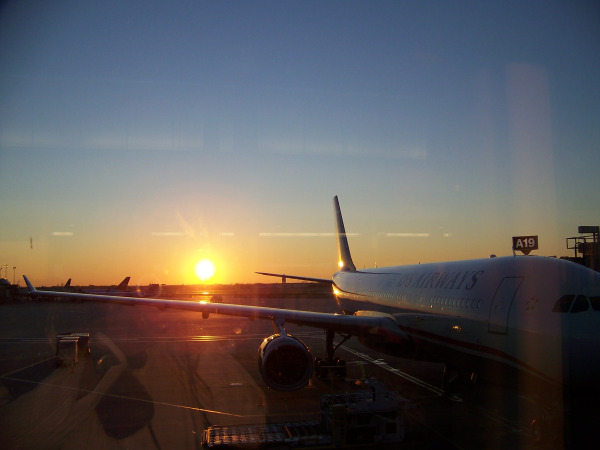
The day started with such potential. I was flying to meet a gorgeous Russian woman. We were in love.
Now, twelve hours later, I’m tied up in an abandoned paint factory while “Veronika” and her thugs figure out how to get five million dollars for me.
Apparently, it’s bad to tell strangers on the Internet that you’re a millionaire.
Still . . . the gentle way she tied the ropes; the way she didn’t taser me like she threatened to. I think there’s a spark there.
I’m just going to sit here and work on my winning smile until she comes back in.
Leaving the Green-Walled Tower for a breath of fresh air
Adios, さようなら, 再见, ជំរាបលា, au revoir, 안녕히 계세요, bye bye… um, that’s about all I know.
Anyway, not to be too dramatic, but I’m taking off for a few days. Actually, I’ll be coming and going for the next few weeks, so don’t fret if my posts seem sporadic. I’ll try to read your posts as well, but don’t get mad if I can’t.
Tomorrow, I’m taking off to go visit a city in Korea I’ve never been to before. I’ll post pictures, if anything seems post-worthy. In the meantime, I will keep writing. Here are a few questions that will be answered when I get back.
1. In Aftermath, what will Edward do now that he has met Hestia again?
2. In the Fantastic Travelogue, who is that strange lady and what happened after I got close to her?
3. I heard from my friend Adam Flynn again. Things haven’t been so good since his last post.
Let me leave you with a song that has always reminded me of traveling, ever since it was on the mix tape in my sister’s first car.
Outside the Gates of Cambridge, Part 2
(An Edward Morrison chapter)
Read Part 1, or the ones that came before.
In Edward’s dream, a child was crying. It sounded like Sean, but Edward could not see him. Dark men were crowding around him, but as much as he fought them off, he couldn’t find Sean.
Edward awoke. The door of the cabin was open and the blood-red stain of dusk could be seen dying slowly in the west. The boy he had called Sean was lying where he had left him, while another small boy stood over him and poked him with a piece of steel. Sean was making whimpering, puppy-like noises.
“Hey kid, stop.” The boy continued. “I said, lay off!” Edward shouted. He grabbed the kid by the back of the neck and threw him towards the door just as Hinsen walked in. Hinsen shoved the now screaming boy out the door with his foot.
“You ready to work? Sun’s down,” he said.
“What about the robot and the boy?” Edward asked.
“They’ll be okay here. Just come along.”
Screams of laughter and inhuman shrieks came from outside the cottage. Fires were blazing, up and down the street and by the nearest, men were rolling on the ground, convulsing and laughing until they were gasping with the effort. Still more were passing around a filthy rag soaked from a glass bottle. In turns, they took deep, shuddering breaths with the rag pressed to their nose. Edward caught the caustic scent of Trill, the cheapest, quickest path to total oblivion of the mind.
“You want some?” Hinsen asked casually. “You might want some, for the work.” Edward shook his head.
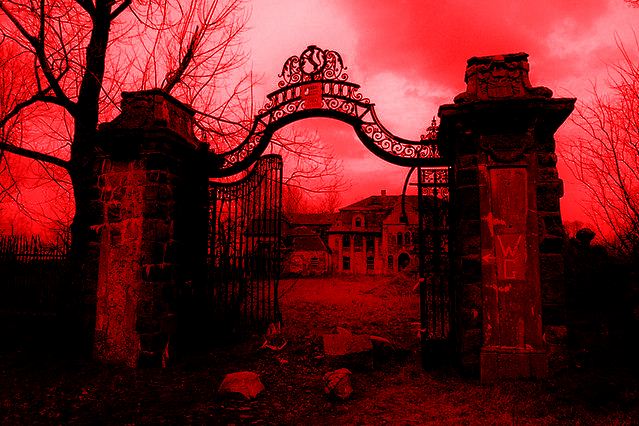
They ate a quick bowl of thin soup and Hinsen put them single file, ten men in all, and led them out into the darkness beyond the slums. Most of the other men were high on Trill and the dead lands around them echoed with the sound of their bestial laughter. They walked for over a mile before Hinsen’s flashlight illuminated a deserted country manor set among a stand of overgrown oak. The windows were smashed and the door gaped like a dead and rotten mouth.
“Everyone take a bucket,” Hinsen said. “Once everyone’s buckets are full, we go back, not before. Don’t stop working until all the buckets are full. Now go.”
Edward approached the door. Away from the glare of the flashlight, he could see a dull red glow coming from inside. He had seen it once before and the sight of it here made the breath catch in his throat. This was no ordinary search and salvage.
“Get going, Squid.”
“That’s chren in there, isn’t it?” Edward said. Chren was radioactive mold carried by irradiated bats. Besides attracting chinch bugs and a host of other radioactive vermin, the spores could burrow into a person’s lungs, slowly burning them from the inside out.
“So? The faster you work, the faster you’ll get out,” Hinsen said.
“You said search and salvage, you never said anything about chren mining,” Edward said. “It wouldn’t be worth a year of beef and bacon to go into that house.”
Hinsen drew a gun from his pocket in one swift movement. “You owe me for the food you ate, Squid. You’re going in.”
Some of the other men had already gone in, but the rest stopped to see what would happen. “You know, I didn’t choose the name Squid,” Edward said softly. “I was given it, by the good people of Free Frall. Do you know why? They said it was like I had eight hands, like I was everywhere at once!”
Edward slipped to the side and kicked up, trying to kick the gun out of Hinsen’s hand. His foot hit the wrist, but Hinsen held onto the gun. It was evidently not loaded, since Hinsen swiveled it around, brandishing it like a club, and tried to smash Edward’s face with it. Edward dodged to the side and slammed the heel of his hand up into Hinsen’s face. He felt the nose break and blood gush down his arm in a sudden warm flood. Grabbing Hinsen’s face with his huge hand, Edward thrust him backwards and hurled him to the ground. He heard a crack as Hinsen’s head impacted with the rock-hard soil.
The sudden silence was broken by a manic guffaw from one of the men. Then the rest joined in, as if seeing their employer beaten to death was the funniest thing they had ever seen. Edward took the gun and left without a backward glance.
When he got back to the town, the house was deserted and Droog and the boy were gone. He asked around, but no one had seen them or would say where they had gone. He cursed and threatened them, but it was hopeless.
The Squid was alone again. He did not need the little ‘Munculus bot, Droog, but he was valuable and had already been a huge help on the road to Cambridge. The boy, he tried not to worry about. He had not wanted to bring him anyway, he told himself. But then, the dream of Sean crying came back to him—a memory that still chilled his heart after years of hard and bitter toil. The Sean from long ago whom he had sworn to protect. The Sean who—
Edward started to hurry through the streets. He shouldn’t have called the boy Sean. He shouldn’t have given him a name at all. Now he knew he had to find him and make sure he was okay.
Outside the Gates of Cambridge, Part 1
(An Edward Morrison chapter)
Read the previous story, The Road to Cambridge, or the ones that came before.
Cambridge was a gulag of order, where only the richest could afford imprisonment. It stood like a candle in the ravening darkness, the afterglow of a civilization long swept away. And just like a candle, it drew the hopeful, the lost, the destitute masses to its light until it was surrounded and inundated by more souls than its walls and barricades could ever contain. Still, the people came, encircling the enclave with ghettos where people scrabbled for entry and for the means to survive.
This was the crowded, tangled scene that Edward Morrison encountered as he reached the Silver Street Bridge gate and was denied entry into Cambridge. The guards saw his tattered clothes and dismissed him summarily. Cambridge was full. Droog started to go through the gate on his own and would have gotten his circuits smashed out, if Edward hadn’t intervened at the last second.
He had been walking for three nights along the M11, carrying the little boy he called Sean in his arms or on his back. The boy had woken up long enough to eat a little and drink water, but he never said a word, even when Edward asked his name and where he was from. Edward gave him what food he could spare, but saved most for himself, so that he would have the strength to keep walking. After the first night on the M11, he avoided other people, instead finding protected hollows to shelter in.
“Please, can I get a place to stay for the day,” Edward asked a woman at a cottage nearby. Dawn was near—already the eastern sky was lightening with omens of the sun’s approaching wrath.
“You got any food?” the woman asked, looking at Edward disdainfully. “Don’t bother offering the kid—we don’t eat ownflesh here.”
Edward soon found that everyone wanted food; even technology was worth almost nothing. He saw someone trade an e-device for a small meal of shrunken vegetables. He felt unarmed and alone. In Free Frall, he had been the king, with anything he wanted at his fingertips for barter, extortion or theft. But here, everyone was smarter and more ruthless than he had ever been. He had nothing left to trade, no threats to use, and dawn was coming.
He went back to the gate. The guards were already locking the gate and moving the day barriers in place on the near side of the bridge.
“Please, I’m friends with a citizen of the town. His name is Blake. He traded me this robot.”
The guard looked unimpressed. “Blake who? If he’s expecting you, then he should be here to vouch for you. If not, you don’t have a chance of getting in.”
A man had been watching them from a canopy on the side of the road and now he approached Edward. “Do you need a place for the day? It won’t cost you no food, and I can give you a bit too, for you and your boy. You look strong—just work for me during the nights and you can stay as long as you like.”
On the surface, the man’s expression was caring and sincere, but Edward could see the greedy look in his eyes. Swindler, he thought.
“What kind of work?” Edward asked.
“Search and salvage,” the man said. Theft and digging, Edward thought, if he was lucky.
“I’ll try it one night. What about the boy? He’s not mine. Can you give him a home?”
The man shook his head. “He’s too small to do work. Get rid of him now, if you want. If you bring him, my girl’ll take care of him while you’re out working, but his food comes out of yours.”
“Fine,” Edward said.
The man grinned and stuck out his hand. “Hinsen,” he said.
“Squid,” Edward replied, not smiling.
The cottage Hinsen led them to was tiny and already held eight people, but it had thick walls and kept out the sun. Two women were serving out thin soup when they got there. Edward got half rations since, as Hinsen explained, he hadn’t done any work yet. Then they all lay in rows on the dusty floor and went to sleep. Droog stood in a corner near Sean, watching over him.
Edward had trouble sleeping. Mosquitoes and burn flies came up through the floorboards and through chinks in the walls, buzzing around and biting. The air was stifling and smelled like filthy people and excrement. He wondered if he had done the right thing. He had abandoned Free Frall and his life there because of a song that had captivated his imagination, but now he was hungry, out of his depth, and sharing a filthy hut with nine other people, with prospects of doing manual labor to earn his keep. He considered leaving everything and fleeing back to Free Frall.
Outside, the sun climbed higher in the sky and before it reached its zenith over the blighted world below, Edward had slipped into a troubled and fitful sleep.
(to be concluded tomorrow)
The Road to Cambridge
(An Edward Morrison chapter)
Read the beginning of the journey: Saturday, 4am, Droog’s Story
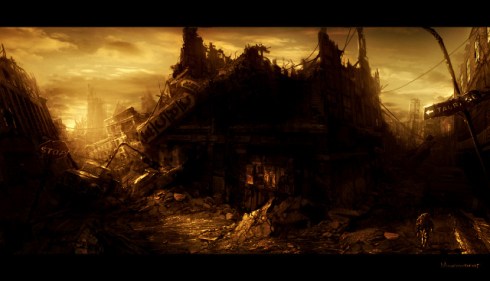
The road was there, waiting for him. He had dreamed about it for the last two nights, eager to set out, but reluctant to start. But tonight, the time had come.
The sun was almost down; it would be time to head out soon. Edward Morrison had his pack on and was waiting for the last blistering rays of the sun to disappear behind the western rubble heaps.
“What do you think, Droog? Can we leave yet?” he asked the small robot next to him. Droog went out into the twilight, did a scan, and hesitated, as if thinking. Then a green light on his shoulder went on and Edward joined him.
This was the night, the night he would set out on his quest to find those forgotten pearls of the world Before. He had spent the last two nights borrowing, extorting and just plain stealing supplies and food. He would set out for Cambridge, the only vestige of civilization that he knew of. He had never been there, but the road was long and barren. He had never heard anything good about it.
He set out walking, letting Droog go slightly ahead to scan the way. The little robot could not speak English but Edward told him what to scan for and to have the light go red if he found anything suspicious. The robot whirred quietly along, his little green light blinking every few seconds.
Edward left the Burrows of Free Frall—where most of the people lived huddled together in underground tunnels—and took the Cleanway north out of town. It had been picked clean of all useable material and was the clearest road in the area. Here and there, he could hear people coming out of their houses to forage for sickly leaves and sour berries to eat. It would hurt them, what he had taken from them. A going away present, he thought. They would be happy enough to see him gone.
Edward left the Cleanway and entered the wide highway known only as the M11. Now it was a twelve-lane graveyard.
On the day the world had ended, the M11 had been filled with cars. They were sitting there still, lined up in neat queues as they had been when the first missiles had hit London. They were ransacked, vandalized and slowly rusting away now—the home of strange creatures and dangerous men who preyed on travelers. Or so they said. Edward had never been far on the M11, just far enough to poke around a few of the cars. Now he started walking north on the left shoulder, with Droog going in front of him.
They had been walking for twenty minutes when the light on Droog’s shoulder blinked red, meaning that he had detected some life form close ahead. Edward froze. He could hear reaper birds shrieking out in the darkness somewhere and the air smelled like dust and decay. He took out his device and turned on the small light, at the same time taking out the length of steel pipe that was his only weapon.
A triple-decker cargo transport had collapsed across a line of car and just underneath, he caught sight of a tiny body, lying curled in a pile of dust. It had to be alive or Droog would not have detected it.
Edward wanted to leave it and was on the point of continuing on, when Droog approached the body and scanned it. Then he did it again and again, scanning it over and over until Edward thought that there must be a problem with the little robot.
“Droog, cut it out,” he said. He knelt down and saw it was a little boy—about six, he guessed, although by his size he looked about four. Edward could see the bones of his skull pushing out against the thin, stretched skin. He was probably about to die anyway. The boy moved a little when Edward prodded him, but did not open his eyes.
“So what do we do, Droog?” Edward asked.
Droog said something in his incomprehensible speech and tried to pick the little boy up, something impossible for the 3-foot high robot.
“Great, a robot with a social conscience,” Edward said. He sighed and picked up the boy, trying to knock some of the dust off the rags that he wore as clothes. The boy was little more than bones wrapped in dusty rags and Edward carried him effortlessly. He set off again, unsure what he was going to do with him next.
The boy stirred and tried to speak, so Edward gave him some water. He would have drunk the entire container if Edward had not stopped him. Then he put his head on Edward’s shoulder and fell asleep.
After another hour of walking, a point of light appeared in front of Edward, and grew into a campfire as he drew nearer. There was a barrier of derelict cars built across the road, the fire behind it. Several men were sitting on the barrier, playing a game with carved bones. They turned as Edward and Droog approached.
“Windrin,” one of the man said.
“Iffa please,” Edward replied. He had never used the wanderer ritual greeting before, but he knew it. The man nodded and opened a small opening in the barrier for them to enter.
Inside was a ragged group of men and women sitting around the fire, cooking rats and squirrels over the flames. They nodded unsmilingly at Edward.
“You’re welcome to stay with us for the night and tomorrow, if you wish,” the man who had greeted Edward said. “All it will cost you is half your food.”
“Half my food?” Edward wasn’t sure he had heard right.
“That’s right. Don’t worry, we won’t touch yer gadgets or anything. Just the food.”
“It took days to collect all this,” Edward said. “Why the scryg would I give it to you? I’ll keep going, if you don’t mind.” He turned, but the gate was now closed.
“The food is the price for passage, as well as lodging,” the man said. He was holding an object in his hand. It had a black metal tube sticking out of it that was pointing at Edward. Edward had never seen one, but he had heard stories. He took his pack off.
The men took out everything from his pack, put back the inedibles and divided everything else exactly in half, down the last withered lettuce leaf. Then they took half away and put half carefully back in the pack.
“I found this boy a while back,” Edward said as they settled back around the fire. “I shouldn’t have taken him, but I can’t take him any further, especially now. Can I leave him here with you?”
“Throw that one in a ditch outside,” one of the women said. “Far enough away though—we don’t want no reaper birds or wulps sniffing around here. We can’t spare no food for’em.”
Edward looked down at the frail form lying next to him with his head on Edward’s pack. He reminded Edward of someone he had known, long ago, back when . . .
“Maybe I can give him away in Cambridge,” Edward said. “I’ll take him that far at least.” He put his coat over the little boy and Droog took up guard at the sleeping boy’s head.
Sean, Edward thought with a mental sigh, as old pains long-buried resurfaced. I guess I’d better call him Sean.