Category Archives: Dusk

Wishbelly

Roland went to see Wishbelly when his family finally ran out of money for doctors for his sick father. Not that the doctors were helping, although their increasingly bizarre treatments did provide Hope, which is a key ingredient to Life, as his grandmother said. The week after the money was almost all gone and it was clear that no more doctors would come, Roland saw something like a veil cover his father’s eyes, as if they were already staring up at the inside of a coffin. That night, Roland got a bottle of water and an apple and went outside by himself. This was a huge deal for a six-year-old.

Roland had heard of Wishbelly from other children in his neighborhood. None of them knew what he looked like—he was the kind of legend your brother’s friend swore he knew—but they knew where he lived: in the abandoned factory across the rushing creek and through the phalanx of rusting farm equipment that was a Tetanus Superstore, as Roland’s mother always said.

He opened the front gate and stepped out onto the shoulder of the rural highway, a tiny boy in a huge, monstrously dark world. He knew the way, even in the dark, but the blinding white beams of a car that rushed past gave him enough light to avoid stumbling over the guardrail and falling into the stream.
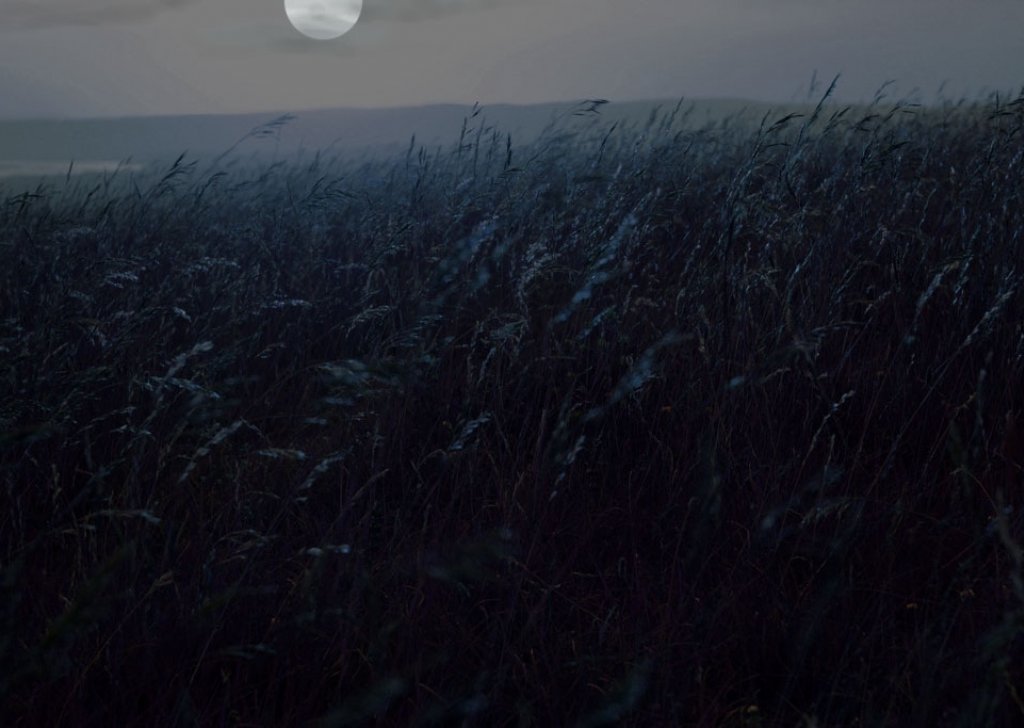
After the stream, it was a fifteen minute walk up the highway and then down a narrow dirt track next to a fallow meadow. The tall blades of grass bent and waved in the breeze, rustling and whispering to him.

“Roland, Roland,” they murmured. “Such a little boy. What’s he doing out at this hour? Wishbelly will eat him for a midnight snack. Such a little, little boy.”

This almost made Roland stop and go home. He had always thought of Wishbelly as being good and willing to help, but now the idea came into his mind that maybe he was a terrible creature who ate children foolish enough to fall into his snare.

The voices were spreading. The wind had picked it up into the trees and bushes and now all around him, Roland heard the mocking pity. “Poor Roland. So young to die. Such a little boy.”

He was about to turn back when he heard one voice among the others. “Go!” it said. “Go. You can make it, Roland.” It sounded so different from the others that he planted a small boot resolutely in front of him and continued on until the sighing voices of the grass and trees were behind him.

But now there was a greater obstacle in front of him: one made of terror and decaying metal spikes showing black against the thinly-veiled moon. Roland shuffled forward slowly, groping in front of himself. Almost immediately, a corroded spike reached out and tore his jacket, almost scratching him. He wished he had brought a flashlight.

He was almost considering going back for one when he noticed a dot of pale green luminescence off to the left. He went towards it instinctively and noticed another. They were appearing more frequently now, one every foot or so. Roland felt pieces of metal brush past him on both sides, but he kept his eyes on the dots. After a hundred feet or more, the glowing dots spread out in a carpet and in their midst sat a dark figure.

The figure was seated with its head down. Roland took a step further and it spoke, soft and raspy. “Yes?”

“I want to see Wishbelly,” he said, his voice shaking.

The figure laughed, a low, dusty chuckle. “Wishbelly, is it? Why?”

“My father is sick.”

“That’s not what Wishbelly does.”

“Oh.” Roland started to turn around, but stopped. “Why not?”

“He can only do things for the people who come see him. If your father came here, Wishbelly could make him better then.”

“But he’s sick! He can’t come.”

“That’s not Wishbelly’s concern,” the figure said. Roland could not see his face. “But you are here, so what can he do for you? You took the leap of faith to come. You made it past the obstacles.”

“Did you put the obstacles there? Did you make the grass mock me?”

The man shrugged. “There are always naysayers and obstacles in life, especially when you are doing something important.”

“And what about the encouraging voice, and the glowing path?”

“Everyone who truly seeks will find.”

“Are you Wishbelly?” Roland asked.

The figure laughed. “Possibly. But you haven’t answered my question. What do you want? To be smart? Strong? Would you like to always be happy?”

“Can he . . . can you make me able to heal my father? That’s all I want.”

“All you want is to help him?” the figure said. He stood up and Roland saw that it was an old man with a bald head and silvery skin that glowed slightly.

“Would you still want that if none of your own wishes could come true? If you could only help others? I wasn’t the first Wishbelly, you know. There were others before me who passed on the gift. So this is what I will do, Roland, conqueror of fears, asker of audacious requests.”

He touched Roland on the head. “All who seek, find, but they often find much more than they could ever have dreamed of. You are Wishbelly now. You wished to help others and you have that chance now. You can wish nothing on yourself, but I hope that helping others makes you happy.”

“Who are you?” Roland asked.

“Just an old man now,” the man said, smiling. “And in need of some rest.”

“How does it work?” Roland asked. “How can I make my father better?”

“He must want it,” the man said. “He must ask. That is the only way. It may be difficult, but I wish you luck. Now go on home and get some sleep.”

Roland walked back along the luminous path through the Tetanus Superstore and through the sighing grass and trees. The dissuading voices had gone silent. All he heard was the one small voice. “Courage, young Roland. The hardest part is behind you, the longest is ahead. Courage.”

~*~

This story is a strange one and it has taken me a long time to write, for one reason or another. Don’t ask me where the name came from, since I’m not sure. You may be tempted to see allegory in it, but it was not written explicitly as one. Let me know what you see, since I am always curious how my readers take my stories.


After Spouse

This is not my typical kind of story, but if you’ve followed me long enough, you know I like to try new things.

After Spouse

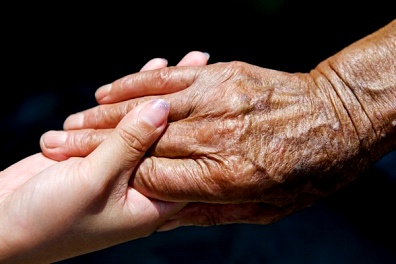
I took Cecil’s wrinkled hand when he knelt in front of me, descending slowly onto arthritic knees. I saw the pain in his face and almost stopped him but I knew it was important to him.

I said yes, of course. When you date a septuagenarian, it’s for life, if only because there’s not much of it left.

For him, at least.

We honeymooned in Tahiti. I would have loved to go snorkeling together, but it wasn’t really an option, not after his bypass surgery three years before. So we spend a lot of time sitting on the beach, holding hands until he drifted off to sleep. It was nice; peaceful.

My best friend Cheryl visited me a week after we got back. We sat by the pool behind Cecil’s mansion—now mine too—and sipped drinks.

“What are you planning on doing after?” Cheryl asked.

“After what?” I asked absently. I was thinking of what to make for dinner.

“You know . . . after your marriage.”

I stared at her, shocked she would say such a thing. “I haven’t thought about it,” I said. “Geez, I just got married two weeks ago and I’m supposed to be thinking beyond it?”

“It wouldn’t hurt,” Cheryl said, sitting up. “Listen, you’re not going to grow old together. He started doing that when you were in university. You can’t tell me you married him without a plan, that you would have married him if he’d been poor.”

Probably not, I had to admit, but to say that seemed to cheapen our marriage. I married him because I loved him. Didn’t I?

“I love him,” I said. Cheryl nodded, with skeptical eyes.

I realized soon enough how naïve I had been. Cheryl had been the most candid, but everyone I knew seemed to take it for granted that I was a gold digger, just out for Cecil’s money. “Of course, of course,” they would reassure me, smoothing back the social veneer when I protested at their hints and insinuations.

Five years later, I sat by Cecil as he lay in the hospital bed. IV lines invaded the hand that had so lovingly held mine, oxygen tubes filled the nose that had brushed my cheek when he kissed me. I gripped his hand and felt our life slipping away.

“My dear,” he said, opening his eyes. I kissed his hand, accidentally wetting it with my tears.

“Don’t leave me,” I said.

He closed his eyes again and smiled faintly. “Thank you. Thank you for sharing the last few years of my life with me. My estate is all yours. Go be free and live well.”

“I don’t want your money, I want you,” I said. “I never wanted anything but you. Believe me, please!”

The smile remained on his lips, but he slipped away before he could answer, and I was left alone.

I wanted to give all his money away, just to silence the snide comments and knowing looks. I gave away all that I could afford, making the gossips add ‘stupid’ to ‘gold digger.’

I don’t care anymore. When I visit his gravestone, the accusing voices all fade away and it’s just the two of us again, sitting on the beach together in Tahiti, happy.


“I’m Sorry”

“I’m Sorry”

“I’m sorry.”

I wanted to punch him, to smash that smarmy, false-penitent expression off his face. I spit at him through the bars. “What gives you the right to be sorry?”

“You don’t want me to be sorry? To regret what I did?”

“So that what? I can forgive you and you can die in peace? My wife didn’t die in peace or her parents or my parents or any of the thousands of people under your charge.” If it wasn’t for the bars protecting him, I would have choked him. “You herded us like animals! You fed us slops and garbage and sent droves off to the gas chambers, for years! And now, now you’re sorry?”

“Yes,” he said, head bowed.

I stormed off and spent a sleepless night wrestling with thoughts and images that would not die. I returned to his cell at daybreak and sat watching him until he awoke.

“I cannot forgive you,” I said. “Not today, at least. But tell me, why did you do it?”

“I was young and needed a job,” he began. “I started at a desk, but I was diligent and got promoted. After that . . .”

We talked all day. There were millions of bricks in that edifice of hate between us but with those two words, “I’m sorry”, a few bricks had fallen. As the day went on, they continued to fall.


Baker Hill

Inspired by a true story.

May’s legs burned as she pumped the pedals of the Schwinn, laboring up Baker Hill. Her brown braids bounced on her shoulders like lengths of sweaty rope. She looked back. Nell had given up already and was pushing her bike.

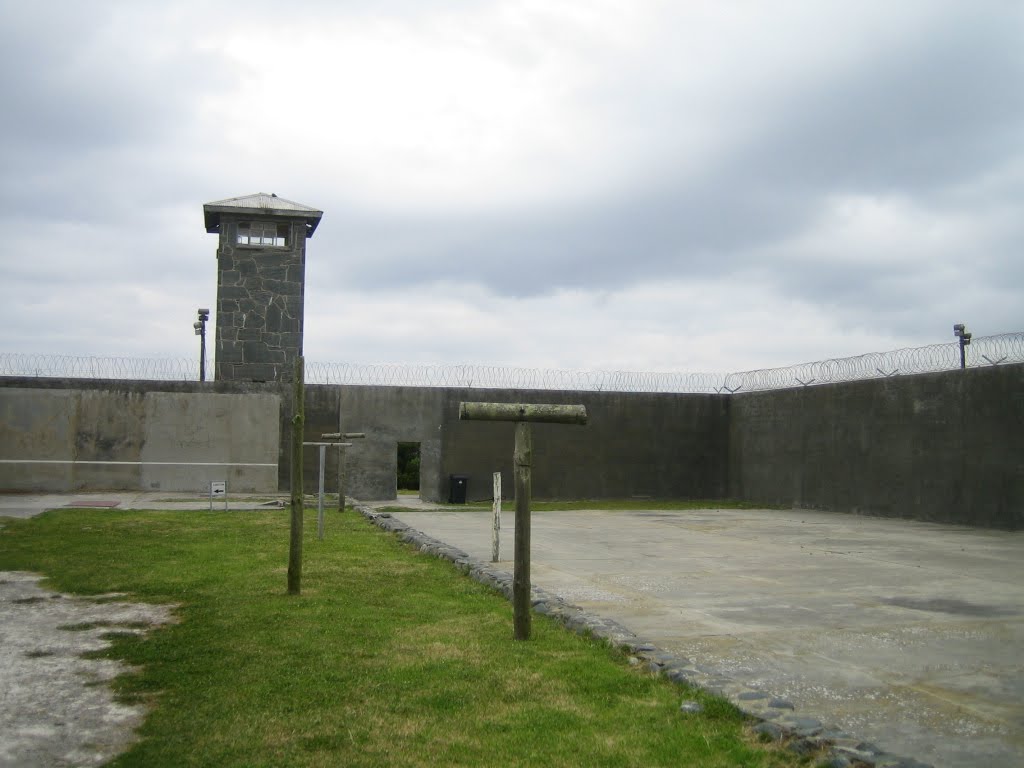
“I won!” May yelled. She reached the huge oak at the top of the hill and threw her bike down. The shade was cool after the burning summer sun and a small breeze played among the leaves above her. From where she sat, the world opened up in a panorama of fields bordered with dark clumps of trees. Right below the hill was a bricked-walled yard surrounded by low buildings and impressive guard towers: Huntersville State Penitentiary.


Nell reached the top of the hill and dropped her bike next to May’s. “What are they doing today?” she asked.

May looked down. “Nothing much. It’s too hot, I suppose.” The prisoners in the yard were clumped together in the shade of one of the southern guard towers.

“What do you suppose he’s doing?” Nell asked.

“Who?”

“That one man. He’s sitting by himself, out in the sun.” Nell pointed and through the shimmering waves of heat, May could just make out a splotch of tan and denim by the western wall.

“Maybe he’s got no friends,” May said. “Maybe he’s new there.”

Nell nodded, but then frowned. “But why’s he sitting in the sun? There’s surely some shade if he wanted it.”

“Perhaps he’s Mexican,” May said. “Down there it’s hotter than blazes this time of year. I’ll bet this is nothing to him. The shade is probably too cold.”

“And that’s why he doesn’t have any friends. He only speaks Spanish and so he can’t say hello to the others.”

“If he’s Mexican, what’s he doing up here?” May asked. “Maybe he’s a migrant worker.”

They sat for a while, watching the prisoners and enjoying the breeze that drew the sweat from their necks, leaving only a delicious coolness.

“What do you think his name is?” Nell asked.

“Pablo,” May said. It was the only Mexican name she knew, the name of a boy in her first grade class.

“What do you think he did?”

“He stole a diamond ring,” May said. She waved away Nell’s shocked expression. “No, it was really supposed to be his anyway. He loves a woman in Mexico and was up here working to save money to marry her. He saved up for a diamond ring, paying the jeweler a bit every month for it. But the jeweler was crooked and when he went to get the ring, the jeweler pretended he didn’t know anything about it. Pablo went to the police but he was Mexican and they didn’t believe him. So, he broke in and stole the ring that was really his. For love, you know. But the police caught him and now he’s in there.”

Nell stared at her. “How do you know all that?”

May shrugged. “It might be true.”

When she got home, May asked her mother for a Mexican woman’s name and soon the ill-fated love story of Pablo and Maria was firmly implanted in her mind.

After school started, May stopped going up Baker Hill as frequently, but still she never forgot about Pablo. Finally, when the weather turned colder, she took half the money out of her piggy bank and bought a pair of mittens and a wool hat at the general store. She did not want to tell her parents, but one day after school, when Nell had to stay late, May walked with slow steps and a pounding heart to the prison.

“And what can I do for you?” the guard at the door asked, not unkindly.

“I want to give these to one of the prisoners,” May said. She held up the hat and mittens. Her hands trembled.

“Well, okay then. What’s his name?”

“Pablo.”

“Pablo?” The guard wrinkled his brow and May realized suddenly that she had made up that name; she didn’t know his real name at all.

“I—I don’t know his name. He sits by himself in the yard all the time, away from the others.”

The guard frowned. “You mean Oscar? How do you know him?”

May wanted to run away from the guard and his uncomfortable questions. “Please just give him this,” she said and thrusting the package into the guard’s hands, she turned and ran.

The next day, May rode alone to Baker Hill. The weather was chilly and the fall wind charged up the hill, rustling the oak tree’s yellowing leaves fiercely. The prisoners below were crowded against the western wall of the exercise yard to stay out of the wind. She saw Pablo—Oscar—standing by himself and with a burst of happiness, she saw he was wearing the dark green hat and mittens she had bought.

As she stood there, looking down, Oscar raised his arm and waved. It had to be at her, there was no one else around. Thank you, he seemed to say. She waved back. You’re welcome.

As she rode home, her mind was a bubbling pot of thoughts and emotions. The story of Pablo and Maria was gone, but then again, it had never been true. But Oscar was real and he had accepted her gift. She was happy.


I Woke up on Monday as a Dog

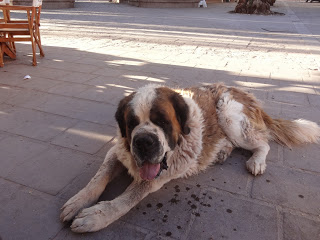
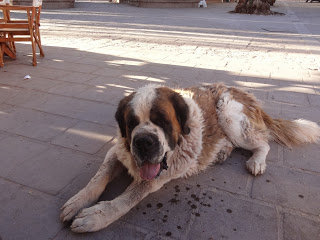
I woke up on Monday as a dog—a sloppy, tangle-furred St. Bernard who had grown up on the streets. Everyone in the neighborhood knew me and as the sun peeked between the brownstone houses that lined the east side of the street, I set out to discover breakfast. A few people called out to me, but I just barked and kept going. People around here might know me, but no one ever fed me.

No one except Mae, my adopted mother. She was blind—poor thing—but loved me no matter what. She fed me the same fare regardless of my form, sometimes with terrible results. There was a freezing day in February where I came to her as a goat only to find she had saved a steak just for me, cooked to medium-rare perfection. It repulsed me and as much as it hurt me to reject it, I could not touch it.

Mae was sitting on the porch steps when I bounded up. She could always tell when it was me. “Good morning, Harry. Come sit and talk to me for a while.” I barked at her and she nodded. “Maybe another day then.”

I wolfed down the bacon and eggs she had set out on the steps and lapped at the water next to it. The rest of the day was spent running around the streets and tearing into the garbage bags behind the McDonalds, searching for abandoned scraps and running away from the shouts and threats of the workers. It was a glorious existence.

On Tuesday, I woke up as a man and the grimmer reality that came with it. I ran a hand through my greasy hair, tried to straighten my clothes, and shuffled over to Mae’s where I ate with fork and knife and we talked about the weather and the arthritis she was getting in her knees. I brought my dishes in, washed them and the rest of the pile there, then took out her garbage. I was walking over to the park to sleep when I heard a shout.

“Harry, come here for a second.” It was a cop. I don’t know which one: I’m not good with faces, or names. He waited until I had approached the car, then kept looking at me until I was thoroughly unnerved.

“Some people complained about you urinating on the street yesterday.”

“Aw, Officer, I wasn’t myself yesterday,” I said. “You don’t arrest other dogs for marking their territory.”

The officer sighed and looked down. “I gotta take you in again, Harry. You know I hate to do it.”

“For what? What did I do?”

“You want the list?”

I went quietly. Violence is not what I’m about. I sat in the corner of the public cell but the other prisoners seemed to know me and left me alone. Luckily, the next day I woke up briefly to find that I was a sloth and then slept most of the day. When I did wake, it took half an hour to get over to the can and back to the bunk. At the end of the day, an official came in and talked to me privately but I was too sleepy to hear much. I caught the words “psychiatric” and “trial” but it didn’t concern me.

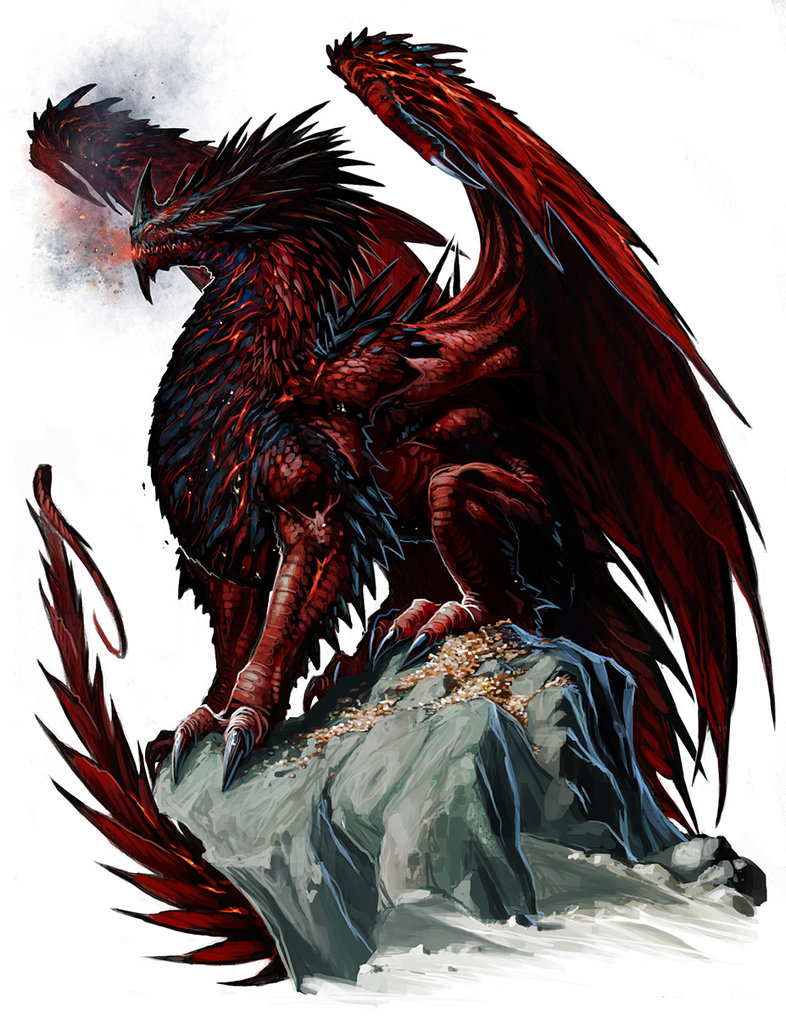
The next day, I woke up as a dragon.

The shock of sudden strength after a day as a sloth was electrifying. I had only been a dragon once before and that was when I had a horde to protect and I had spent the whole day sleeping on it. But not this time. I sat hunched on my bunk, eyes closed but flexing the muscles in my limbs and wings, feeling the deadly power in my claws.

“Harry, it’s time to go,” I heard someone call. I didn’t move. “Just go get him,” someone else said. “Cuffs but no shackles. He’s not a high risk.” The tip of my tail flicked back and forth in anticipation.

The cell door open and I sprang with a roar. I caught one look at the shocked expression on the guard’s face before I was on him, raking my talons across his face. My tail slammed him against the bars and I was free, my huge bulk crashing through the next room. It was pure exhilaration and I reveled in the power that I suddenly possessed.

I smashed through one room after another until suddenly, I was outside and then I was airborne and flying over the city. But where to go now? I couldn’t visit Mae—the weight of this new form would crush her house. I could not retreat to the subway system like I often did, not with my huge frame.

In the end, the form that gave me freedom caused my downfall. A dragon cannot hide well and they found me and netted me and brought me to another facility. A man came and talked to me, but all I could do was roar at him. It was his own fault for trying to talk to a dragon.

Today I woke up as a cat but they still guarded me as if I were a dragon. It’s a shame and I suppose I’ll never get out of here unless I turn into something stronger than a dragon, something strong enough to bend steel and smash concrete. I look out my window and see the beautiful blue sky. A perfect day for a cat to go exploring—a beautiful tabby cat with golden eyes who’s never hurt a person in his life.


Spheres in a Pool

glowing water

Spheres in a Pool

I sat on the edge of the luminescent pool, trying to will myself to dive again into that horrible liquid. Far below the surface lay the spheres piled and jumbled together. Those tiresome, vital, detestable spheres.

“Damn them,” I said. I never wanted to see another one as long as I lived. But in them, in one of them at least, lay the key to my escape from this concrete hellhole.

My cell was smaller than a college dorm room: a concrete cube with lichen growing on the walls. At one end was a locked gate and the way of eventual freedom. It led out to a hallway lined with similar cells.

I went to the gate. “Hey Jerry, you okay?” Jerry, the man in the cell across from mine, was lying on the floor. He raised his head and nodded.

“Just tired,” he said. “I might not pull up any spheres today. You want some bread?” He sat up and threw me part of a loaf of brown bread. Jerry had a friend somewhere that sent him bread down the chute in the corner of his cell. It was the only way things came into the cells; I received nothing beyond my basic rations from mine.

“I need to get at least two spheres today,” I said. I took a deep breath, again willing myself to go in.

The problem was that the liquid in the pool was not water. It was slimy and burned after long exposure. My first day in the cell, I had pulled out eight spheres. I did not pull another one for a whole week, as I lay with screaming, inflamed skin, red and raw from whatever the liquid had done to it.

Finally, I took a deep breath and dived. I did not dare open my eyes but felt around to where I had seen a red sphere. Someone, long ago, had scrawled on the wall, “Reds are the best bet” and I followed that advice.

I felt the sphere and heaved it upwards. It was light enough in the liquid, but slippery and hard to handle. I couldn’t get it the first time and had to surface for more air, but I got it on the second dive. I hauled it out onto the floor of the cell and began the process of cracking it open.

The reds had a tougher shell than some of the others and I used to spend hours prying one open with my hands. But then Jerry (who really had the best of friends somewhere above) slid me over an extra knife he had gotten and that helped a lot. I cut open the sphere, but of course it was empty.

Jerry tried for yellows. He had gotten a tip somewhere that they were the best bet. But I stuck with reds, because even if there was no reason for it, it was nice to think I had my own system.

I pulled another one out before I stopped for a rest. I sat with my back against the wall, fighting despair and panic. The worst thing about the whole situation was that I had put myself there voluntarily. I had been happy enough where I was—that life of low risks, low responsibility, and low pay. But then I heard word of an Opportunity. Some people called it a lottery, or a contest, or a competition. It seemed easy enough and the rewards on the other side were amazing. Just pick the right ball and you’re out, they said. You have all the time in the world to do it.

The reality in their words mocked me now. All the time in the world. All the time in the world. Fifty-nine scratches on the wall marked the number of spheres I had pulled out. I finished eating the bread from Jerry. I was tempted to give up for the day; two spheres was pretty good, but I decided to get one more, any color. I dived and grabbed the first one I felt, wrestling it to the surface.

It was a green one, slightly smaller than the reds. I cut it open and my heart almost stopped when I heard a clink as my knife hit metal.

It was a key. A real key after all this time. My hand was trembling as I fitted it into the lock. But a moment later, my elation changed to confusion and then fury. The key wouldn’t turn. I reached out and put it in from the outside but still nothing. It was the wrong key. I yelled and swore and kicked the walls until Jerry finally shouted at me, asking if I was okay.

“It’s the wrong key!” I shouted. “I got a key but it doesn’t work.”

I worked at it for another twenty minutes until I finally gave up. It wasn’t going to work. “Throw it over here,” Jerry said. “Let me play around with it for a while.” I threw him the key; what did it matter? He put the key in his lock and a second later, Jerry was standing in the hallway, a free man with a look of shock on his face.

“How did you do it?” I asked.

“Just how you did it,” he said. “Here, let me try again.” He put the key in my lock and wiggled it back and forth, but it wouldn’t budge.

“It’s not fair,” I said, beating my forehead against the concrete wall. “It’s not fair.”

“I’m sorry,” Jerry said. “I’ll go see if there’s a mistake. Maybe I can get them to get you out too, since it was you who found the key.”

“Do what you can, I guess,” I said. “And don’t be sorry, Jerry. I’m happy for you.” He smiled and we shook hands through the gate and then he left, glowing with happiness.

The next day, a loaf of bread and a new blanket came down my chute, wrapped in a plastic bag. On it was scribbled a note: Don’t give up. You can do it! – Jerry

So he was up there now too. “Good for you, Jerry,” I said. “And thank you.” Then I turned back to that hideous pool and prepared to dive again.


Currents Run Deep

Currents Run Deep

Triliton’s mining ship the Ocean Duchess set sail from Dover with the mission to strip mine the ocean floor. It was carrying a new machine that extracted all nutrients and left only bare rock behind. It was also carrying a saboteur.

<Five days later>

“They got Tre!” Joy said at the Ecological Army headquarters. “They caught him setting the dynamite.”

“Is he alive?” Nel asked.

“They brought him into a small room for a couple hours. He’s unrecognizable now. Here’s a picture I stole from a security camera.” She turned her iPad.

“Bastard!” Nel squinted. “I never thought I’d see Tre in a suit. Is that a Mercedes he’s driving?”

“Yep. They made him the Director of Environmental Affairs. Six figures. He won’t return my calls.”

“It just shows the evil we’re up against.”

<Five years later>

Joy could barely restrain from punching Tre when he turned up late one night at her apartment.

“How could you, Tre?” she demanded. “You sold yourself to the enemy.”

“Haven’t you been getting my donations?” he asked. “They were anonymous, but I thought you’d figure it out. Plus, the mission is finished.” He flipped on the TV.

“TRILITON’S ENTIRE OCEAN MINING FLEET SUNK. ECO-TERRORISM SUSPECTED.”


The Rage Within

The Rage Within

ADX-Florence Supermax Prison, Fremont County, CNN

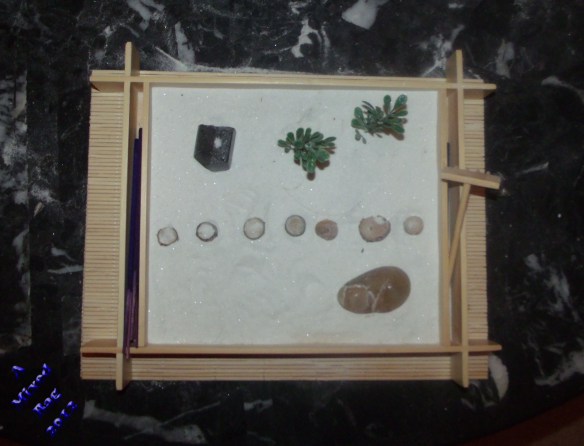
The guards say that no inmates ever went near Karl Zakharin’s zen garden, scratched out of a sandy corner of the exercise ground. Not unless they wanted one of their fingers to become a grisly addition, the center of a newly-pinked swirl of sand. Every day at 10:00 sharp, the crime boss would smooth out the sand and spend an hour drawing circles and whorls with a stick or arranging cigarette butts in an aesthetic fashion.

“Just letting out the rage that’s trapped inside,” he would say to anyone who asked. The guards were not so trusting and routinely dug up the sand patch, looking for contraband. They found nothing.

Three years later, the mystery was solved. A codebook, found 2000 miles away in a gang hideout, detailed the complex language through which Zakharin communicated with his vast syndicate. Authorities also found a commercially-built drone, which had flown high overheard every day, capturing the day’s messages.

Confronted by this evidence, Zakharin only smiled his customary leer of filed points. “It was therapy,” he told guards. “The rage was confined here behind these walls. I was only letting it out into the real world where it belongs.”

Zakharin is believed to have ordered the murders of 136 people while incarcerated.


My Ancestors’ Cell Phone

The cell phone was the most important relic of the tribe. We did not know when it was originally made, but it had been passed down through the generations, each taking care of it, replacing its parts, memorizing and passing on its secrets.

cell phone

The current cell phone case had been made by my uncle, after the former case had been shattered in a moose hunt. He had melted down plastic and cast it in the precise dimensions. It was waterproofed with rubber seals in case it fell in the water or got wet. Each of us had our task in keeping it going. Mine was the batteries.

“I think we are going to need a new battery soon,” Hadrian told me. He was my cousin, in charge of maintaining and repairing the solar panels that charged our batteries. The current battery was getting less than an hour of use per charge.

“I will need to make a journey,” I said. “The necessary materials are far away.”

The next day, I set out, taking only my spear and a skin bag of food and tools I would need. It was a three-week walk to the mineral spring my grandfather had shown me, where the precious salts crusted along the outflow. I collected what I needed and then began the long process of heating and refining, then more refining. I took special rocks from my bag and crushed them, heating, mixing, siphoning, all in the precise order that I learned from my grandfather and that he learned from his father long ago: The Way of Making the Battery.

I stayed at the mineral spring for a week, preparing everything in sequence. It was exacting work, working with the fine tools my great-uncle had made, and working under a magnifying glass that had been hand ground generations before. When all was complete, I assembled the components in a battery case that my brother Yocub had made, and set off back to camp. My path crossed the lands of the Tensheein, and a band of their warriors stopped me, demanding tribute. I gave them some of my food, but when they learned why I was traveling, they let me go. Missions of teknoji were sacred.

When I got back, Hadrian and I tested the new battery, charging it with the solar panels. There was a small flaw inside it and it did not hold charge, so I had to take it apart and remake it. A week later, we tried again and this time the charge lasted up to eight hours: a very successful battery.

My father wanted to call a neighboring tribe with whom we hunted every fall, but the wind had died and he had to wait another day so that the wind could power the tower on the hill and transmit the signal. They talked for fifteen minutes, arranging to meet at Black Cross a week later.

That night, we sat around the fire, listening to my sister code. She had been creating an app that would pick out the locations of nearby animals by their calls. She had been working on it for almost a year, writing it on the phone itself on an application written by our great-great grandmother. As she worked, she sang the lines of code aloud, each of us listening, learning, checking her work.

campfire

The Song of the Code echoed in my head as we all lay down in the great tent for sleep. It was like us, I thought. Each line nothing in itself, but working together, each with its own purpose, it could make something great. Without my battery, the cell phone was nothing. Without the solar panels, or the case, or the microphone, or the delicate camera optics, the cell phone would not function as it should. Each part and person working in perfect unison.


What if…?


What if…?

Rick Forrest was driving the Number 45 bus, empty, back toward the garage when he saw a man waiting at a lonely bus stop on the opposite side. There were no more buses that day, so he slowed and slide open his window.

“Hey buddy, no more buses today!”

The man looked up. “I’m not waiting for that bus.”

“This is the only bus route out here,” Rick said. He was about to drive away, when the man stood up and took a step into the road.

“The bus will be here any moment. Do you want to take it too? There’s room.”

You’re crazy! was on the tip of Rick’s tongue, but something in the man’s intent look made him pause. “I have to finish my route.”

“Come on, there’s room. It’s worth it.”

Rick suddenly had an insane vision of himself parking the bus by the side of the road and getting out to wait with the man. Crazy. He stepped on the gas and drove off.

A dark red bus was approaching. He watched it in the rear view mirror as it stopped and the man got on. Then the bus vanished into thin air.

Rick finished his route and went home, but every single day for the rest of his life, the same question went through his head: What if I had gotten on that bus?


The Elephant's Trunk

🐘 Nancy is a storyteller, music blogger, humorist, poet, curveballer, noir dreamer 🐘

Thru Violet's Lentz

My view, tho' somewhat askew...

The New, Unofficial, On-line Writer's Guild

Aooga, Aooga - here there be prompts, so dive right in

Just Joyfulness

Celebrating joy

Tao-Talk

You have reached a quiet bamboo grove, where you will find an eclectic mix of nature, music, writing, and other creative arts. Tao-Talk is curated by a philosophical daoist who has thrown the net away.

H J Musk

On reading, writing and everything in between ...

Clare Graith

Author, Near Future Sci-Fi, Dystopian, Apocalypse

Kent Wayne

Epic fantasy & military sci-fi author.

Rolling Boxcars

Where Gaming Comes at you like a Freight Train

Lady Jabberwocky

Write with Heart

Fatima Fakier

Wayward Thoughts of a Relentless Morning Person

Life in Japan and Beyond

stories and insights from Japan

The Green-Walled Treehouse

Explore . Imagine . Create

One Minute Office Magic

Learning new Microsoft Office tricks in "just a minute"

lightsleeperbutheavydreamer

Just grin and bear it awhile

Linda's Bible Study

Come study God's Word with me!

Haden Clark

Philosophy. Theology. Everything else.

Citizen Tom

Welcome to Conservative commentary and Christian prayers from Mount Vernon, Ohio.

The Green-Walled Chapel

Writings on Faith, Religion and Philosophy

To Be A Magician

Creative writing and short stories

My music canvas

you + me + music

Eve In Korea

My Adventures As An ESL Teacher In South Korea

Luna's Writing Journal

A Place for my Fiction

Upper Iowa University

Center for International Education

Here's To Being Human

Living life as a human

jenacidebybibliophile

Book Reviewer and Blogger

yuxianadventure

kitten loves the world

Strolling South America

10 countries, 675 days, 38,540km

It's All in Finding the Right Words

The Eternal Search to Find One's Self: Flash Fiction and Beyond

Reflections Of Life's Journey

Lessons, Joys, Blessings, Friendships, Heartaches, Hardships , Special Moments

Ryan Lanz

Fantasy Author

Chris Green Stories

Original Short Fiction

Finding Myself Through Writing

Writing Habits of Elle Knowles - Author

BEAUTIFUL WORDS

Inspiring mental health through creative arts and friendly interactions. (Award free blog)

TALES FROM THE MOTHERLAND

Straight up with a twist– Because life is too short to be subtle!

Unmapped Country within Us

Emily Livingstone, Author

Silkpurseproductions's Blog

The art of making a silk purse out of a sow's ear.

BJ Writes

My online repository for works in progress