Tag Archives: funny

Braiding Mythology

For my wife, who requested it.

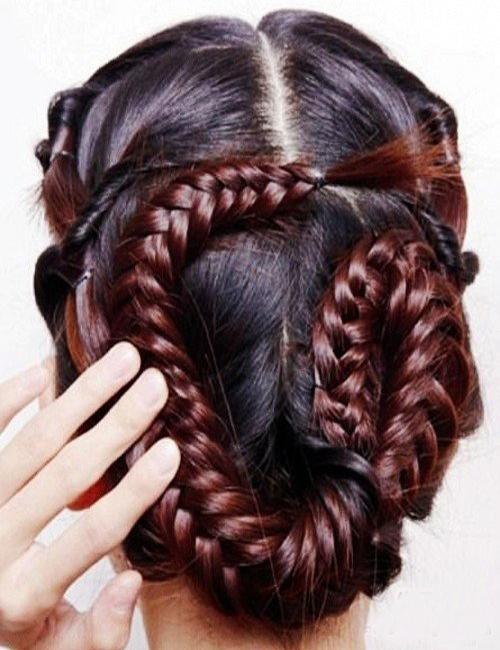
All she had wanted was to put her hair up in French braids. They looked so neat and elegant on that woman in the booklet where the step-by-step instructions made it sound as simple as looking in the mirror. Maybe it was, for all she knew, but for her, a woman whose hair was so unruly that she couldn’t even get a brush through it, it was a Herculean task.

An hour into the process, Medusa was so frustrated that she just wanted to shave her head and become a mass-murderer.

“Okay, let’s try this again,” she said, studying the instructions. “Chad and Lucifer go over Jafar and Travis.” The snakes hissed and she reached back and wrestled them into place. “Okay, now Hecate and Adolf go over Jafar and Travis.” She grunted as she tried to grab the writhing mass. One of the snakes bit her—probably Adolf; he was still mad at her for the whole split-ends treatment she’d had done the week before.

She had just gotten the first two steps in place and was searching with her pinky finger to pull Devon and Mephistopheles into the emerging braid when her cell phone rang. It was Stheno. Jezebel, who was one of her bangs and more helpful than most, answered the call with her forked tongue.

“Where are you?” Medusa asked. “I thought you were coming to help with this.”

“Hero trouble,” Stheno said. “I’m in a taxi on my way over now. When’s he picking you up?”

“At seven. That’s ten minutes from now. I haven’t even put on my makeup yet.”

“You don’t expect him to look at you, do you?”

There was a pause. “Well, I want to look nice in case he does,” Medusa said, a touch defensively. “Anyway, that’s why I needed your help with this braid, so I could let him look at my back.”

“I don’t know why you don’t do what I do and wear a hat,” Stheno said. “I fill it with mice; that’s the only thing that keeps my hair under control.”

“I want to impress him. He looks like such a special guy.”

“You met him on Tinder,” Stheno said.

“He swiped right, didn’t he?”

“But you didn’t put your real profile picture up.”

“Of course not! I’m not trying to turn the whole Internet to stone,” Medusa said. The snakes were restless and her fingers were getting tired. “Just get over here, would you?”

Just then the doorbell rang. “Crap, he’s here already.” She released her hair reluctantly and the snakes all wriggled out again into the freedom of an intractable tangle.

“Put a hat on,” Stheno said.

“No. Look, I don’t care. He’ll just have to accept me as I am. I’m sure Perseus and I will have a great time tonight. I’ll call you later.”


High Street Lows – Friday Fictioneers

Thank you all for your great comments on my story and picture last week. As you might know, I was out of town at an English teaching convention from Wednesday to Sunday (learning about IEP organizational culture and L2 writing assessment techniques, etc.) so I didn’t get a chance to read many stories. However, I still intend to.

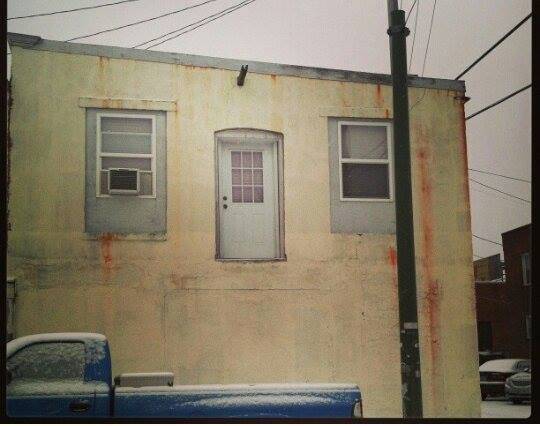
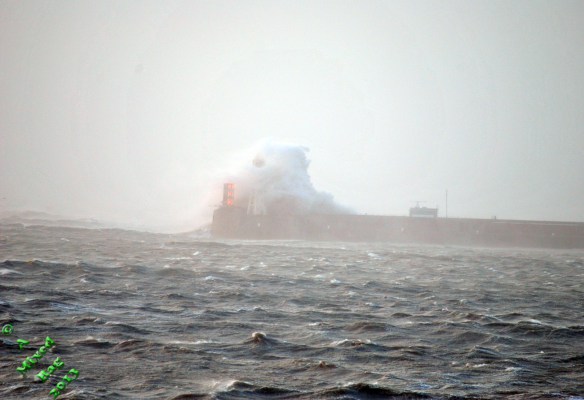
As for this picture, my first instinct was to write an April Fool’s story (either one based on a joke or an actual joke on you) and my second was that this looked like a mouthless face with the right eye winking. I resisted both of these for something much sillier.

copyright Lauren Moscato

copyright Lauren Moscato

High Street Lows

I stepped outside, fell five feet, and sprained my ankle.

I checked the road report.

“High Street is feeling very low today. It’s tired of getting stepped on, like people feel it’s beneath them. Please compliment the road when you get the chance.”

I limped to work, muttering “Good road” through clenched teeth. A storm drain gave off a little sigh of contented steam.

The next day I opened the door to solid earth.

Road report: “High Street is quite high today. Please refrain from complimenting it until further notice. Also, please do not discard drug paraphernalia on the road.”


How Much for the Tuba?

You can call this a second string Friday Fictioneers piece, not because it’s worse but because there was no way it was fitting into 100 words.

“How much for the tuba?” I asked.

The clerk told me.

I smiled and let nostalgia glaze my face like a Kristy Kreme donut. “You know, my mom used to play the tuba. She had lungs on her like a pair of steel bagpipes. Growing up ,I thought she could put her lips to an elephant’s trunk and blow him up like a balloon, just like in the cartoons. Once, I put a ball bearing into the bell of her tuba before a performance, just as a prank. She played that whole concert, keeping it hovering in there. It wasn’t until the final note that she launched it up and out. Knocked out the conductor cold.” I chuckled, in a subdued way. “She passed away last year.”

The clerk looked amused and sympathetic at the same time. “Sounds like quite the lady. You know, I don’t normally do this, but I think I can give you a 20% discount on it. For your mom’s sake.”

“Wow, thanks!” I said. “That means a lot to me. I’ll think of her when I play it.”

I paid and arranged for the delivery. Then I strolled outside and down to the next music store. One down, three to go for my brass quartet.

“How much for the trumpet?” I asked when I was inside.

The shopkeeper told me.

I nodded and looked far away. “You know, my old grandpappy used to play the trumpet . . .”


Death Don’t Us Part

Death Don't Us Part

Death Don’t Us Part

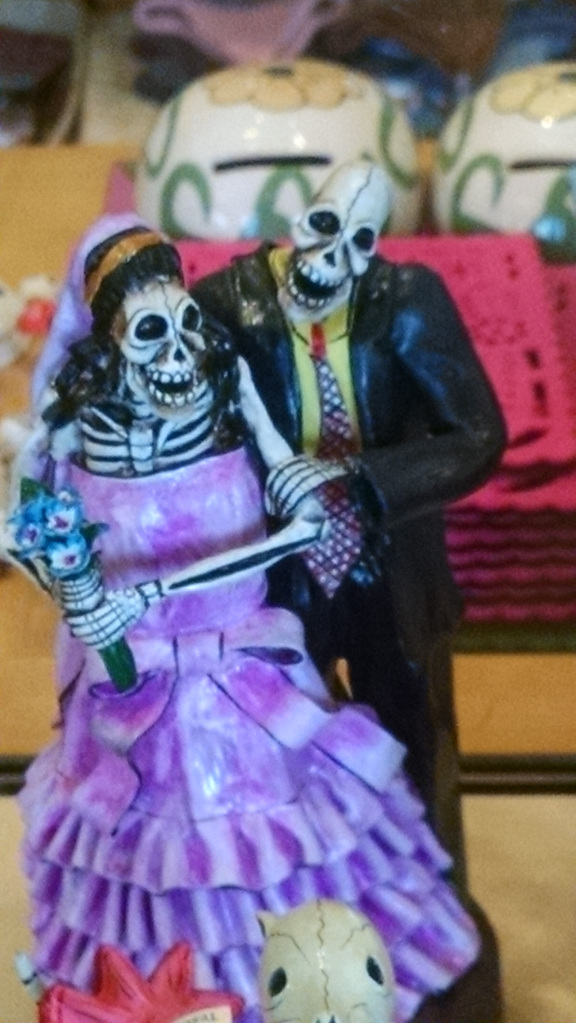
Life and death never end up like you think. I went to sleep one night, dreamed about being back at college with a lobster for a roommate, then woke up in a coffin. It was comfortable, at least.

I lay there for a bit, wondering why I had had a lobster for a roommate when I heard a tap, tap, tap.

“Who’s there?” I said. What else do you say?

“Is that you, Jamal?” It was my wife Olivia.

“Yeah, I’m in a coffin. Where are you?”

“In one too. I’m next to you.”

“Huh. Do you suppose we’re dead?”

“I suppose.”

There was a pause that could have been a few seconds or a few years.

“Do you think this is because we omitted ‘Til death do us part’ from our vows?” I asked.

“Could be. I never thought of this happening. So, you want to get out of here?”

“Can we?”

“After you, monsieur.”

I tried and a moment later, I found myself in a cemetery at night. A translucent version of Olivia appeared a moment later.

“Have you lost weight?” I asked. She rolled spectral eyes at me.

“You don’t have to be so grave about everything,” I said. That made her laugh.

“You kill me, you know?” she said.

“Not anymore. So, what now?”

She took my hand. “I don’t know, go visit our old haunts?”

“Now look who’s starting.”

We floated off. Together.


Acid Rain! Now in Different Colors!

Acid Rain!

I pulled back the shower curtain after my shower and saw a group of people in blue raincoats crowded in front of me, holding up cell phones and cameras. I was shocked for a moment, then nodded smugly, remembering my new LSD-laced shampoo: Acid Rain! I didn’t think the hallucinations would be so specific though. The ceiling wasn’t melting or anything.

“Can we ask you a few questions?” one of them asked.

“I can’t hear you,” I said, combing my hair. “You’re just a product of double lathering.”

“Actually,” one said, “we’re part of a focus group on the drug-related merchandise you’ve recently bought.”

“You’re not hallucinations?” I asked.

“No.”

“You’re real people?”

“Yes.”

“So, I should put a towel on?”

“Please!” they all said, in unison, like they’d been practicing.

“Now, you have questions?”

They all pulled out clipboards. “How’s the shampoo?”

I shrugged. “No dandruff. Pleasing smell. The morning is a magical time.”

“Have you been eating your Weedies?”

“Every morning!” I said brightly.

“And how is your new Honda Ecstasy?”

“Great gas mileage!” I said, “and I always get to work happy.”

“Excellent.” They all scribbled notes assiduously. “Now, we’d like your ideas for other things.”

“Well, maybe some sort of heroin bicycle?”

There was a shocked silence. “Heroin?” one said. “At OmniDrugCo, we’re trying to make the world a better place. We’re not monsters. Now take your free sample of meth and have a nice day!”


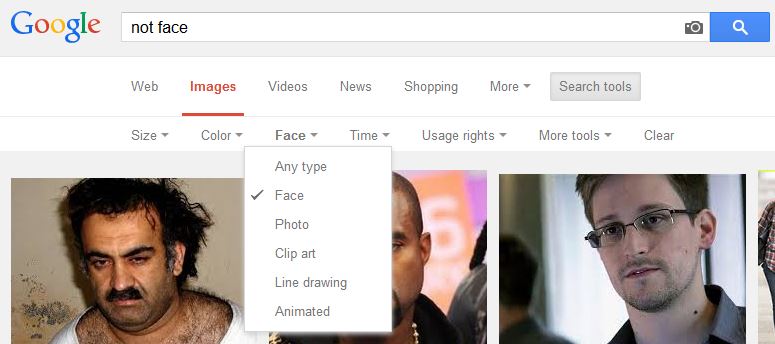
I tried to blow up Google with a paradox

Not face

Next time, Google. Next time…


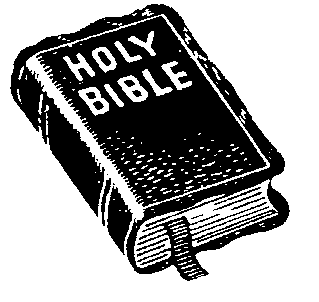
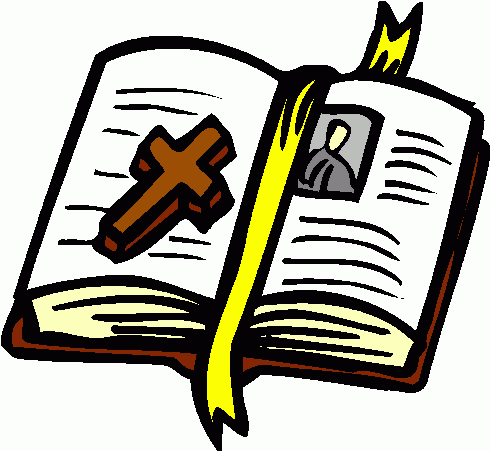
If the Bible Used Clickbait

“Clickbait”, for those of you who aren’t familiar with the term, is web content that relies on sensational headlines to get people to click on it and share it. But what if the Bible used clickbait? I think it would look something like this.

Can’t Remember Ten? These Two Powerful Commandments Are All You Need!

bible

If You Think You’re Having a Bad Day, Check Out This Woman’s Story

bible2

Whale or Fish? Either Way, This Prophet’s Story Will Blow Your Mindbible3

8 Simple Ways to Tell If You Are Blessed!

bible4

What Kind of Fruit Does God Like? The Answer May Surprise You

bible5

Are You Living Like a Nazirite? Take Our Simple Quiz!

bible6

Undeniable Proof That Prophets of Baal Were Insane!

bible7

Before Leonidas, These 300 Kicked Some Serious Derriere

bible9

This is Like No Food Courier You’ve Ever Seen bible11

This Man Delivers an Epic Smackdown, Bible-Style!

bible8

You Will Not Believe What This Man Did For You. Click Here to Find Out!

bible10


5 Mind-blowing Facts about English that Historians Don’t Want You to Know

Please share this post. People deserve to know.

It’s easy to take our language for granted and not think about where it came from or what it looked like only a short time ago. However, the English language has had a twisted and bizarre past, and historians have tried to cover up some of the most startling facts. Here are five facts about the English language that they don’t want you to know, which will literally blow your mind.

5. Shakespeare created the future tense.

This is hard to imagine but before William Shakespeare, there was no future tense. Time in that period of history was divided in two: past and present. This was the case not only for English but every other language up until that point.

The main reason for this was that in ages past, life was very hard. Hopes for the future were slim or non-existent and people did not dwell on it. A popular proverb in Old Germanic translates as, “Let it be so: we shall all die today anyway.” Today, in this case, meant either the present or the future.

We still have a vestige of this in today’s grammar, in the expression “to be going to” as in “I am going to eat a bucket of gerbil heads.” Even though we know this means the future, it is still technically the present.

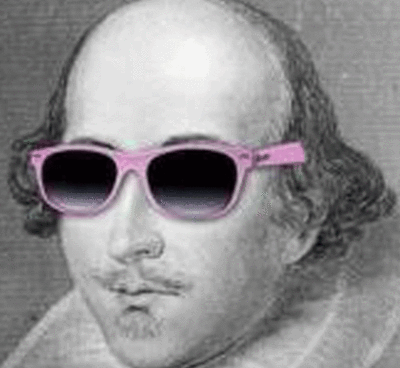
Shakespeare, however, was the first person in history to have both hope and a way to express it: i.e. through his writings. He created the future tense and then, when trying to think of a word to use for it, decided to use his own name. At first, people were confused at this new word will, but Shakespeare cleverly always used it with a future time phrase and soon people accepted the new word and the idea of the future. Eventually, many other languages noticed this and formed their own future tenses.

4. Spaces Between Words Were Created During WWI.

This one may surprise you, but take a look at any book written before 1914 and chances are, there will be no spaces between the words (later editions of these books have since put in the spaces for the benefit of the modern reader). The reason for this was that paper was extremely expensive and so publishers would push all the words together to save space. Authors were allowed to have one blank line between chapters, although they were charged 1 cent per line by the publisher (this is where the term “publisher’s penny” comes from, when referring to line breaks.)

Actually, spaces between words used to be a hot issue, with many authors in the 19th century fighting for their use. Other authors, however, were against them. Jane Austen once famously said, “I want my words huddled together so as not to catch cold, when read upon a cold winter’s night.” To give you an idea of what this looked like, here are the first few sentences of Pride and Prejudice, as they would have looked when first published:

jane austen no spaces

Jules Verne, another supporter of no spaces, declared that reading novels with no spaces “caused the reader to strive mightily and through great toil, to attain the true meaning of the text.”
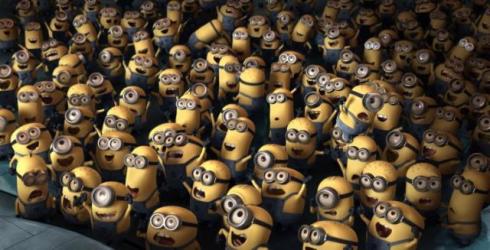
Kind of like this, but with words (copyright Universal Pictures)

Kind of like this, but with words (copyright Universal Pictures)

World War One, however, changed all that. Suddenly, troops at the front were having to read dispatches quickly and accurately. They began to put spaces between words to make them easier to read in the trenches. After the war, authors who had been soldiers adopted this practice and within a few years, it had become standard, to the point that now it seems inconceivable to have text with no spaces in it.

3. The Semicolon was Created in a Bar Bet

semicolon cat

[*]

In 1871, two writers, Lewis Carroll and Benjamin Disraeli, were drinking together in a tavern in Oxford. Carroll argued that there were no more innovations to be made in literature and that the art form was more or less dead. Disraeli declared that he could create an entirely new punctuation mark and have it accepted within 5 years. They wagered a Nebuchadnezzar of fine Bordeaux wine on the attempt. Disraeli drew a period and a comma on a napkin and although he meant to draw them side by side, his hand was shaking and he accidentally drew the period above the comma. He liked the effect and this is how it has remained.

Its usage was somewhat in debate at first. Disraeli first declared that it was designated for “full stops that have not yet a full-committal” or as Punctuation Daily editor Mark Groobinsky put it, “when you think you want to stop, but you’re not sure.” It would take fifty years or more before the modern usage of the semicolon came into standard practice.

Over the next few years, Disraeli included this new mark in all his writings and even gave talks on it. Initially, he called it the ‘perio-comma’ but it was later renamed ‘semicolon’ since it “partially resembles that particular body part.

The semicolon was slow in catching on and Disraeli eventually lost his bet. However, by the turn of the twentieth century, the semicolon was an accepted punctuation mark.

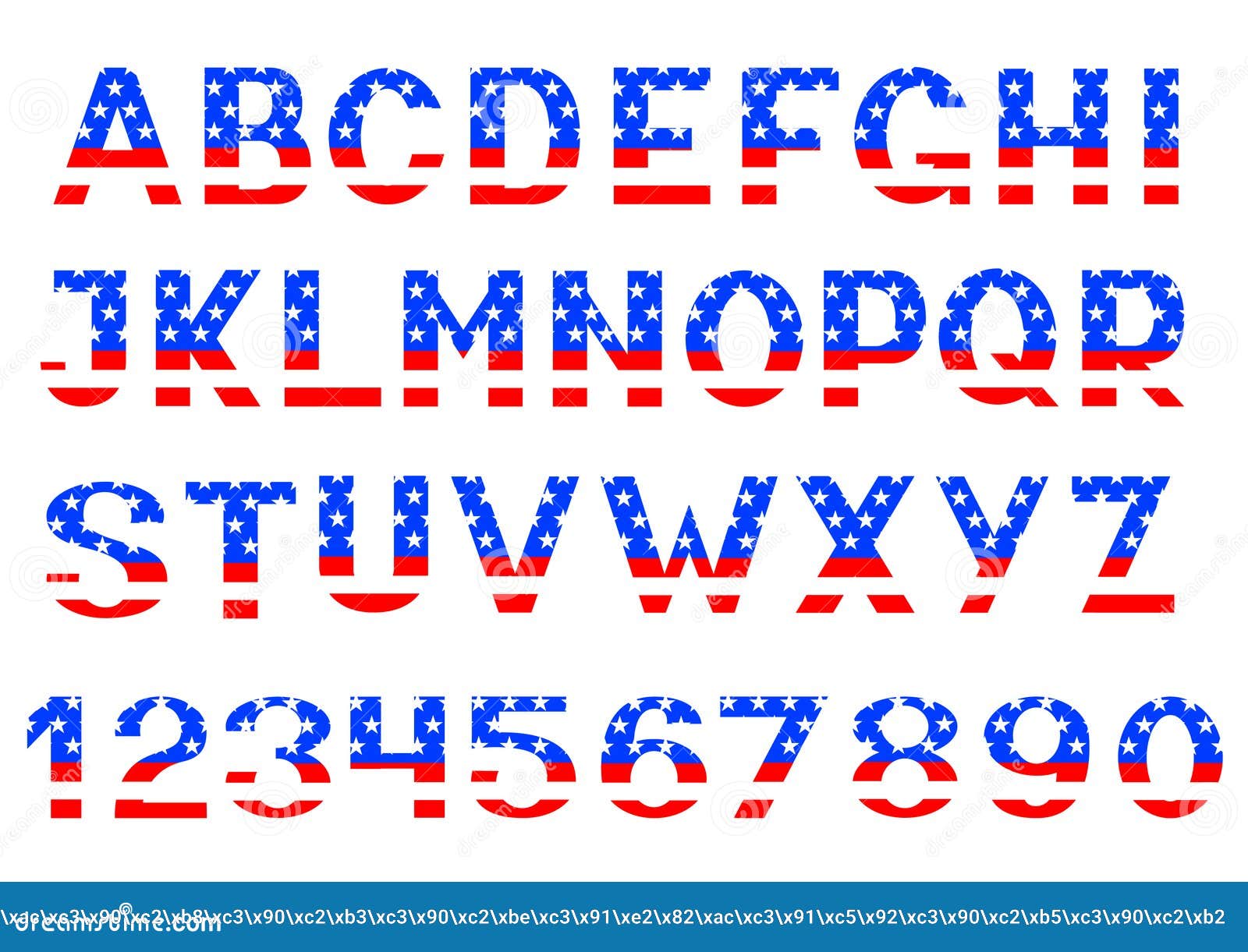
2. The US Almost Adopted its Own Alphabet

Although the US has never had an official language, back in 1795, it almost had its own alphabet. Right after the Revolutionary War, there was a great deal of anti-British sentiment in the United States. It was generally agreed that changing the language would be too hard, but some senators proposed changing the alphabet to make it purely American.

It was known as the Stockton-Bloodworth Plan, named after the two senators who proposed it. The idea was to replace the standard letters with American symbols that started with those letters. Thus, “T” was replaced by a sketch of a turkey and “G” was replaced by an upright gun. Today, there are only a few examples of this type of writing in existence, all of which are stored in the Library of Congress archives.

The current American alphabet [*]

The current American alphabet [*]

Critics of the plan pointed out that many of the symbols were not uniquely American (the letter “H” was a horse); some were very hard to draw (the letter “F” was an American flag, complete with all fifteen stars and fifteen stripes); and others simply did not make sense (the letter “X” was represented by a picture of a man kicking a puppy.) Ultimately, the proposal was defeated in Congress with a vote of 18-14.

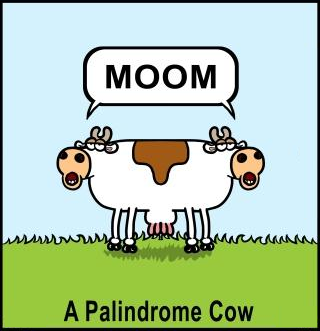
1. For a Period of 300 Years, All English Words Were Palindromes

Henry II was crowned king of England in 1133 AD. He always had trouble reading and in 1135, his court doctor declared that he “had a right-moving globe of Apollo”, as opposed to most people, whose globe of Apollo apparently moved left. This meant, according to the doctor, that the king could best read words from right to left. To facilitate both types of reading, the king declared that all words be made into palindromes, so that they could be read from either direction. The court scholars worked for two years to perfect this system (some of these words, such as “level” and “refer” still persist in English today).

The king trumpeted the achievement as a great step forward for both right- and left-moving globes of Apollo, despite the fact that he was the only person to have ever been found in the former category (historians now believe this was actually a form of dyslexia.)

Here is a sample of this type of text from the Old English version of Orosius’ The Amazons, converted to palindromes:
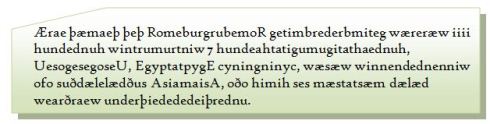
Old English Palindromes

Spaces added later for modern readability

This type of writing became established and persisted long after Henry II’s reign. It was finally abolished in 1443 by Henry VI when a major ink shortage caused the king to look for ways of shortening the language. Still, whenever you talk to an “Anna” or do anything “civic”, think of Henry II and his right-moving globe of Apollo.


The preceding article has been rated “S” for satire.


Ablutophobic

copyright Al Forbes

copyright Al Forbes

Ablutophobic

“NOOOO!” my son screamed. He Houdini’ed out of my grasp, snaked between my legs and sought refuge under the table.

“Nathan,” my tone was firm but warning. “This is going to happen. Now hold still.”

He was like a cornered tiger, so I took it slow, making hushing noises as I moved in. Just when I thought I had him, he slipped under the far side and hopped out the kitchen window.

My walkie-talkie crackled. “Status?”

“He pulled a runner,” I said. “Target’s in the backyard, heading towards the woods.”

“Copy. I’m ready to go mobile.”

I ran to the roof, where my wife was in the cockpit of a small helicopter.

“He can’t have gotten far,” she said. As soon as I was in, she took off, heading towards the grassy space behind the house.

“Do you have the stuff?” I asked.

She pointed between the seats. “Right here.”

We spotted Nathan running hard. My wife maneuvered the chopper above him. “Now!” she shouted.

I grabbed the bucket and dumped the warm, soapy contents out the door. It hit Nathan square on the head, running down his hair like a judge’s wig.

“Does that count as a bath?” she asked.

“It’s as good as we’re getting.” Nathan was looking up furiously. I threw him a towel.

“How long will this have to go on?” she asked.

I shrugged. “Well, his high school graduation is this afternoon. I think he’s on his own after that.”


Note: although I used this title for comedic effect, I don’t wish to make light of the actual phobia, which can be a serious thing for those who suffer with it.


The Bronze Lady

The Bronze Lady

There was a crunch and the chariot lurched. Another puppy gone. A scream from the owner.

“Watch where you’re going, you maniac!”

“Shut up, shut up!” Boudicca yelled. She maneuvered the chariot further into the dog park. This clearly hadn’t been a good idea.

“Are you insane?”

“I’m trying to give the horses some exercise!” she shouted over her shoulder. There were too many trees here for a good run.

“They’re bronze! Why do they need exercise?” someone yelled.

“Well, I don’t need to kick your arse, but I still might,” she said, pulling back a bronze foot to emphasize her point.

It was no good anyway; the heavy wheels were sinking into the turf. She turned around and retreated.

As she rode back sadly along Bridge Street to her pedestal, cars honking behind her, she sighed. There was no place in this modern world for a bronze woman. It was lonely, being the only one of her kind. If only her friend the Iron Lady were still alive.


The Elephant's Trunk

🐘 Nancy is a storyteller, music blogger, humorist, poet, curveballer, noir dreamer 🐘

Thru Violet's Lentz

My view, tho' somewhat askew...

The New, Unofficial, On-line Writer's Guild

Aooga, Aooga - here there be prompts, so dive right in

Just Joyfulness

Celebrating joy

Tao Talk

You have reached a quiet bamboo grove, where you will find an eclectic mix of nature, music, writing, and other creative arts. Tao-Talk is curated by a philosophical daoist who has thrown the net away.

H J Musk

On reading, writing and everything in between ...

Clare Graith

Author, Near Future Sci-Fi, Dystopian, Apocalypse

Dirty Sci-Fi Buddha

Musings and books from a grunty overthinker

Rolling Boxcars

Where Gaming Comes at you like a Freight Train

Lady Jabberwocky

Write with Heart

Fatima Fakier

Wayward Thoughts of a Relentless Morning Person

Life in Japan and Beyond

stories and insights from Japan

The Green-Walled Treehouse

Explore . Imagine . Create

One Minute Office Magic

Learning new Microsoft Office tricks in "just a minute"

lightsleeperbutheavydreamer

Just grin and bear it awhile

Linda's Bible Study

Come study God's Word with me!

Haden Clark

Philosophy. Theology. Everything else.

Citizen Tom

Welcome to Conservative commentary and Christian prayers from Mount Vernon, Ohio.

The Green-Walled Chapel

Writings on Faith, Religion and Philosophy

To Be A Magician

Creative writing and short stories

My music canvas

you + me + music

Eve In Korea

My Adventures As An ESL Teacher In South Korea

Luna's Writing Journal

A Place for my Fiction

Upper Iowa University

Center for International Education

Here's To Being Human

Living life as a human

jenacidebybibliophile

Book Reviewer and Blogger

yuxianadventure

kitten loves the world

Strolling South America

10 countries, 675 days, 38,540km

It's All in Finding the Right Words

The Eternal Search to Find One's Self: Flash Fiction and Beyond

Reflections Of Life's Journey

Lessons, Joys, Blessings, Friendships, Heartaches, Hardships , Special Moments

Ryan Lanz

Fantasy Author

Chris Green Stories

Original Short Fiction

Finding Myself Through Writing

Writing Habits of Elle Knowles - Author

BEAUTIFUL WORDS

Inspiring mental health through creative arts and friendly interactions. (Award free blog)

TALES FROM THE MOTHERLAND

Straight up with a twist– Because life is too short to be subtle!

Unmapped Country within Us

Emily Livingstone, Author

Silkpurseproductions's Blog

The art of making a silk purse out of a sow's ear.